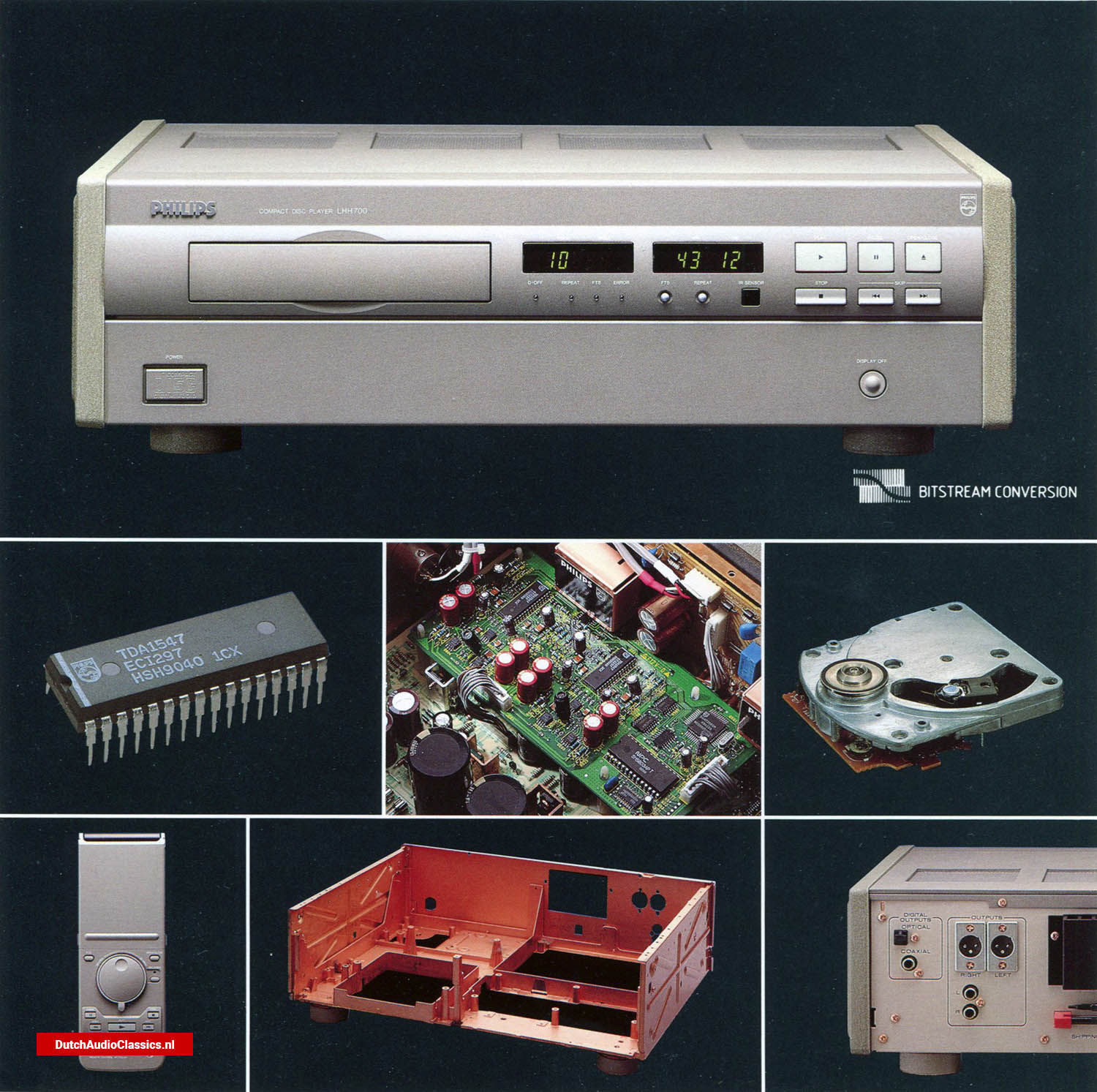
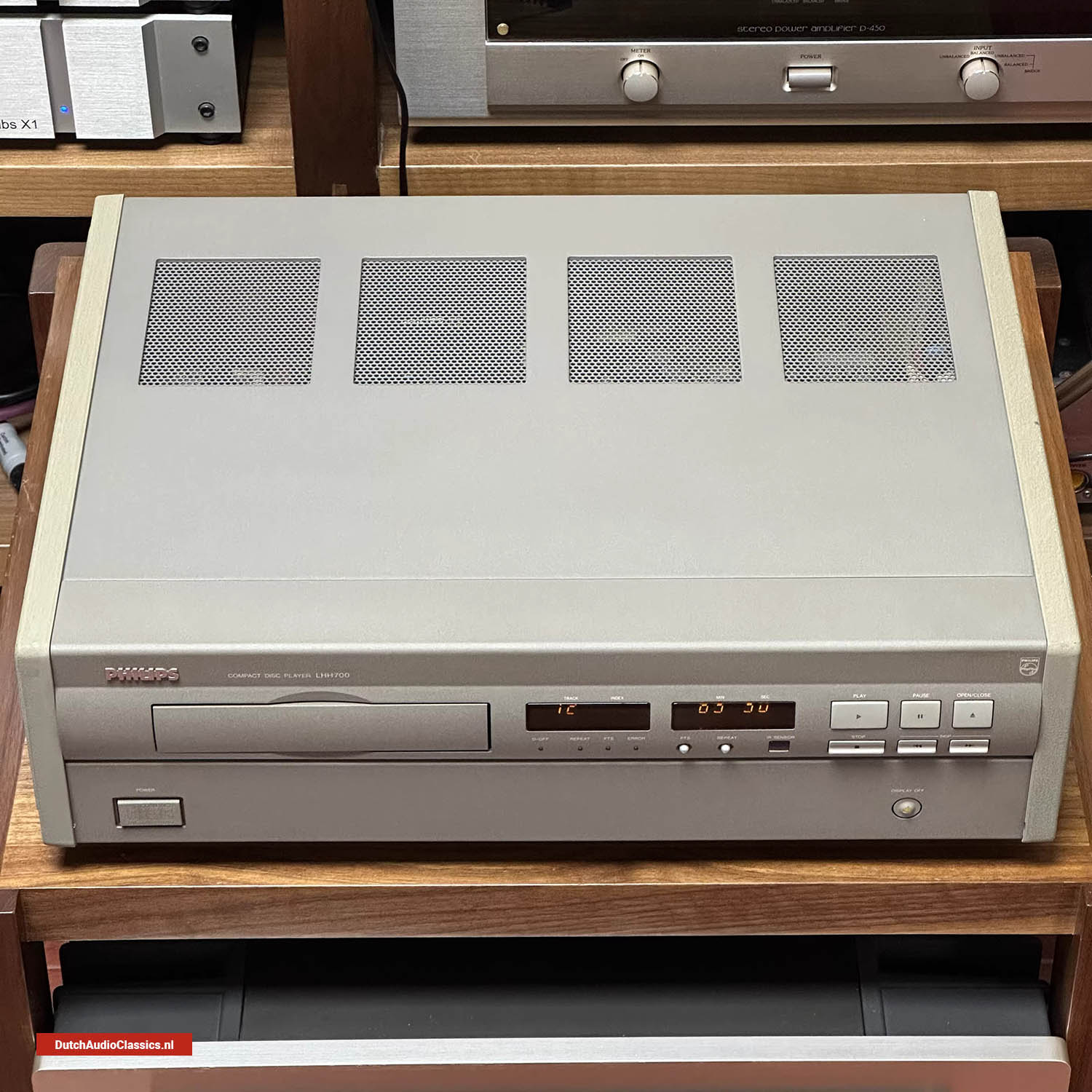
Some audio components stay with you. Not because they were the most spectacular of their time, but because they got the essentials right. The Philips LHH700 is one of those rare CD players that quietly earns your respect the longer you live with it.
When the LHH700 was introduced in 1991, Compact Disc technology was evolving rapidly. Many manufacturers chased technical novelty and eye-catching specifications. Philips chose a different path. With the LHH700, the goal was not to impress in a short demonstration, but to create a reference CD player that would remain musically convincing long after the hype had faded.
![Philips LHH700 cdplayer]()
Designed as a True Standard
What always struck me about the LHH700 is how deliberately restrained it is. Philips approached the idea of a “standard” not as something fixed in time, but as something that should continue to make sense years later. Rather than designing a product to win comparisons, they focused on stability, balance, and long-term reliability.
This philosophy runs through every aspect of the player. The LHH700 does not exaggerate or dramatize music. There is no forward treble meant to impress, no oversized bass designed to create impact. Instead, it presents music with clarity and calm confidence, allowing recordings to unfold naturally.
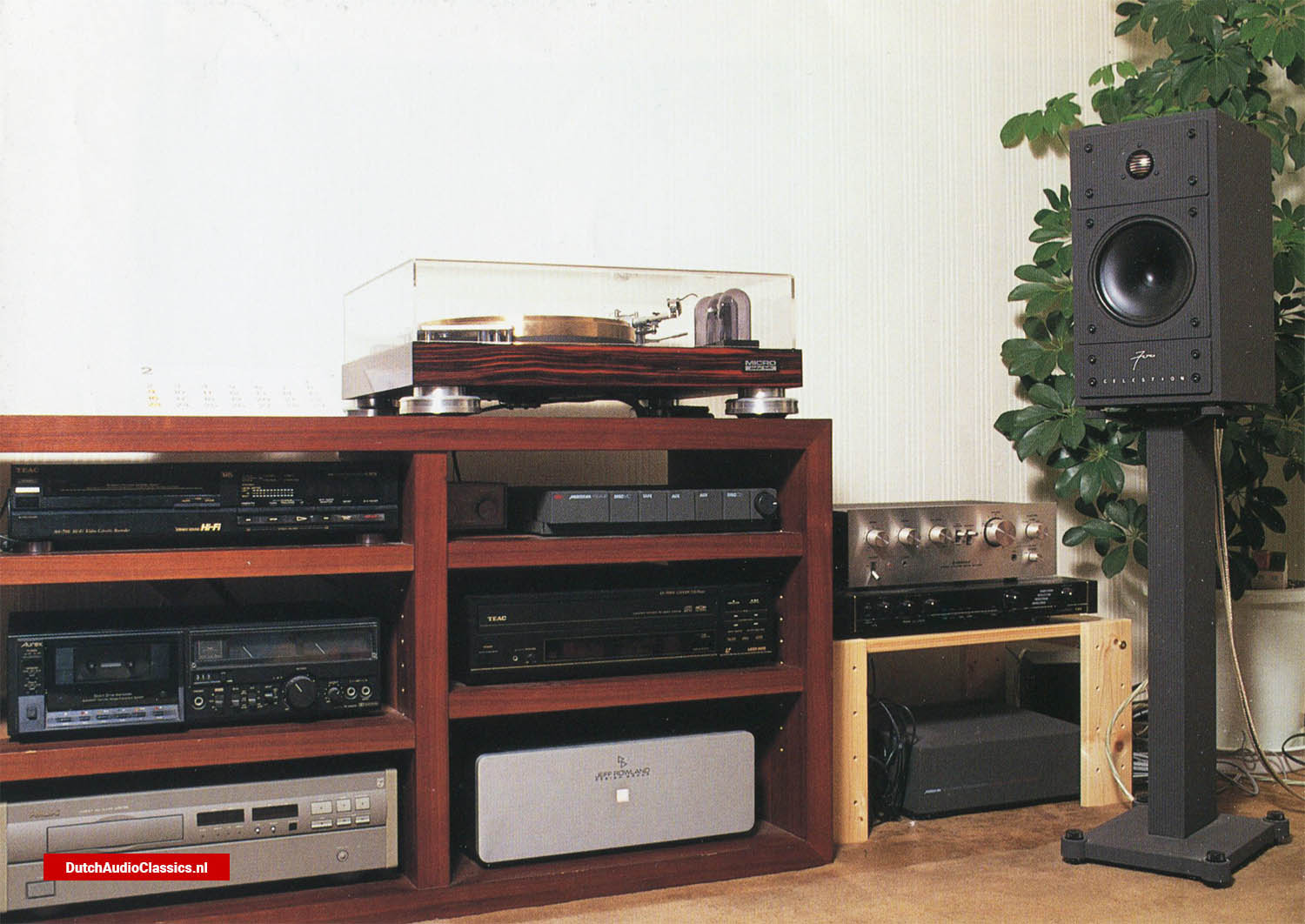
As a listener, you notice this restraint almost immediately. The LHH700 integrates effortlessly into different systems and rooms, adapting rather than dominating. Over time, that quality becomes more meaningful than any single technical highlight. The player never demands attention; it earns trust. That is exactly why it ages so well. It does not try to sound “digital” or “analog”. It simply tries to sound right.
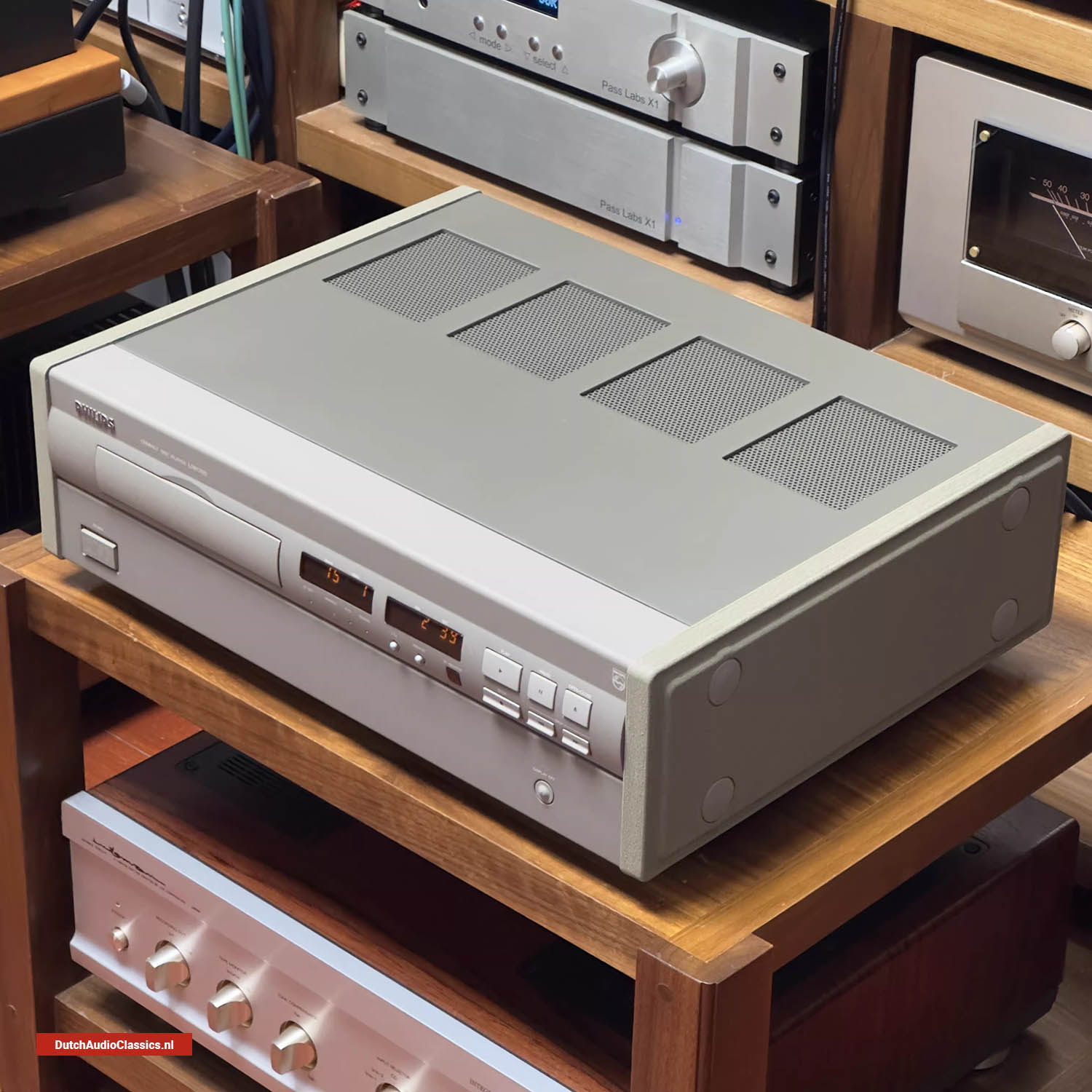
![Philips LHH700 cdplayer set]()
A Musical Digital Architecture
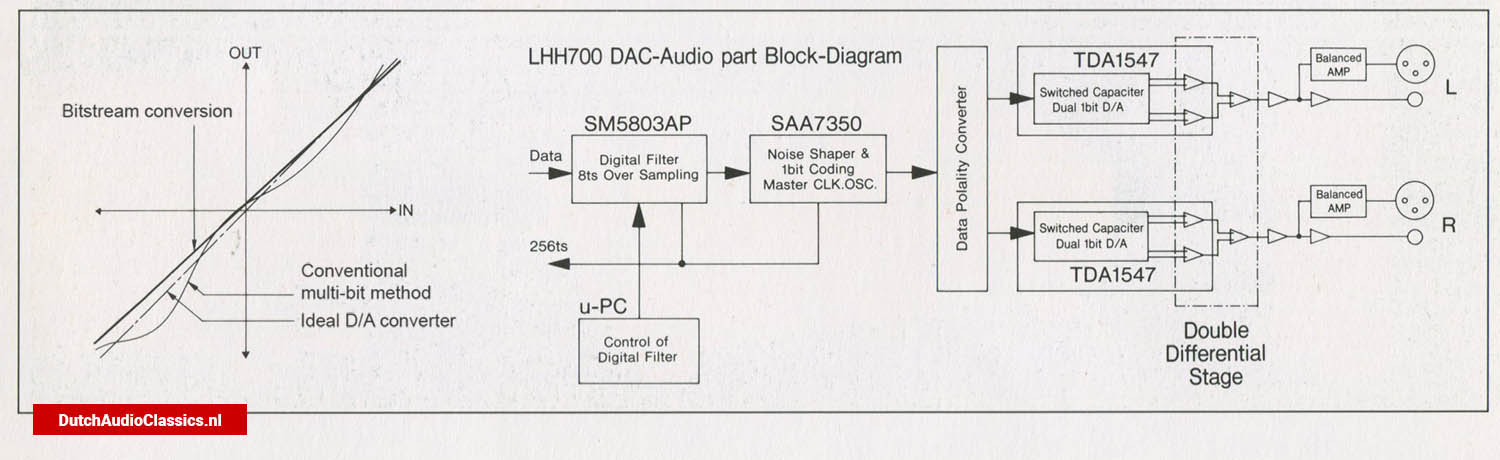
At the heart of the LHH700 lies the TDA1547, a Philips bitstream (1-bit) DAC that represents a refined approach to bitstream conversion and noise-shaped digital audio. Rather than pursuing extreme processing or headline figures, Philips focused on musical coherence and controlled, predictable behaviour.
Listening confirms that decision. Timing feels natural and unforced. There is no digital glare, no artificial sharpness pushing details forward. Music flows easily, with a sense of ease that invites long listening sessions rather than analytical listening.
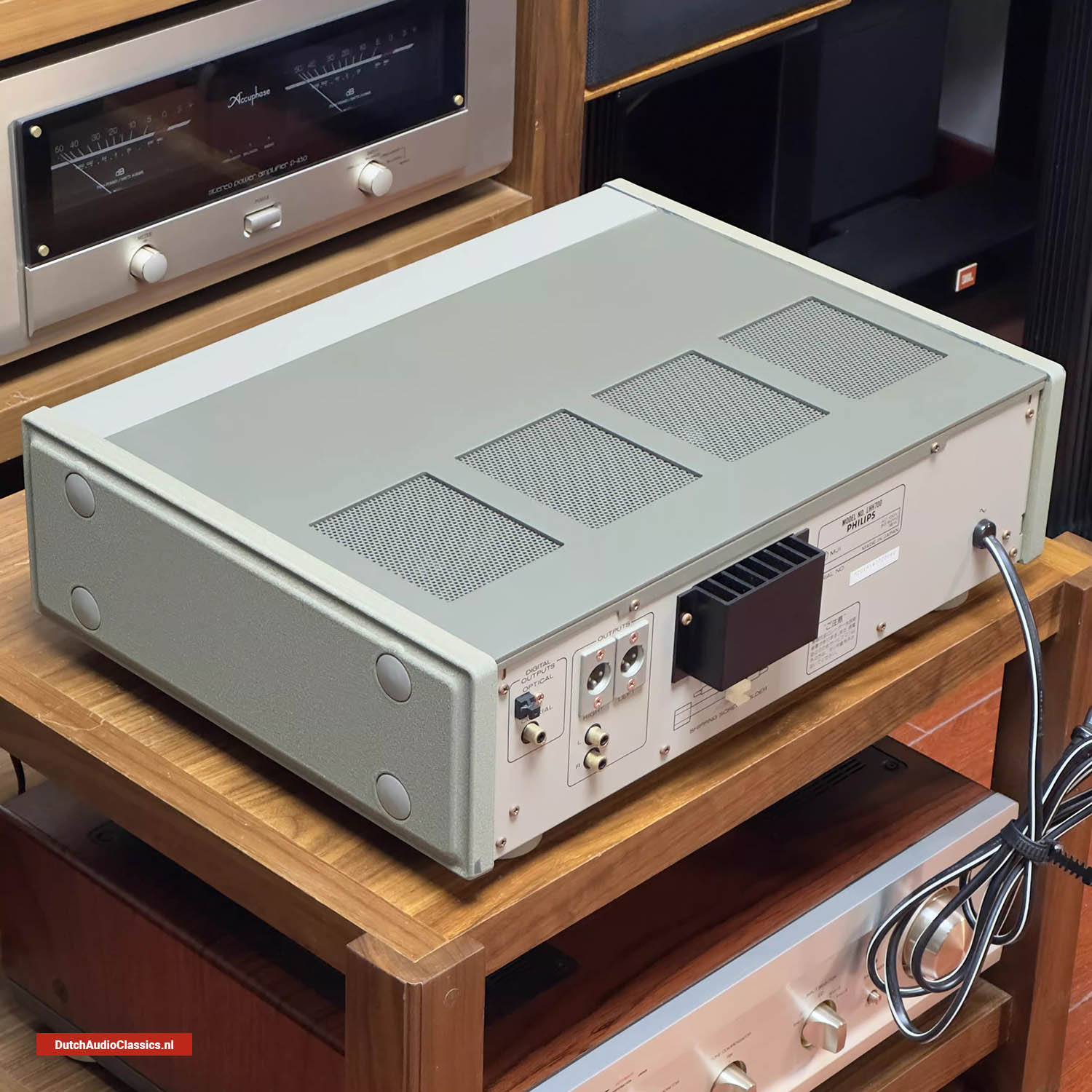
The fully balanced analog output stage reinforces this character. Noise remains low, channel separation is excellent, and the soundstage forms naturally without being exaggerated. Small details appear on their own, emerging from a deep and stable silence between notes. That silence is just as important as the notes themselves, giving the music room to breathe.
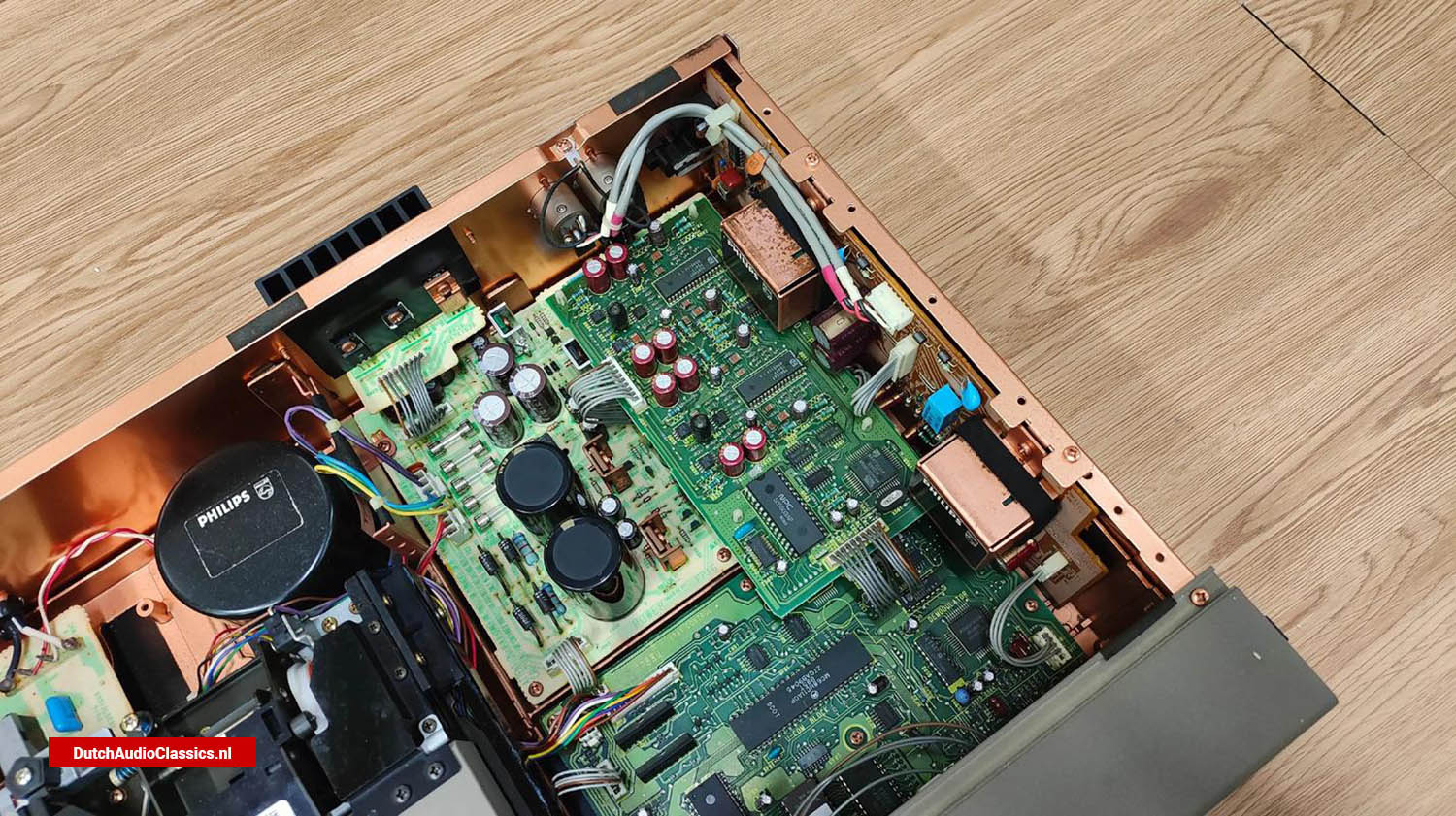
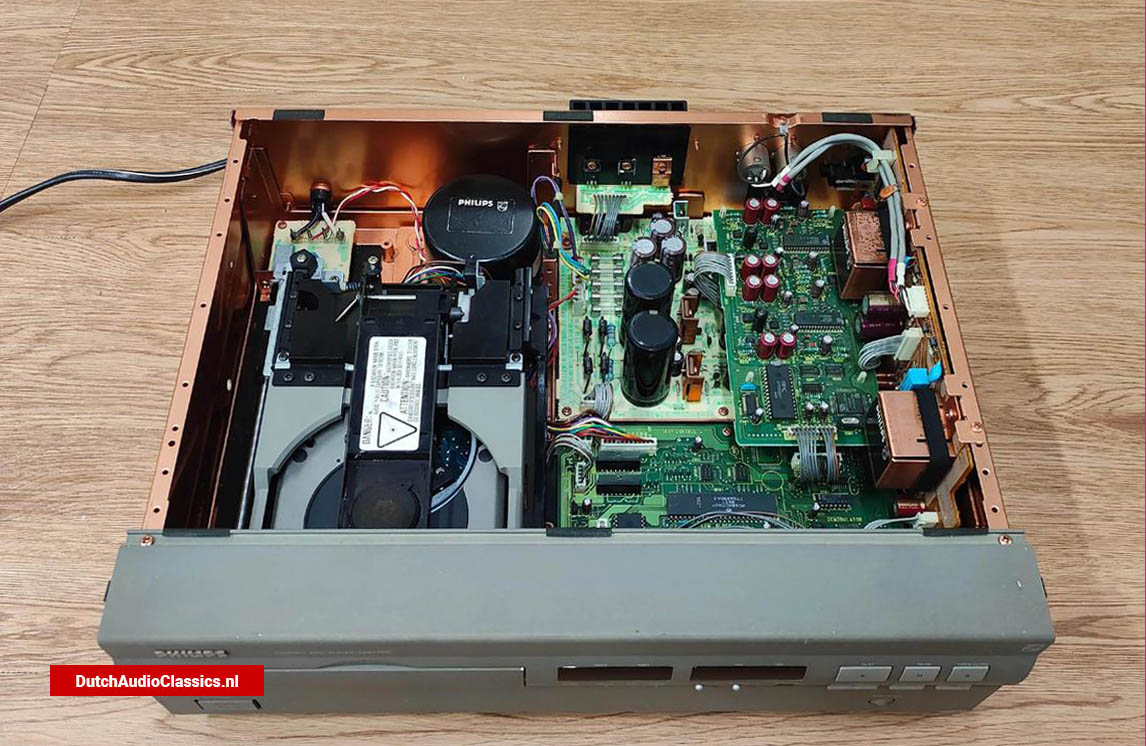
Equally important is the mechanical design. The rigid chassis and stable disc transport reduce vibration and reading errors, allowing the digital system to operate under ideal conditions. Nothing feels accidental. Every part of the LHH700 feels purposeful and carefully considered, contributing to a presentation that remains calm and coherent even with complex music.
![Philips LHH700 cdplayer blockdiagram]()
The Philips Bitstream Method
The Philips Bitstream method is a unique digital-to-analog conversion approach developed to overcome the limitations of conventional multi-bit DACs. In traditional multi-bit systems, sound is reconstructed by combining many resistors corresponding to binary bits. While this works reasonably well, it inevitably introduces non-linearity errors because the accuracy depends heavily on the precision of each element. This can affect the smallest details in music, especially at low signal levels, where micro-distortion becomes audible.
Philips’ bitstream approach takes a different route. Instead of generating many discrete voltage levels, it oversamples and noise-shapes the original digital signal into a 1-bit pulse density code, which is then converted into an analogue waveform. The result is excellent linearity, meaning the relationship between input and output remains proportional even as levels change. This reduces micro-level distortion and preserves subtle musical nuances.
Because bitstream systems avoid many of the inherent errors of multi-bit conversion, they produce a smooth, connected sound with clear, atmospheric detail. They are also more resistant to temperature and aging effects due to their simpler structure.
In essence, Philips’ bitstream method delivers a more musical and natural-sounding digital audio reproduction, one reason the LHH700’s DAC implementation remains highly regarded.
Read more about the background and principles behind Philips’ bitstream conversion.
Living With the LHH700
What ultimately defines the LHH700 is how it behaves over time. It does not reveal everything at once. Instead, it rewards patience and familiarity.
Bass is controlled and natural, never heavy or overstated. The midrange carries warmth and texture, giving vocals a convincing human presence. Treble remains smooth and refined, offering detail without fatigue. Complex passages stay composed, while simple recordings gain intimacy and emotional weight. Instruments occupy believable space, and the soundstage remains stable regardless of musical scale.
Perhaps the greatest compliment I can give the LHH700 is that it never demands attention. Hours can pass without the urge to analyze, adjust, or compare. The player encourages immersion rather than evaluation.
Living with the LHH700 feels less like owning a piece of equipment and more like having a dependable reference. It becomes the baseline against which other sources are judged. Its strengths reveal themselves slowly, in familiar recordings that suddenly feel more coherent or emotionally grounded.
That is why the LHH700 still matters today. Not as a collectible or a technical curiosity, but as a CD player that continues to do exactly what it was designed to do: serve the music.
In that sense, the Philips LHH700 truly is a standard. Not of its time, but beyond it.
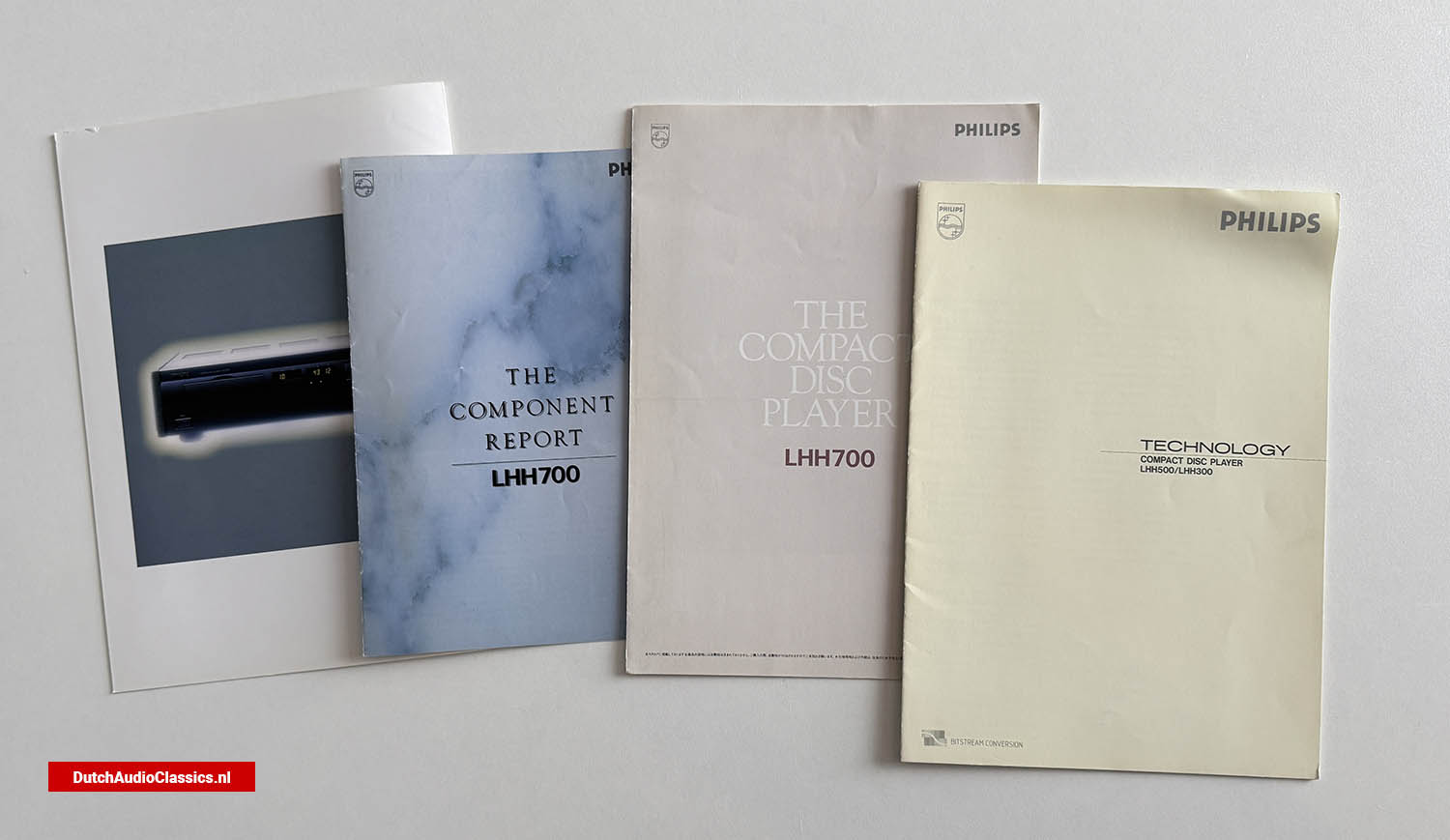
![Philips LHH700 cdplayer brochures]()
![Philips LHH700 cdplayer documentation]()
Specifications Philips LHH700
- Frequency response:
20 Hz – 20 kHz ±0.5 dB (balanced)
20 Hz – 20 kHz ±0.3 dB (unbalanced)
-
Signal-to-noise ratio:
100 dB or higher
-
Total harmonic distortion:
0.0015% (1 kHz)
- Dynamic range:
100 dB
-
Output level:
Balanced: 2 V RMS
Unbalanced: 2 V RMS
-
Output impedance:
Balanced: 100 Ω
Unbalanced: 100 Ω
-
Digital output:
Coaxial (RCA)
-
Power supply:
AC 100 V, 50/60 Hz
-
Dimensions:
457 W × 140 H × 350 D mm
-
Weight:
Approx. 16 kg