Digital Compact Cassette is often remembered for how it ended. A format that arrived at an awkward moment, asked too much from consumers, and never really found its place next to the Compact Disc. That conclusion is easy to make, but it misses what DCC actually was inside the engineering world that created it.
When you look beyond market success or failure, DCC becomes something far more interesting. It shows how digital audio was shaped in practice. Not as a clean, theoretical system, but as a technology that had to work on a factory floor, inside a cassette shell, and in the hands of everyday users. And within that process, Marantz played a role that was quiet but decisive.
DCC was defined as a Philips technology. Its structure, logic and compatibility rules were largely fixed from the start. What remained open was how that system would be realised. That space between definition and reality is where Marantz took responsibility.
Understanding the Marantz DCC era
What role did Marantz play in the DCC format?
Marantz did not define the Digital Compact Cassette standard itself. That role belonged to Philips.
Instead, Marantz worked within the existing DCC system, focusing on analogue circuitry, sound quality
and musical balance rather than on altering the digital architecture.
Why did Marantz treat DCC differently from a consumer format?
When DCC was introduced, digital audio was already evolving beyond cassette-based media.
Marantz approached DCC not as a mass-market replacement for analog tape, but as a serious audio component
suited to critical listening within a broader hi-fi system.
How does the Marantz DCC era fit into digital audio history?
The Marantz DCC era represents a transitional moment in which traditional audio design values had to coexist
with fixed digital standards. It highlights how Marantz interpreted Philips’ DCC technology through engineering
discipline rather than format innovation.
A format built on compromise
DCC was never meant to replace the past overnight. Its most important requirement was backward compatibility with analogue cassette tapes. This single choice shaped every technical decision that followed.
Unlike the Compact Disc, which could leave analogue audio behind entirely, DCC had to live in two worlds at once. One mechanism had to deal with digital data and analogue signals without fully favouring either. From a system point of view this was clever. From an engineering point of view it was demanding.
Every compromise affected several parts of the design. Mechanical tolerances, signal paths, control logic and physical layout all became tightly linked. Small changes could have unexpected consequences. In a format like this, nothing existed in isolation.
Marantz working inside the system
Marantz did not step into DCC development to challenge the system itself. Its role was more practical. Take what already exists and make sure it behaves well in the real world.
That meant dealing with variation. Components that look identical on paper do not always behave the same once they are mounted on a board. Power supplies interact with digital circuits. Grounding choices influence stability. Mechanical construction affects noise and vibration.
Rather than dismissing these effects as secondary, Marantz treated them as part of the design. The goal was not to rewrite Philips’ work, but to make it coherent, reliable and listenable when all parts came together.
This was not about ideology. It was about responsibility.
Ken Ishiwata and the discipline of listening
Although many decisions around DCC were shaped by teams and processes, it is difficult to understand Marantz’s role during this period without acknowledging Ken Ishiwata. His influence was not about redefining formats or rewriting system architecture. It was about constantly asking how a machine behaved as a complete audio product.
Ishiwata worked within boundaries that were largely fixed. The DCC architecture was defined, compatibility rules were non-negotiable, and the system logic left little room for fundamental change. What remained open was execution. And it was precisely in that narrow space that his contribution became visible.
Rather than assuming that digital audio would automatically “sound right” once specifications were met, Ishiwata treated DCC as a system that still required balance, tuning and restraint. Power supply behaviour, grounding, component choice and mechanical stability were not secondary concerns. They were essential to achieving coherence and long-term reliability.
This approach did not reject measurement or system thinking. Ishiwata worked comfortably alongside engineers focused on logic, repeatability and compliance. His role was complementary. Where the system guaranteed correctness, listening revealed character. Where the format defined limits, execution determined whether those limits felt acceptable.
Within the DCC project, this mindset helped ensure that Marantz players did not simply comply with the format, but behaved in a controlled and deliberate way. Looking back, this method of working would become familiar in later Marantz digital designs, including projects where Philips technology again formed the foundation.
In the context of DCC, Ishiwata’s role can best be described as interpretative. He did not author the system, but he shaped how it was experienced. That quiet influence aligned perfectly with Marantz’s position during this era: never dominant, never absent, but present exactly where decisions about sound and behaviour truly mattered.
Manufacturing as part of the design
The production environment itself shaped how DCC was realised. Assembly was highly automated. Robots placed most components. Boards moved through the factory on tightly controlled lines. Quality control was constant and visible.
Yet listening remained an essential step. Electrical tests and measurements were important, but they were not the final word. Engineers listened to machines as complete systems, not just as collections of circuits.
This balance reflects how Marantz approached digital audio at the time. Measurement and perception were not in conflict. They were simply different tools for understanding the same thing.
The head design challenge
One of the clearest examples of DCC’s complexity is the head assembly. A single head had to read both digital and analogue information. Early ideas involving multiple heads or complex mechanical solutions quickly ran into problems with space, reliability and cost.
The final composite head design met the technical requirements, but it introduced new sensitivities. Alignment, grounding and material choices all affected performance. Some of these effects could not be predicted fully during system design.
Marantz’s contribution here was careful observation. By studying how the head behaved in real machines, weaknesses became visible that did not appear in specifications. Solving those issues required attention to details that digital audio was often assumed to ignore.
DCC made it clear that digital systems were still physical systems.
Power, grounding and audible differences
Another important lesson from DCC development concerned power supply quality and grounding. At the time, it was common to assume that digital circuits were largely immune to such factors. Practice showed otherwise.
In a hybrid format like DCC, where analogue and digital circuits shared space, small changes in grounding or supply stability could influence the final result. These effects were audible, even if they were difficult to express in simple measurements.
Instead of arguing about whether this should be possible, Marantz worked with what was observed. Power supplies were refined. Grounding paths were reconsidered. Chassis construction became part of the electrical design.
The system itself did not change. The way it behaved did.
Coordination over authorship
People like Yoshiyuki Tanaka played an important role during this period. Not as public figures or designers with a personal signature, but as coordinators who ensured that complex ideas could be executed consistently.
The challenge was not to invent new concepts, but to keep many variables under control at the same time. Sound quality, production speed, reliability and cost all had to align. Improvements were made step by step, tested, and only kept if they proved stable.
This way of working would later appear again in other Marantz projects that relied on Philips technology. DCC was one of the first places where this discipline became clearly visible.
Continuous improvement in practice
The working culture around DCC was shaped by continuous improvement. Production sections were measured against each other. Faults were identified early. Responsibility stayed close to the process itself.
This environment made it possible to refine a complex system without destabilising it. Changes were small and controlled. Feedback was immediate. Risk was managed through iteration rather than avoided altogether.
For a format as vulnerable as DCC, this approach was essential. The margin for error was small. Stability mattered as much as innovation.
What DCC revealed
DCC did not succeed commercially, but it revealed a great deal about digital audio at a critical moment in its development. It showed that digital systems were not automatically neutral. That execution mattered. That listening still had a place, even in highly specified technologies.
For Marantz, DCC helped confirm a working philosophy that would continue long after the format itself disappeared. Digital audio required interpretation. Sound quality emerged from interaction between parts, not from theory alone.
The quiet position of Marantz
Marantz did not dominate the DCC story, and it did not stand in opposition to Philips. It occupied a space next to it. Close enough to influence outcomes, far enough to maintain its own way of thinking.
Its authority was quiet because it was never claimed. It showed itself in decisions that held up over time. In machines that behaved predictably. In designs that balanced complexity with coherence.
The seat of Marantz during the DCC era was not defined by titles or branding. It was defined by where difficult decisions were made. On production lines. In listening rooms. In small refinements that made a complex system workable.
DCC may not have lasted, but the mindset shaped during its development did. And that mindset would quietly continue to influence how Marantz approached digital audio in the years that followed.
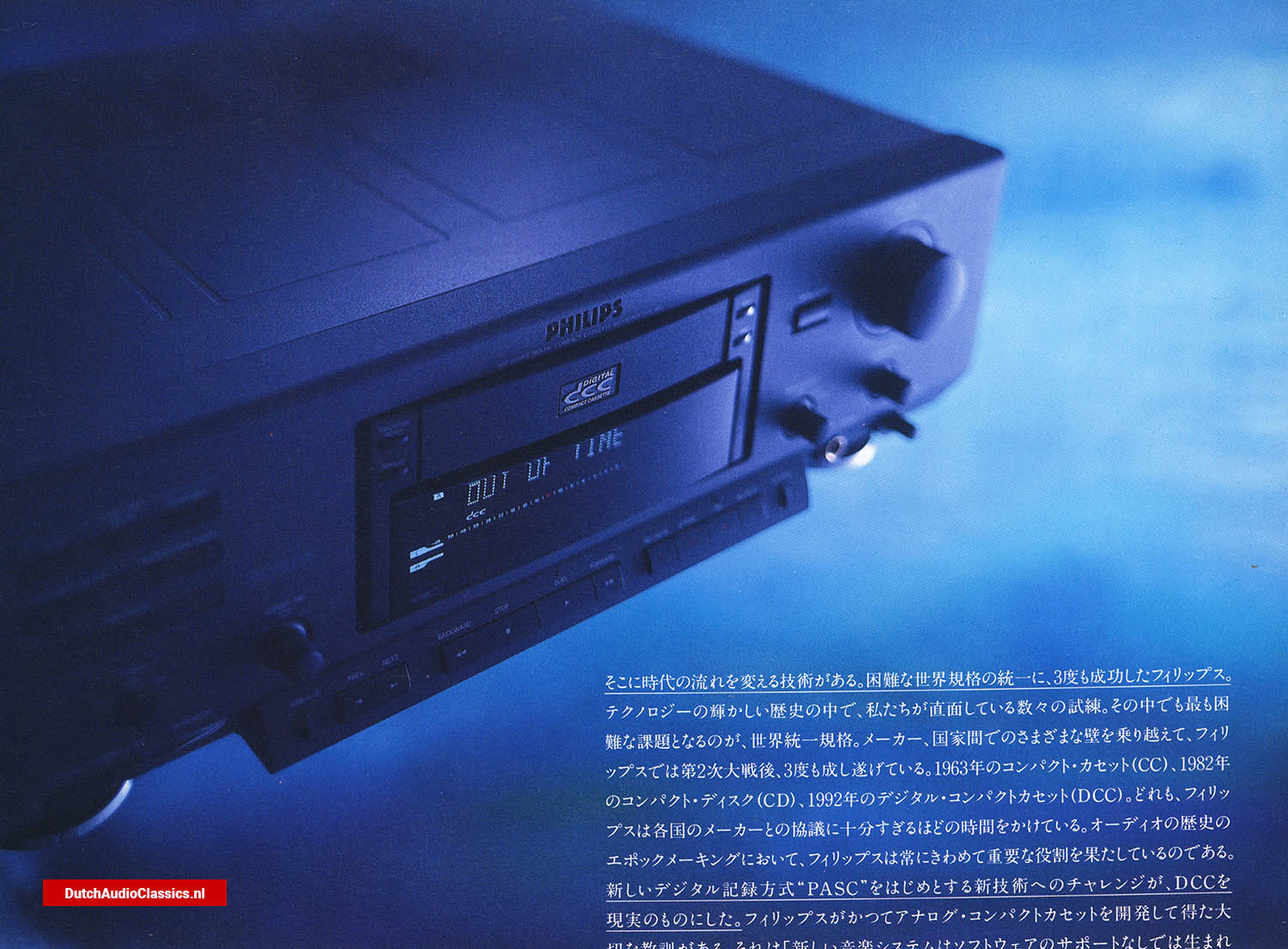 Philips DCC900
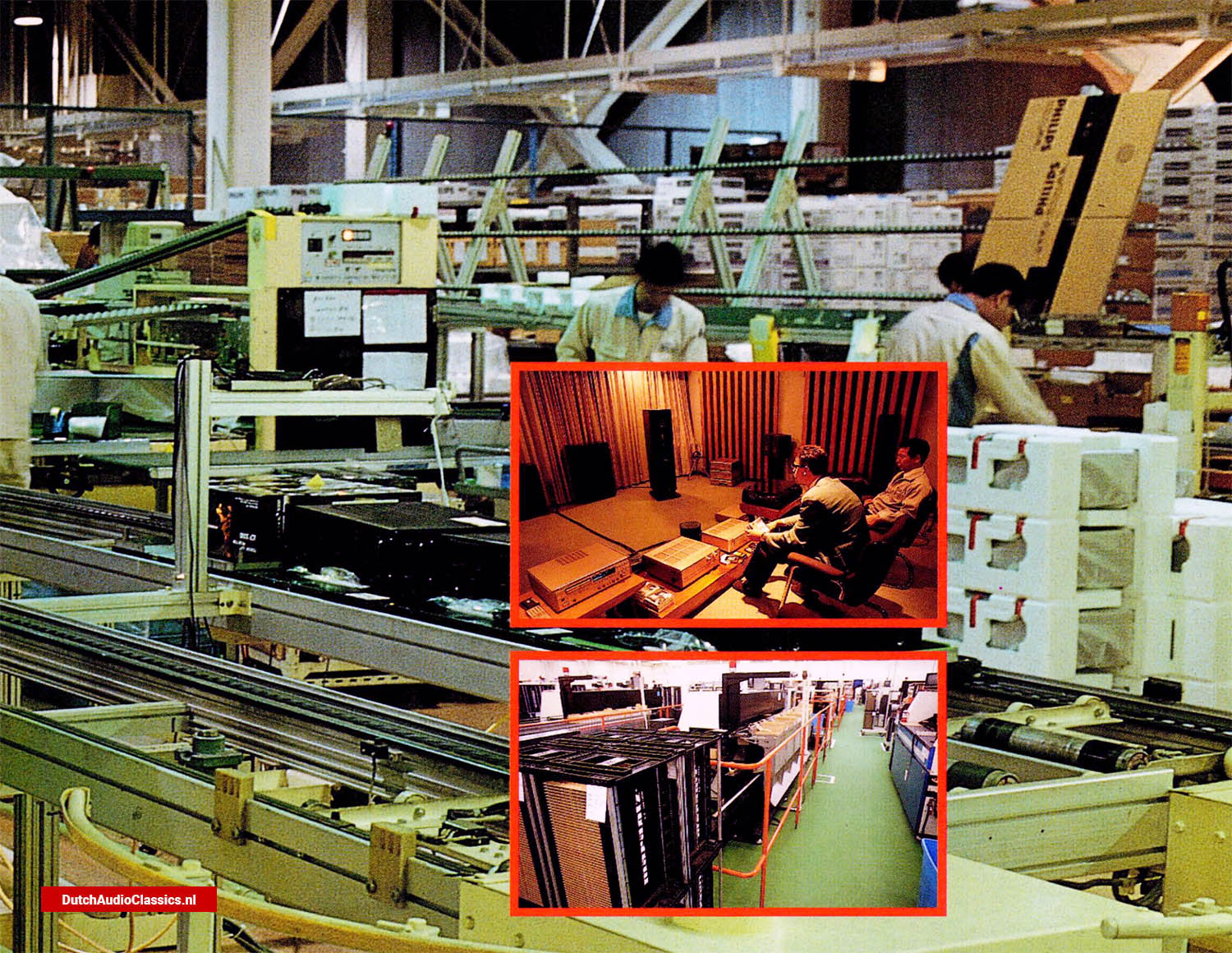
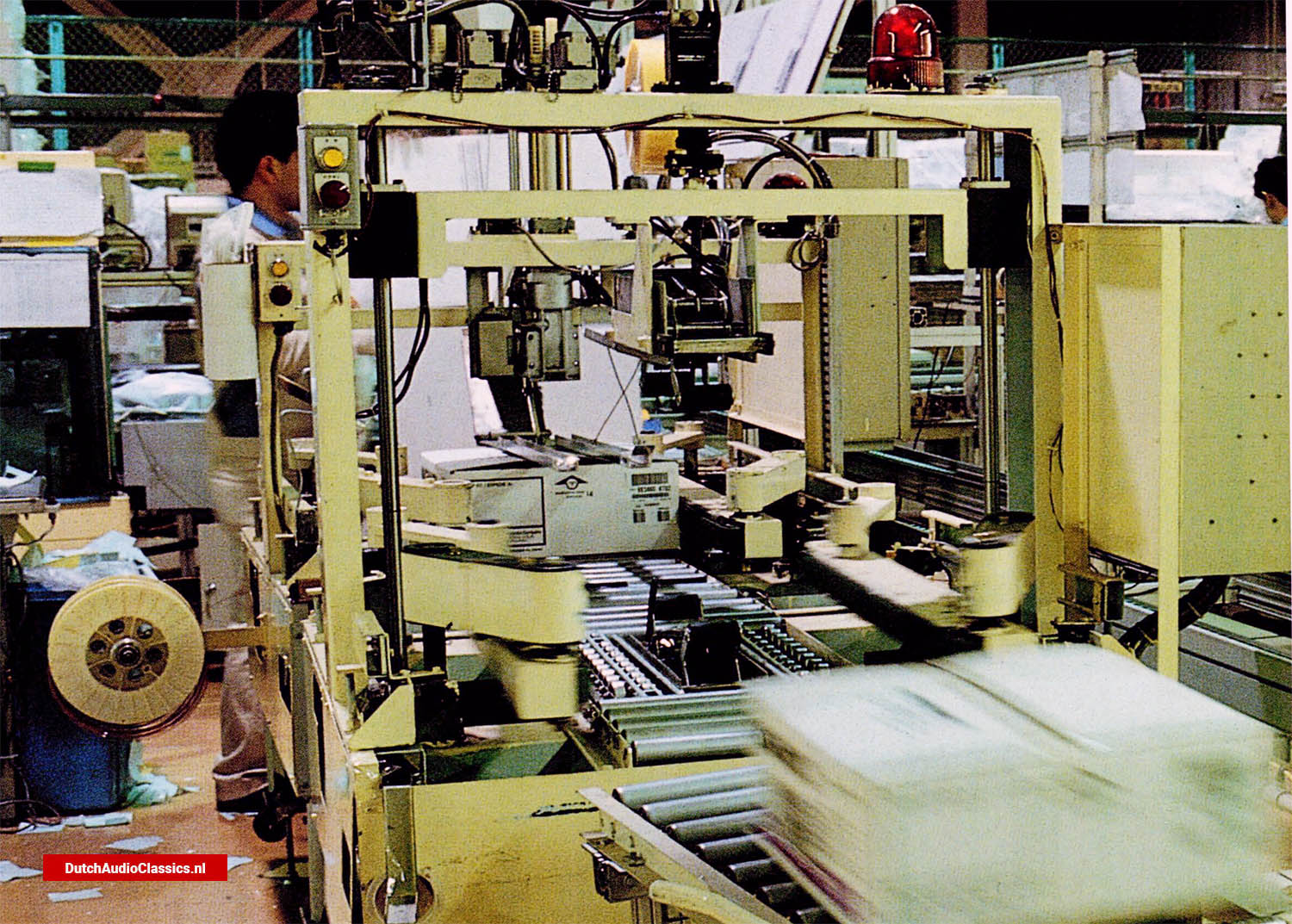 The Marantz production facility in Yokohama, Japan
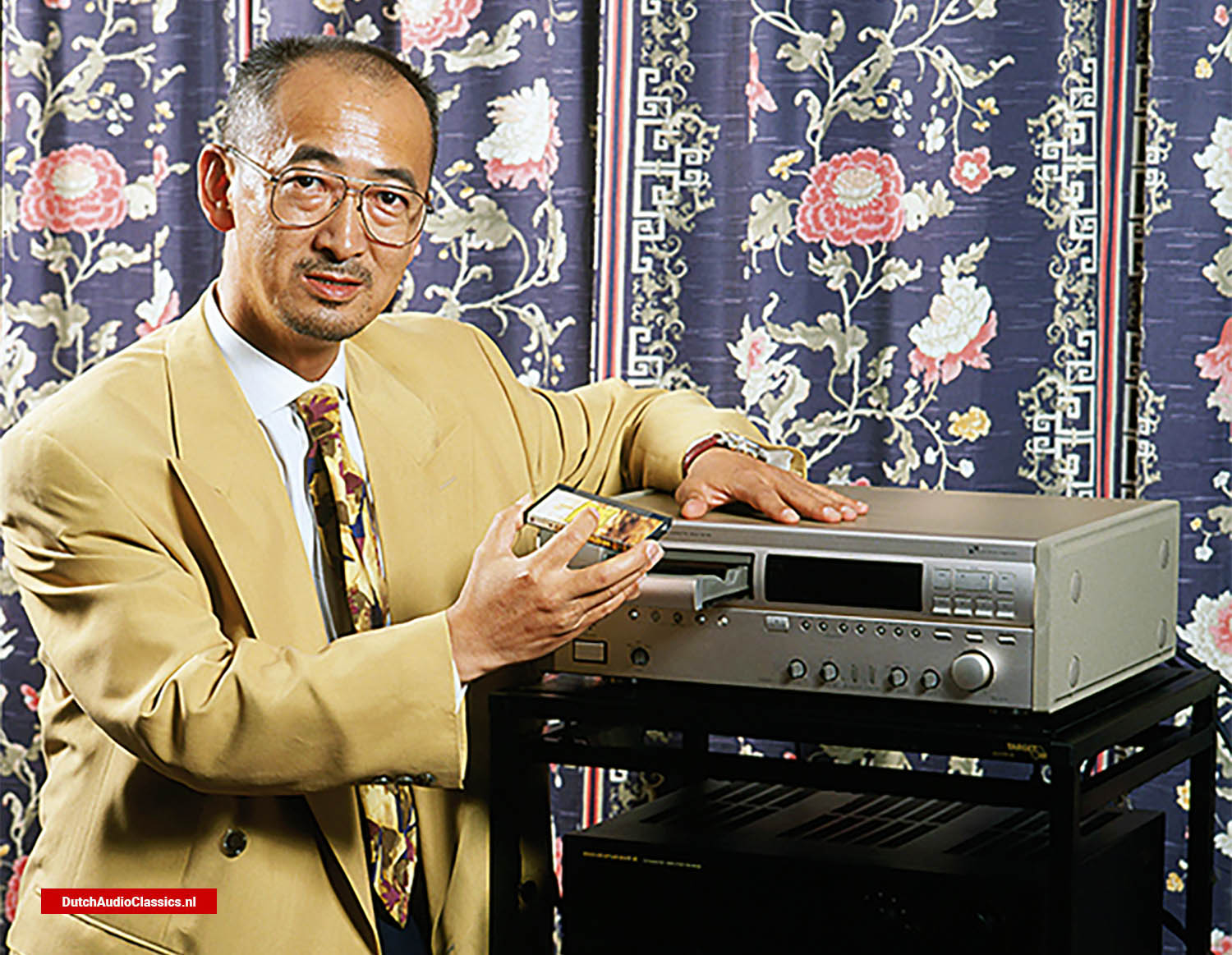 Ken Ishiwata