When Philips introduced the LHH600B in Japan in late 1992, the company had just reached an important milestone. Ten years had passed since the commercial introduction of Compact Disc, and Philips marked the occasion with its "A Decade Edition". The LHH600B was one of the models carrying that designation and entered the Japanese market at ¥280,000.
Philips LHH600B: The Refined Successor to the LHH700
September 20, 2026
The Philips LHH600B arrived in 1992 as part of Philips' A Decade Edition, marking ten years of the Compact Disc. Closely related to the LHH700 introduced a year earlier, it retained much of that player's engineering, including the CDM-4 swing-arm transport, the DAC7 Bitstream platform with two TDA1547 converters in Double Differential configuration, and the substantial mechanical construction associated with Philips' Japanese high-end CD players.
Within the Japanese LHH series, the LHH600B can be regarded as a further development of the LHH700 concept at a lower price point. This blog looks in detail at its digital architecture, copper-plated construction, mechanical isolation, power supply and revised output configuration, alongside contemporary Japanese listening impressions. It also places the LHH600B in the development towards the LHH800R, where simplified circuitry and the introduction of Non-NFB amplification marked a significant change in the design approach of Philips and Marantz Japan.
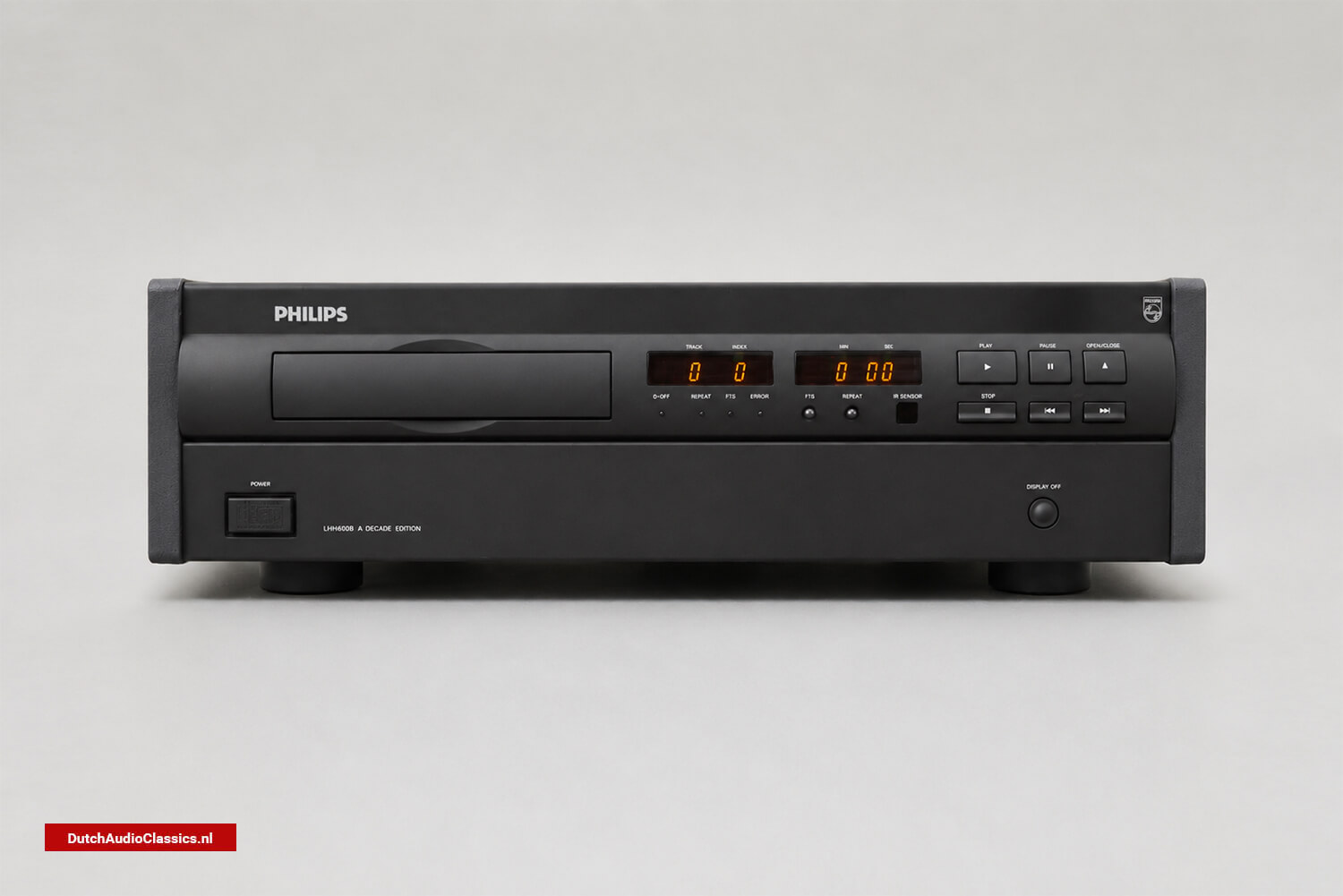
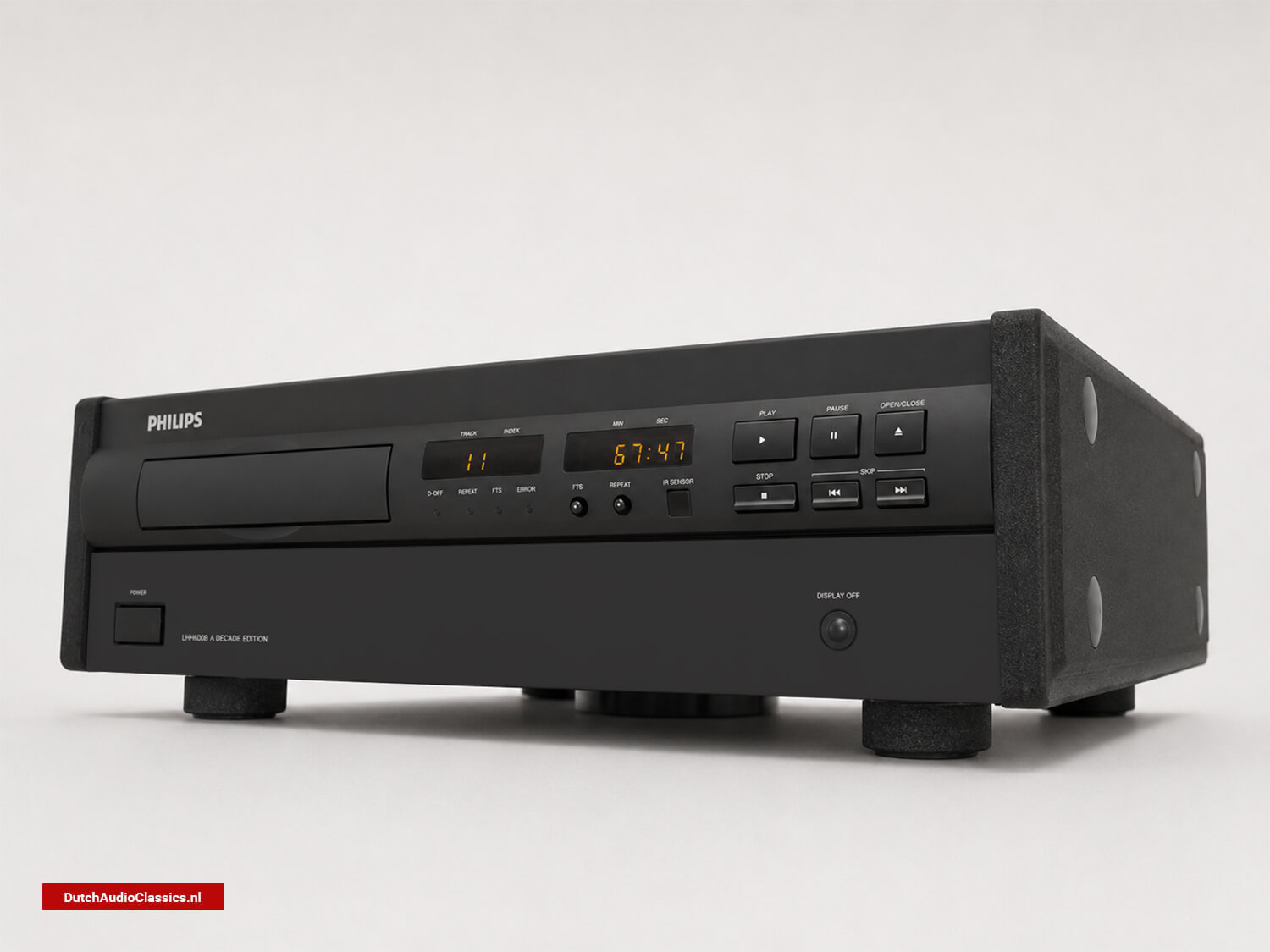
Its appearance immediately reveals its relationship with the LHH700 of 1991. The dimensions and basic cabinet construction are very similar, although the champagne finish of the LHH700 was replaced by the much more restrained "Crystal Black" finish. The price was also lower: the LHH700 had originally cost ¥330,000 in Japan, making the LHH600B exactly ¥50,000 less expensive.
The similarities extend much further than the cabinet. Philips retained the CDM-4 Mini Die-Cast mechanism and the same fundamental DAC7 architecture, consisting of an NPC SM5803AP digital filter, Philips SAA7350 noise shaper and two TDA1547 converters operating in Double Differential Mode. The substantial chassis construction, extensive shielding and carefully separated power supply arrangements also show a clear continuation of the LHH700 concept.
For that reason, I think it is too simplistic to regard the LHH600B merely as a cheaper version of the LHH700. Philips removed some expensive features, most visibly the transformer-coupled balanced outputs, but contemporary Japanese sources also indicate revisions to components and grounding. The LHH600B appears to have been a further development of the same basic design rather than simply the LHH700 with features removed.
A Decade Edition
The "A Decade Edition" designation refers to the tenth anniversary of the Compact Disc. Philips and Sony introduced the format commercially in 1982, and by 1992 CD had developed from a new digital format into the dominant source for high-quality consumer audio.
The LHH600B therefore followed two anniversary-related Philips players in quick succession. The LHH700 had appeared in 1991 as a special model commemorating Philips' centenary, while the LHH600B arrived a year later as part of the CD anniversary range.
At ¥280,000, the LHH600B remained an expensive CD player by any normal standard. The ¥50,000 reduction compared with the LHH700 represented roughly fifteen percent of the earlier model's Japanese retail price, yet Philips retained many of the components that defined the LHH700 technically.
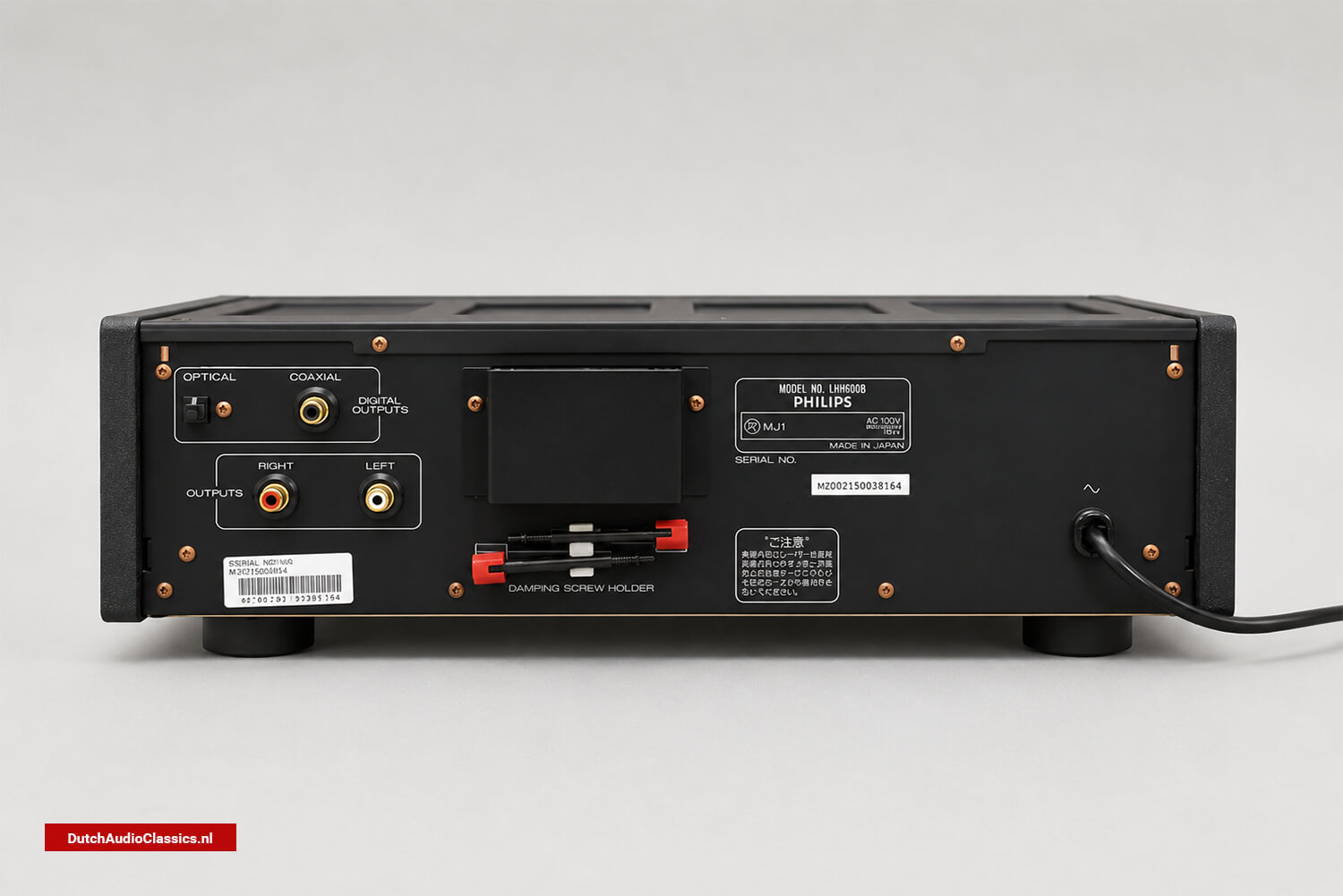
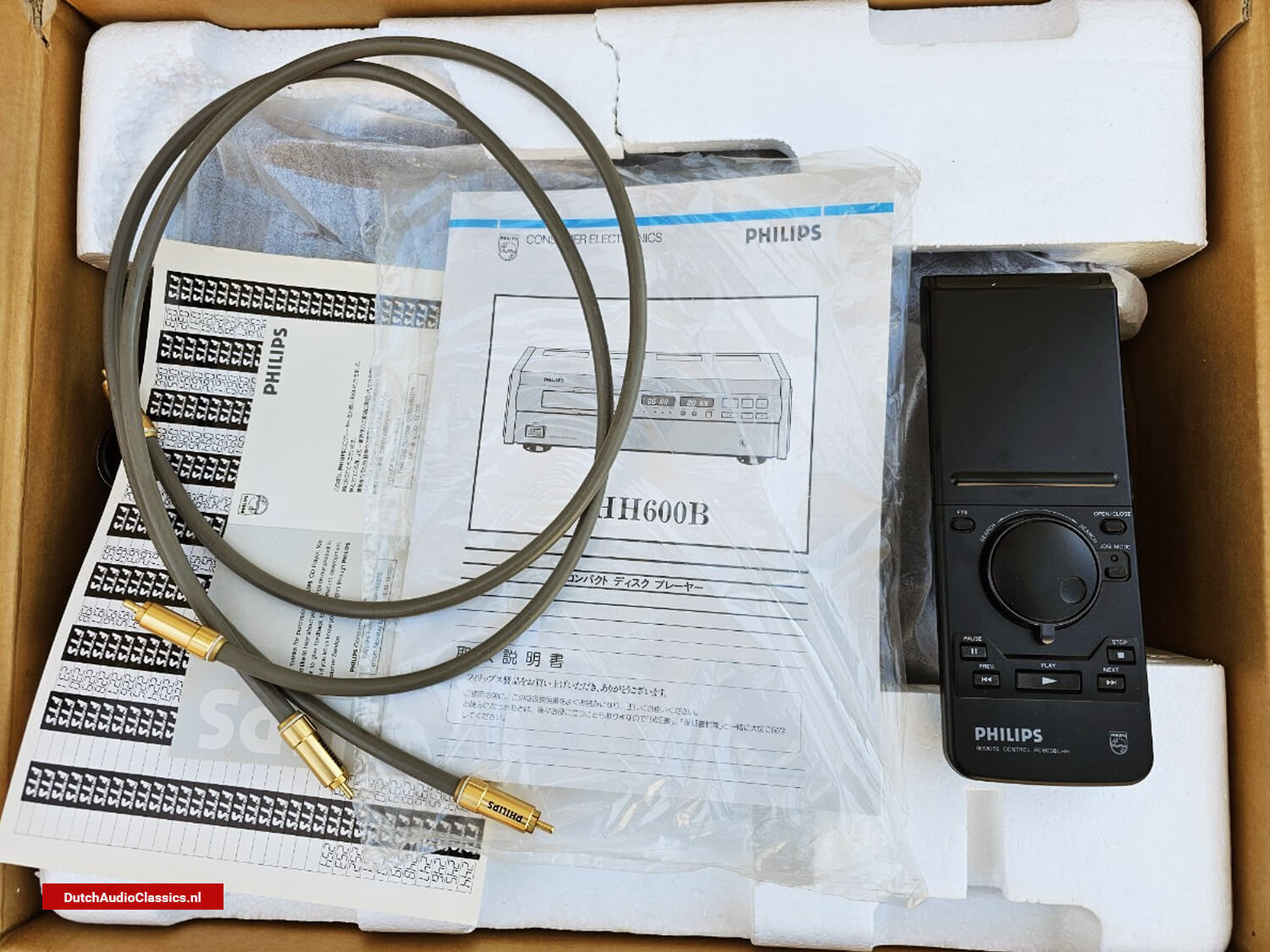
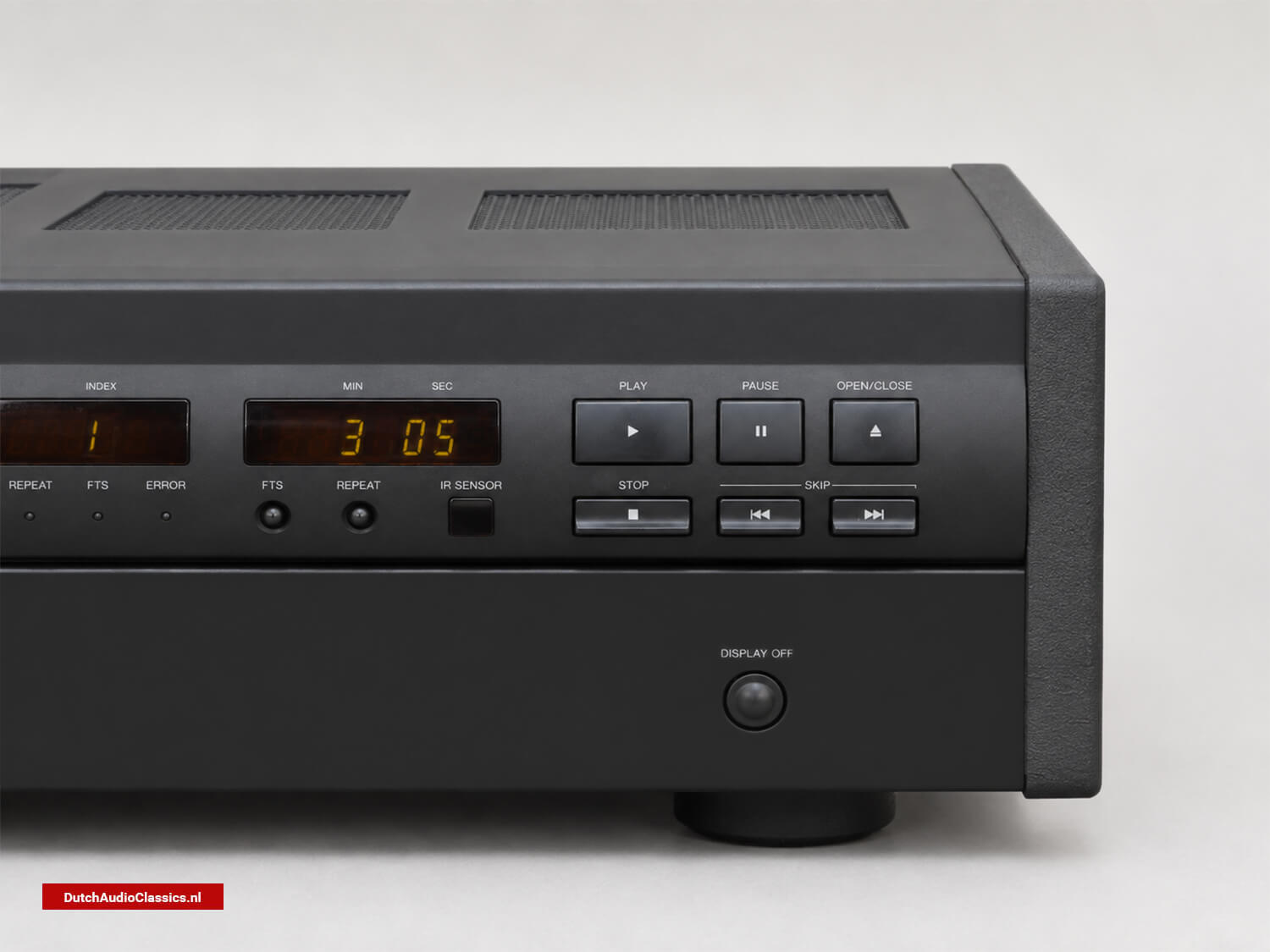
The most obvious economy can be found on the rear panel. The LHH700 offered transformer-coupled balanced XLR outputs in addition to conventional RCA outputs. The LHH600B dispensed with the XLR connections and their associated line transformers, providing a conventional 2 V RMS unbalanced analog output instead. Optical and coaxial digital outputs remained available.
The Crystal Black finish also gave the LHH600B a less ceremonial appearance than the champagne-coloured LHH700. Despite those changes, there is little about the construction of the LHH600B that suggests Philips intended it as a conventional cost-reduced CD player.
CDM-4 Mini Die-Cast mechanism
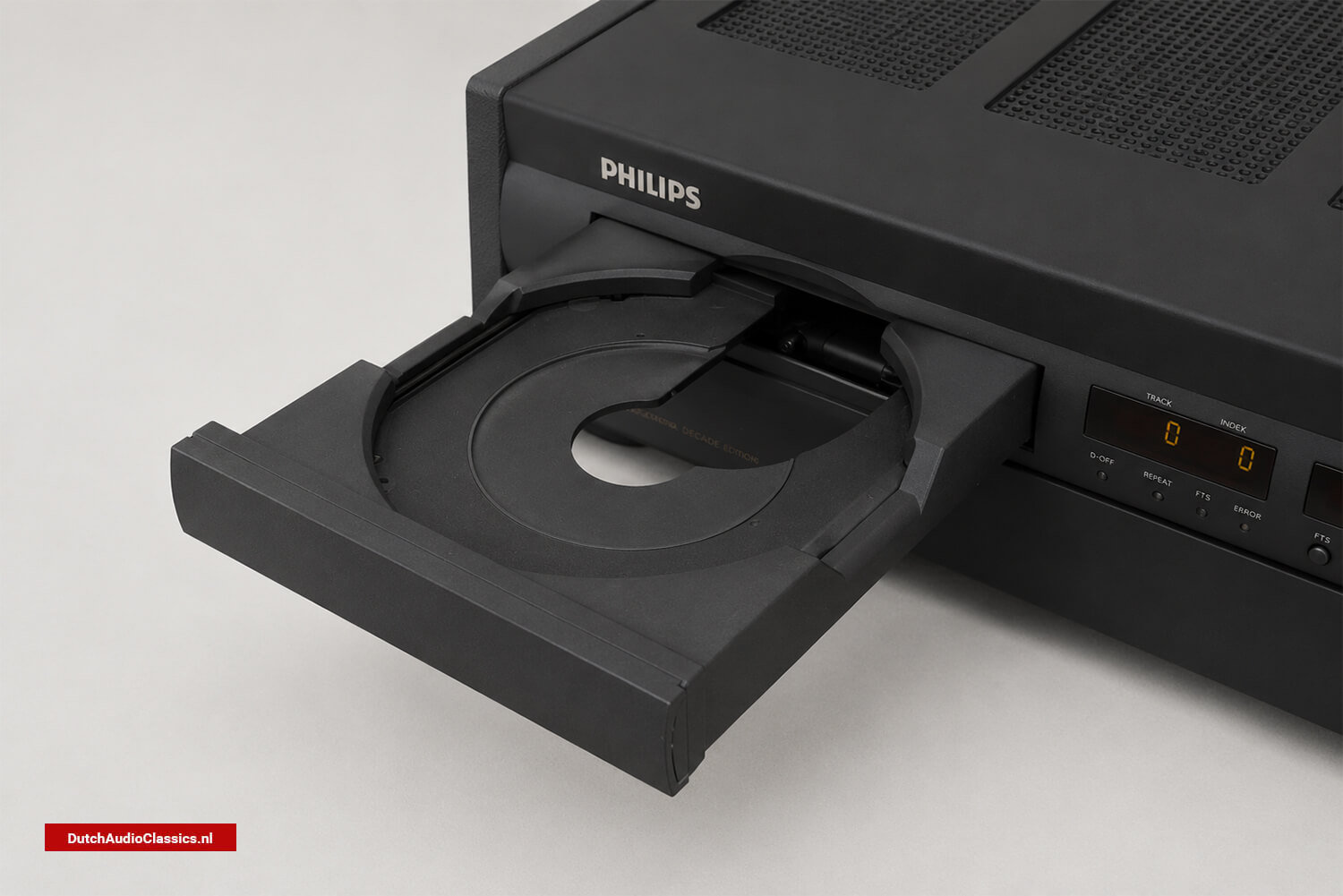
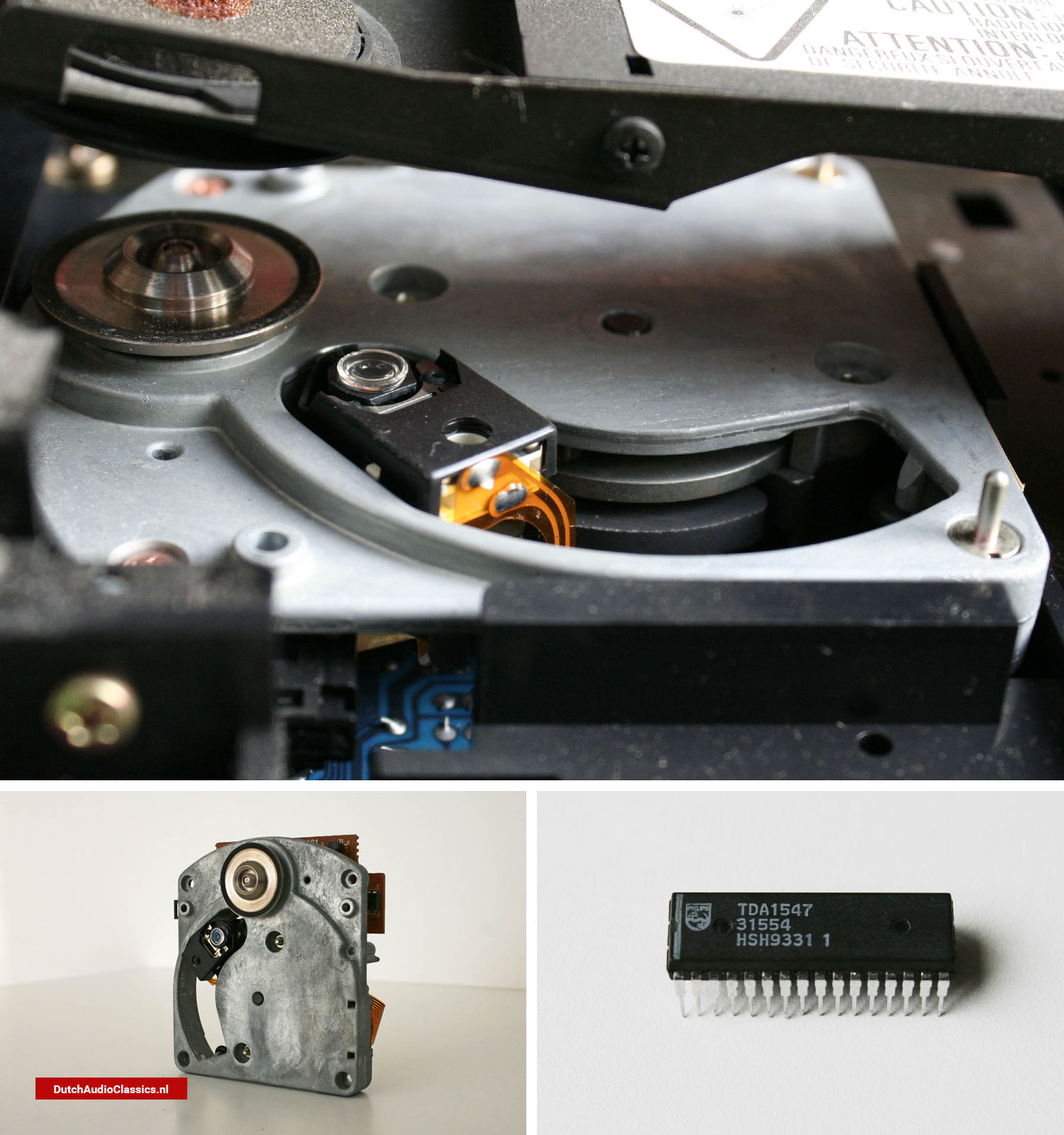
Philips retained its CDM-4 Mini Die-Cast mechanism for the LHH600B. This mechanism belongs to the familiar Philips swing-arm family, in which the optical pickup moves along an arc rather than travelling linearly across the disc.
The mechanical implementation received considerable attention. The mechanism is supported by a rigid die-cast structure and the swing arm uses a counterweight to balance the optical assembly. The same basic approach had already been used in the LHH700 and was retained despite the lower retail price of the LHH600B.
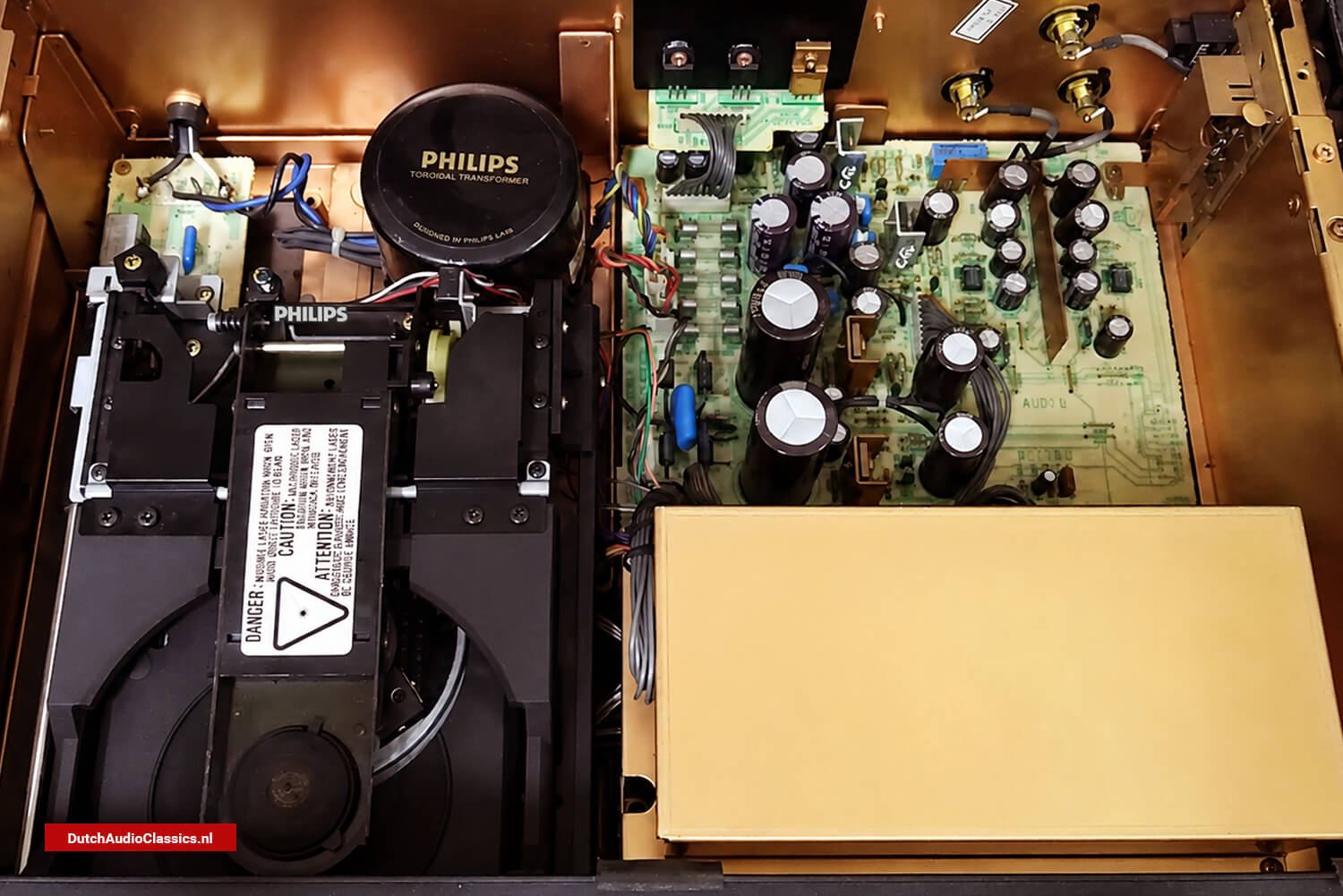
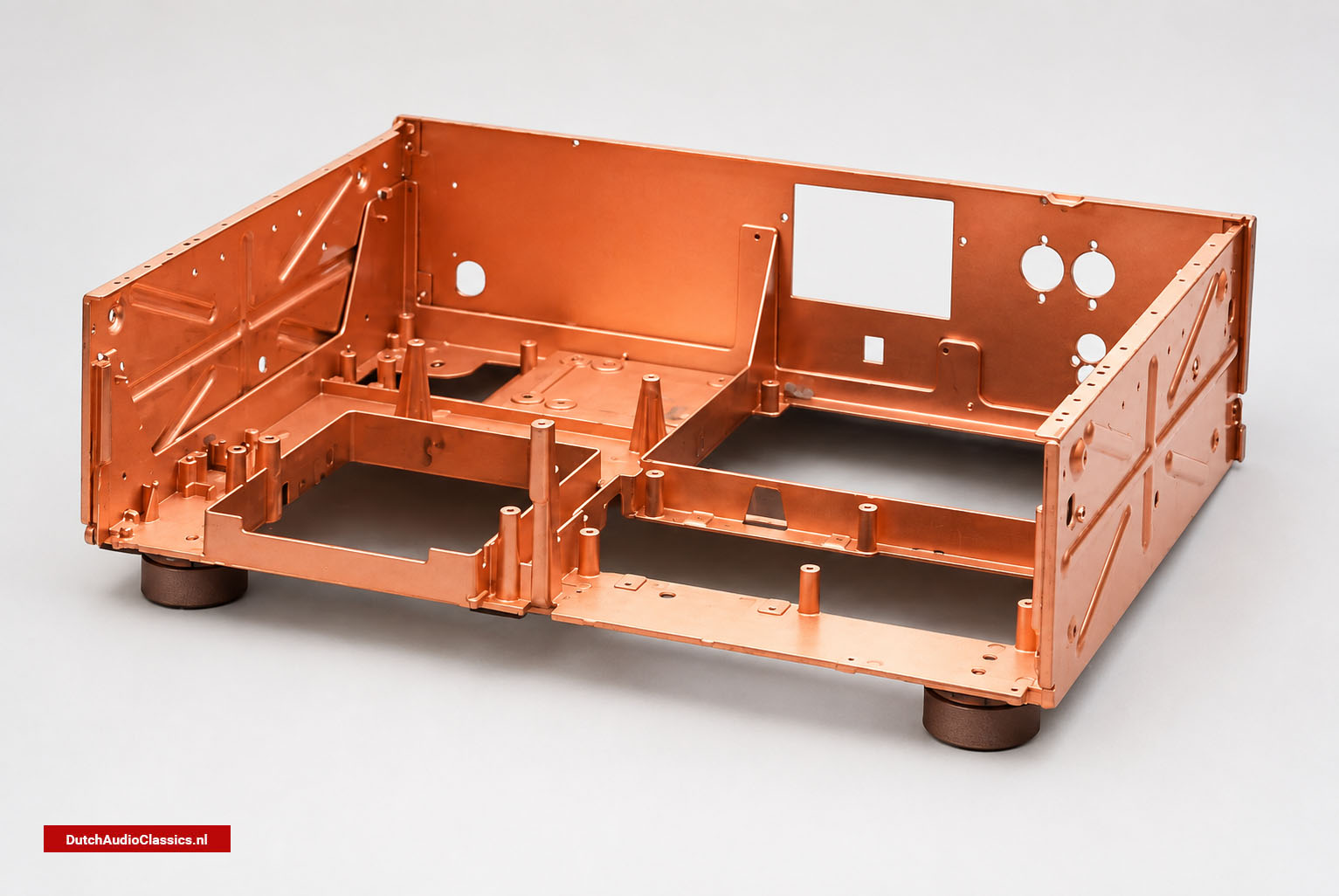
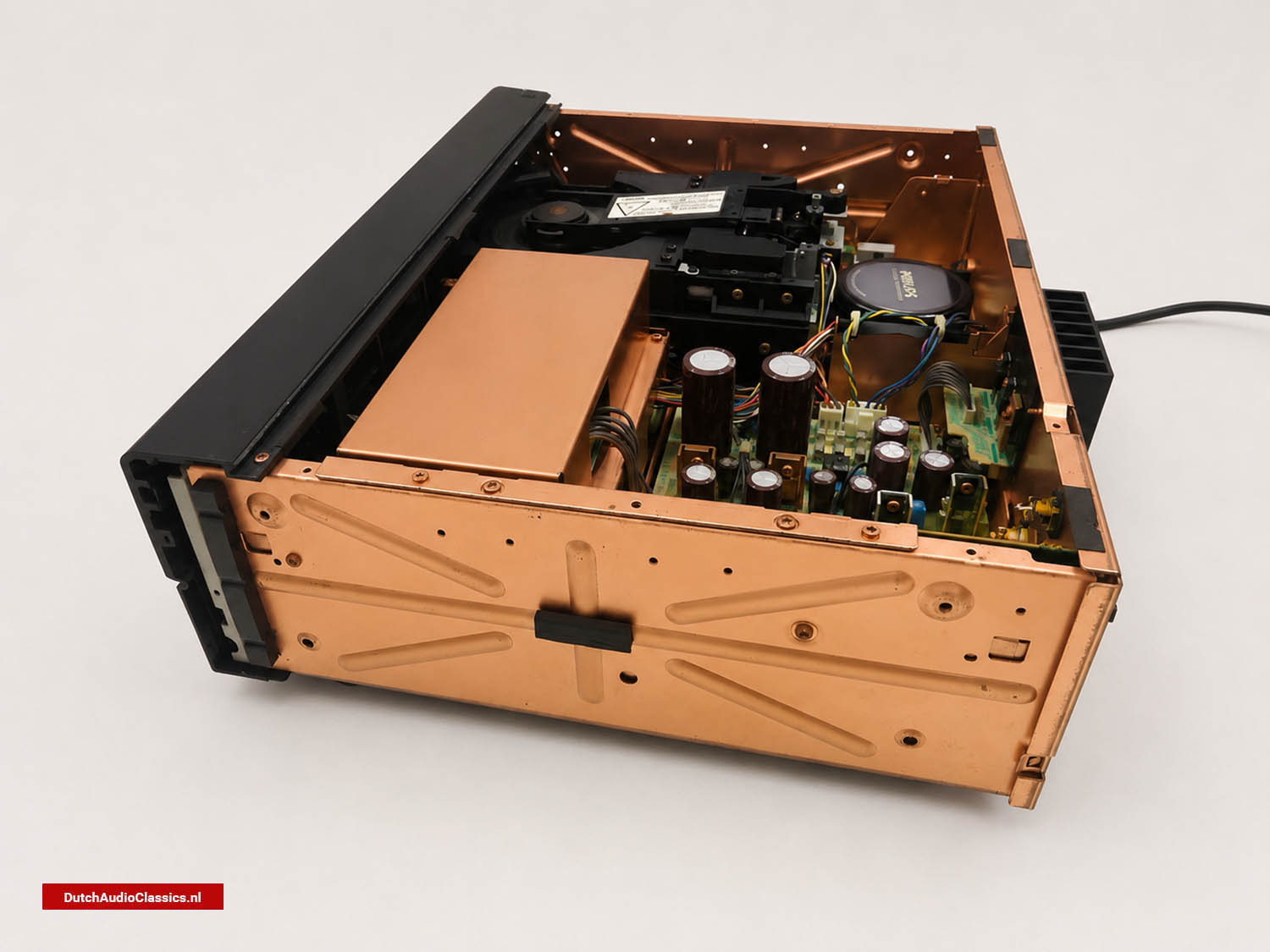
This has to be considered together with the chassis surrounding the mechanism. At 16.8 kg, the LHH600B is exceptionally heavy for a CD player. Its construction combines a substantial die-cast structure with a 3.2 mm steel bottom plate and extensive use of copper-plated metal. Heavy side sections add further mass and rigidity.
The copper plating serves an electrical purpose as well as giving the interior its distinctive appearance. Digital processing, servo electronics and D/A conversion operate together inside a relatively confined enclosure, and Philips used physical separation and shielding to reduce interaction between these sections. The digital processing circuitry and the DAC section are consequently housed in separate copper-plated shielding enclosures.
This construction is one of the strongest arguments against viewing the LHH600B as a substantially downgraded LHH700. At 16.8 kg, it is actually fractionally heavier on paper than the 16.7 kg figure published for the LHH700.
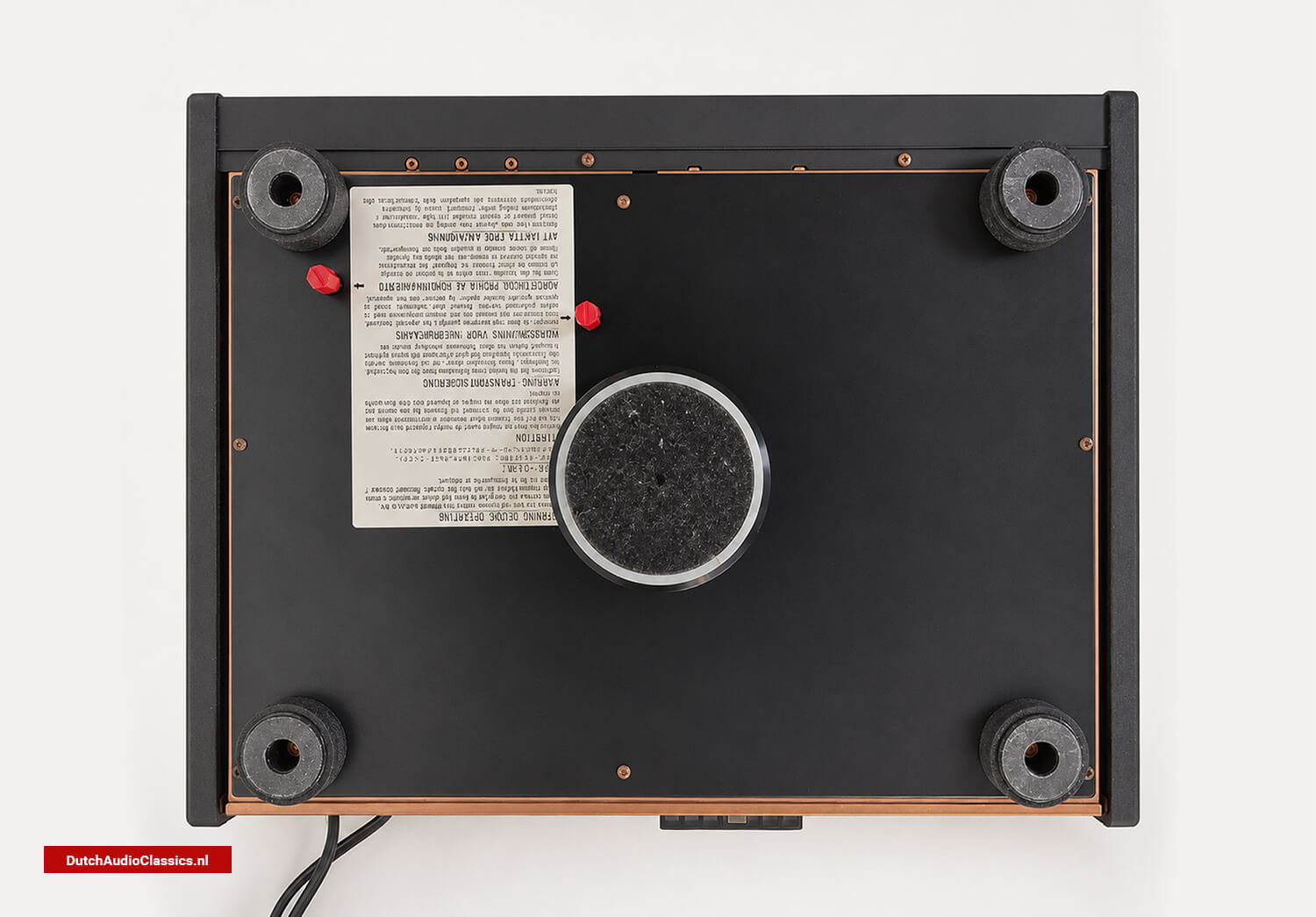
The fifth foot
An unusual construction detail can be found underneath the LHH600B. In addition to the four conventional feet, Philips fitted an additional support around the centre of the chassis.
The Japanese Philips documentation explicitly describes this as a "fifth foot" positioned at the body's centre of gravity and designed to absorb shocks. With such a large and heavy chassis, the principle is logical: the central support reduces the unsupported span between the four outer feet and provides additional support close to the centre of mass.
This detail deserves some attention because it can easily be confused with the support systems of later LHH models. The LHH800R, for example, adopted a three-point support arrangement. The documentation available for the LHH600B specifically describes five supports, so the two systems should not be conflated.
The combination of the fifth foot, rigid mechanism support, heavy bottom plate and substantial chassis shows how seriously mechanical behaviour was treated in this generation of Philips high-end CD players.
Double Differential DAC7
The digital conversion architecture is arguably the most important technical connection between the LHH600B and LHH700.
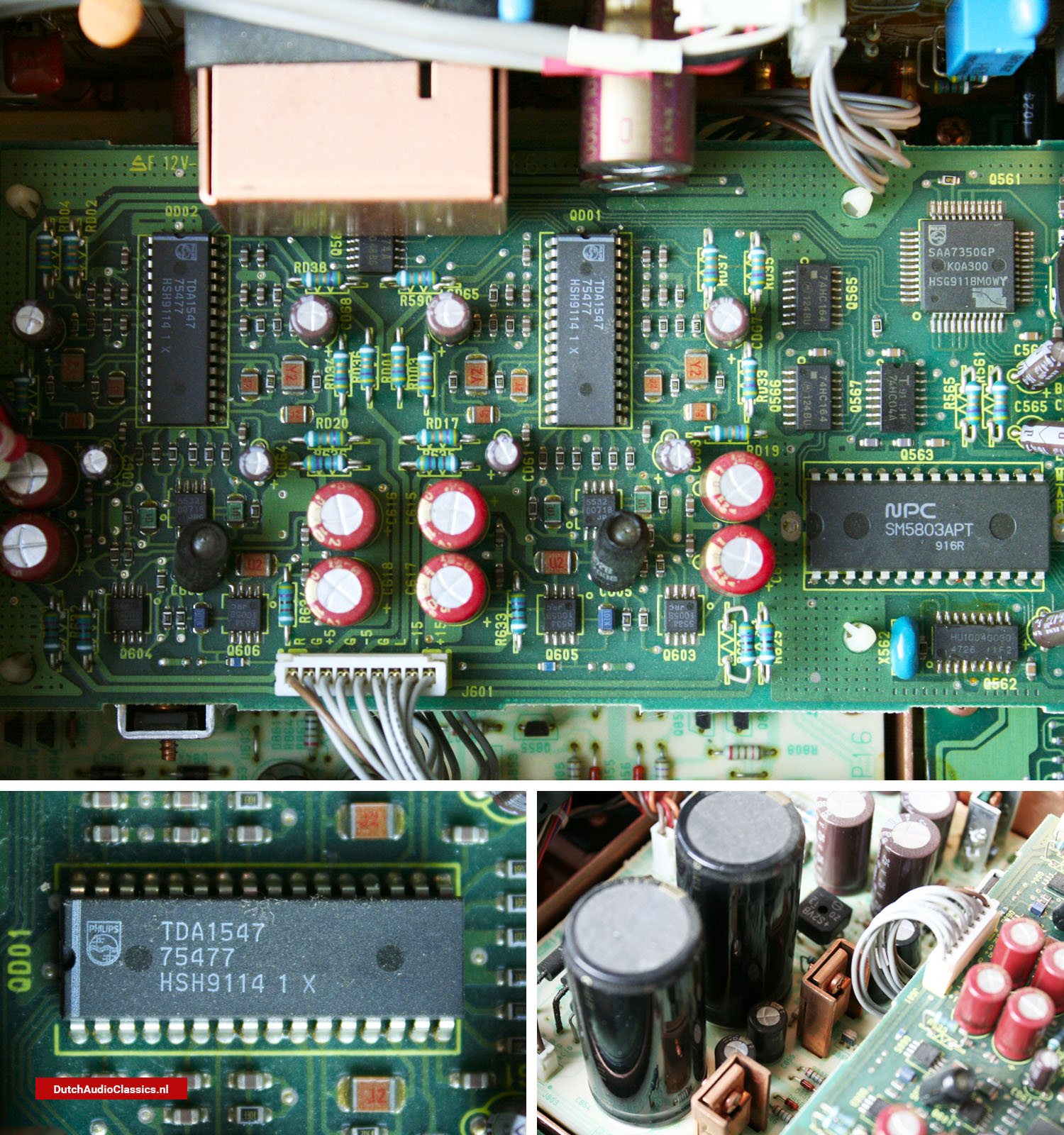
The signal passes through three principal digital stages before reaching the analog circuitry:
NPC SM5803AP → Philips SAA7350 → 2 × Philips TDA1547
The NPC SM5803AP digital filter performs 8-times oversampling, taking the 44.1 kHz CD signal to 352.8 kHz while processing it at 20-bit precision. The signal subsequently passes to the Philips SAA7350, which performs the noise shaping used by Philips' Bitstream conversion system.
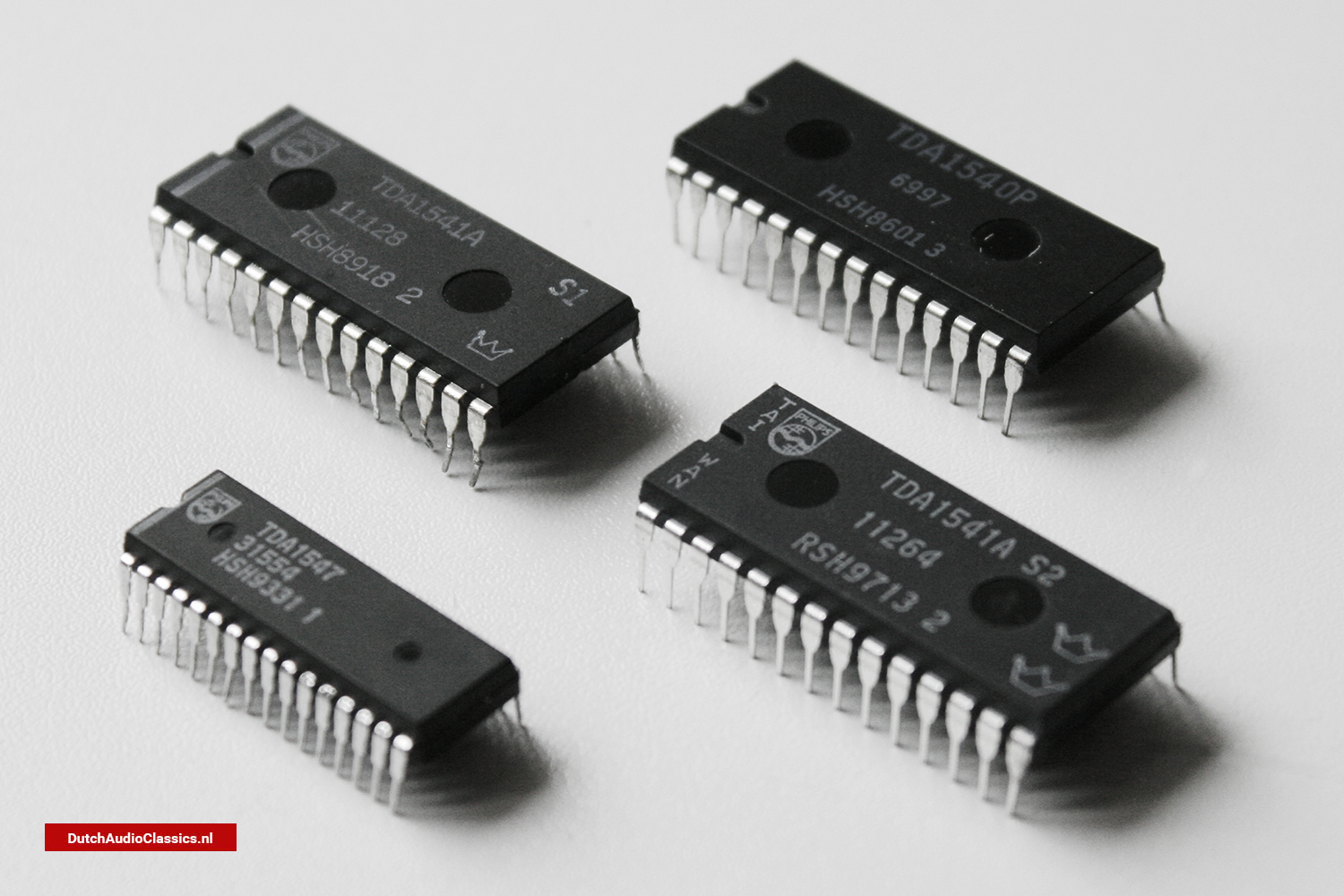
The resulting high-frequency 1-bit data is then converted by two TDA1547 DAC7 devices.
The number of TDA1547s is important because descriptions of Philips' Double Differential system can easily create confusion. The LHH600B contains two physical TDA1547 ICs in total, with one complete chip dedicated to each audio channel.
Each TDA1547 internally contains two conversion sections. A Data Polarity Converter generates normal and inverted versions of the signal for each channel. One internal DAC section processes the normal-polarity signal and the other processes its inverted counterpart. Their analog outputs can subsequently be combined differentially.
This is what Philips referred to as Double Differential Mode.
The principle allows common components in the two signal paths to be reduced when the signals are recombined and can suppress certain even-order distortion products. Dedicating a complete TDA1547 to each channel also provides greater physical separation between the left and right conversion paths.
It is an elaborate implementation of DAC7, and essentially the same conversion architecture was used in the LHH700.
Power supply and internal separation
The LHH600B uses a large toroidal power transformer together with substantial filtering capacitors. The DAC7 section also receives its own dedicated power supply arrangement, separating the sensitive conversion circuitry from other parts of the player.
That separation is relevant in a CD player because the electrical environment is far from quiet. The transport motors and servo system continually vary their demands on the supply, while digital processing circuitry switches at high frequencies. The D/A conversion and analog output sections operate in the same enclosure but benefit from being electrically isolated from these sources as much as practically possible.
The physical construction follows the same principle. Shielding boxes separate important circuit sections, while the copper-plated chassis provides additional screening.
Taken together, the power supply, grounding, shielding and physical layout show that Philips treated the implementation surrounding the DAC chips as an important part of the conversion system. Looking only at the presence of two TDA1547s therefore gives an incomplete picture of the LHH600B design.
The analog section
The analog circuitry places the LHH600B firmly within the same design generation as the LHH700. Following D/A conversion, the differential signals have to be combined and the high-frequency components produced by the Bitstream conversion process have to be filtered before the audio signal reaches the RCA outputs.
The available information indicates a conventional active analog architecture using negative feedback. This is an important distinction from the later LHH800R and LHH900R, which moved towards specially developed discrete Non-NFB circuits.
Some descriptions of the DAC7 architecture specify the exact filter order, cutoff frequency and amplifier configuration. I would be cautious about assigning all of those details specifically to the LHH600B without a complete model-specific circuit diagram. The documentation does establish the overall architecture, but it does not support every circuit-level detail sometimes associated with generic Philips DAC7 implementations.
What can be established clearly is that the LHH600B did without the transformer-coupled balanced output stage of the LHH700. Its analog signal leaves the player through conventional RCA connections at a specified output level of 2 V RMS.
Published specifications
Philips published impressive specifications for the LHH600B, and several of them are identical to those given for the LHH700.
Specification
Philips LHH600B
Introduction: 1992
Japanese price: ¥280,000
CD mechanism: CDM-4
Digital filter: NPC SM5803AP
Oversampling: 8×
Noise shaper: Philips SAA7350
D/A converters: 2 x Philips TDA1547
DAC configuration: Double Differential
Frequency response: 20 Hz–20 kHz ±0.2 dB
Signal-to-noise ratio: 108 dB
Dynamic range: 96 dB
Channel separation: 100 dB at 1 kHz
THD: 0.00135% at 1 kHz
Analog output: RCA, 2 V RMS
Digital outputs: Coaxial and optical
Weight: 16.8 kg
Finish: Crystal Black
Listening impressions from Japan
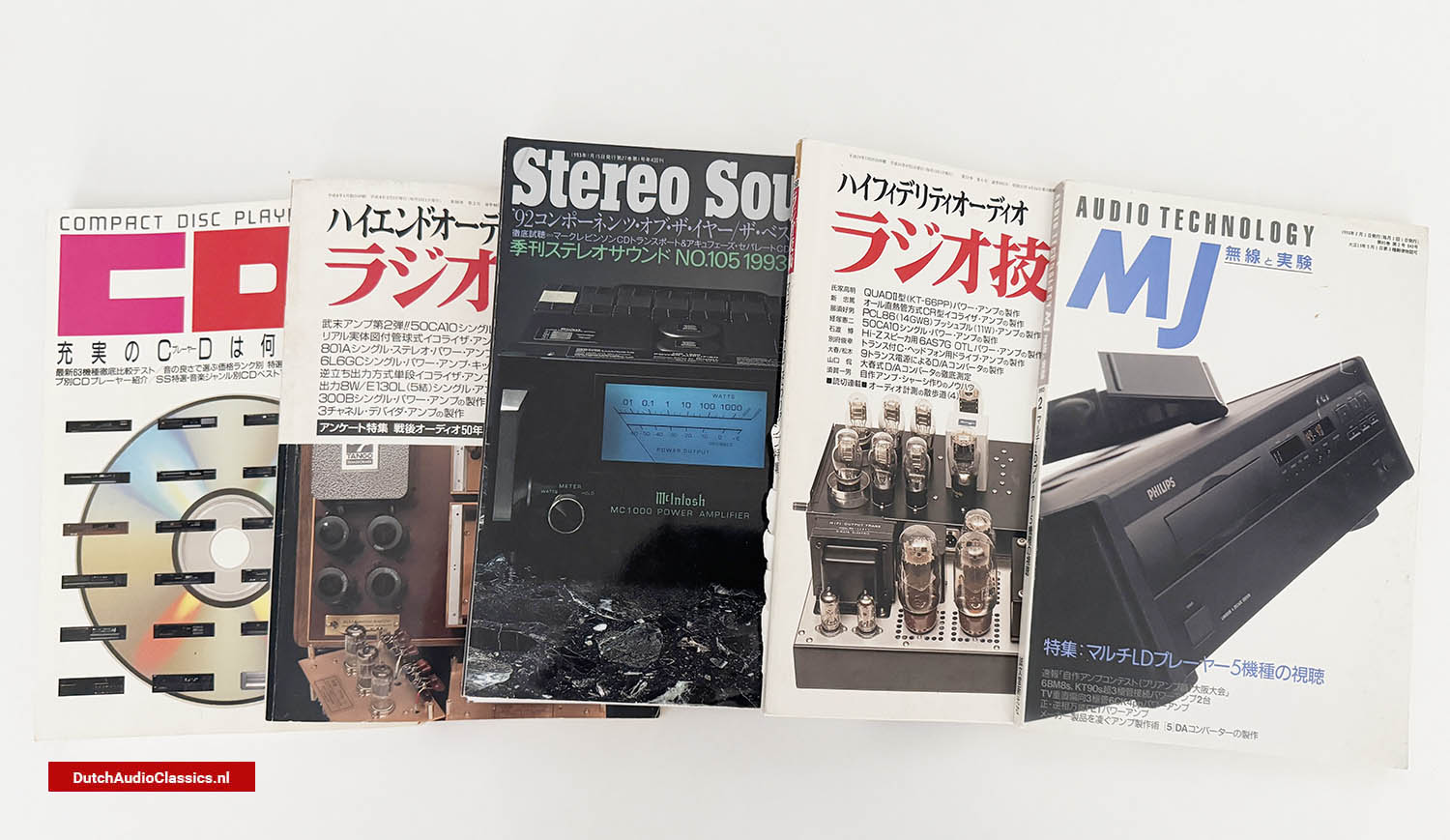
One of the more valuable sources for understanding the LHH600B is a contemporary Japanese listening assessment by Stereo Sound reviewer Isao Yanagisawa. His comments are particularly useful because he was familiar with the preceding Philips players and could therefore place the LHH600B in that context.
Yanagisawa heard greater definition in the lower registers. Where earlier Philips players could present the mid and low frequencies with considerable richness but somewhat less precise outlines, the LHH600B produced firmer contours and more clearly defined sound images.
At the same time, he did not describe the LHH600B as becoming hard or clinical. His assessment refers to a smooth and flexible quality, together with a sense of gloss and refinement.
His comments about spatial information are especially interesting. He noted the reproduction of concert-hall atmosphere and the way reverberation and decay around instruments such as timpani, bass drum and cymbals were preserved. Piano reproduction and the physical impression of instruments also contributed to the sense of realism he heard.
Perhaps the most interesting part of the review is the comparison with the LHH700. Yanagisawa considered the LHH600B capable of surpassing its more expensive predecessor in certain aspects of acoustic realism.
I would not interpret that observation as evidence that the LHH600B was categorically the better player. Listening reviews are inherently subjective, and the two machines also differ in their output arrangements. It does, however, provide useful contemporary evidence that the LHH600B was not perceived simply as a sonically compromised version of the LHH700.
The reported revisions to components and grounding offer a plausible technical context for the differences Yanagisawa heard, although it would go too far to establish a direct cause-and-effect relationship from the available documentation.
LHH600B versus LHH700
Comparing the two models makes Philips' approach quite clear.
The LHH700 and LHH600B share the CDM-4 mechanism, SM5803AP digital filter, SAA7350 noise shaper and two TDA1547 converters in Double Differential configuration. Both employ extremely substantial mechanical construction, copper shielding and extensive attention to their power supplies.
The LHH700 distinguishes itself through its centenary presentation, champagne finish and transformer-coupled balanced XLR outputs. Its Japanese retail price of ¥330,000 was ¥50,000 above the LHH600B.
The LHH600B uses the darker Crystal Black finish and provides RCA analog output without the LHH700's balanced transformers. At ¥280,000, the reduction amounted to approximately fifteen percent.
In my view, the most interesting aspect of this comparison is how little Philips appears to have compromised the central digital architecture. Removing the balanced output transformers is a meaningful simplification, but it does not change the CD mechanism, digital filter, noise shaper or Double Differential DAC7 implementation.
The contemporary listening report makes the comparison even more interesting because the revisions made for the LHH600B apparently resulted in audible differences rather than simply reproducing the character of the LHH700 at a lower price.
Philips LHH600B cdplayer
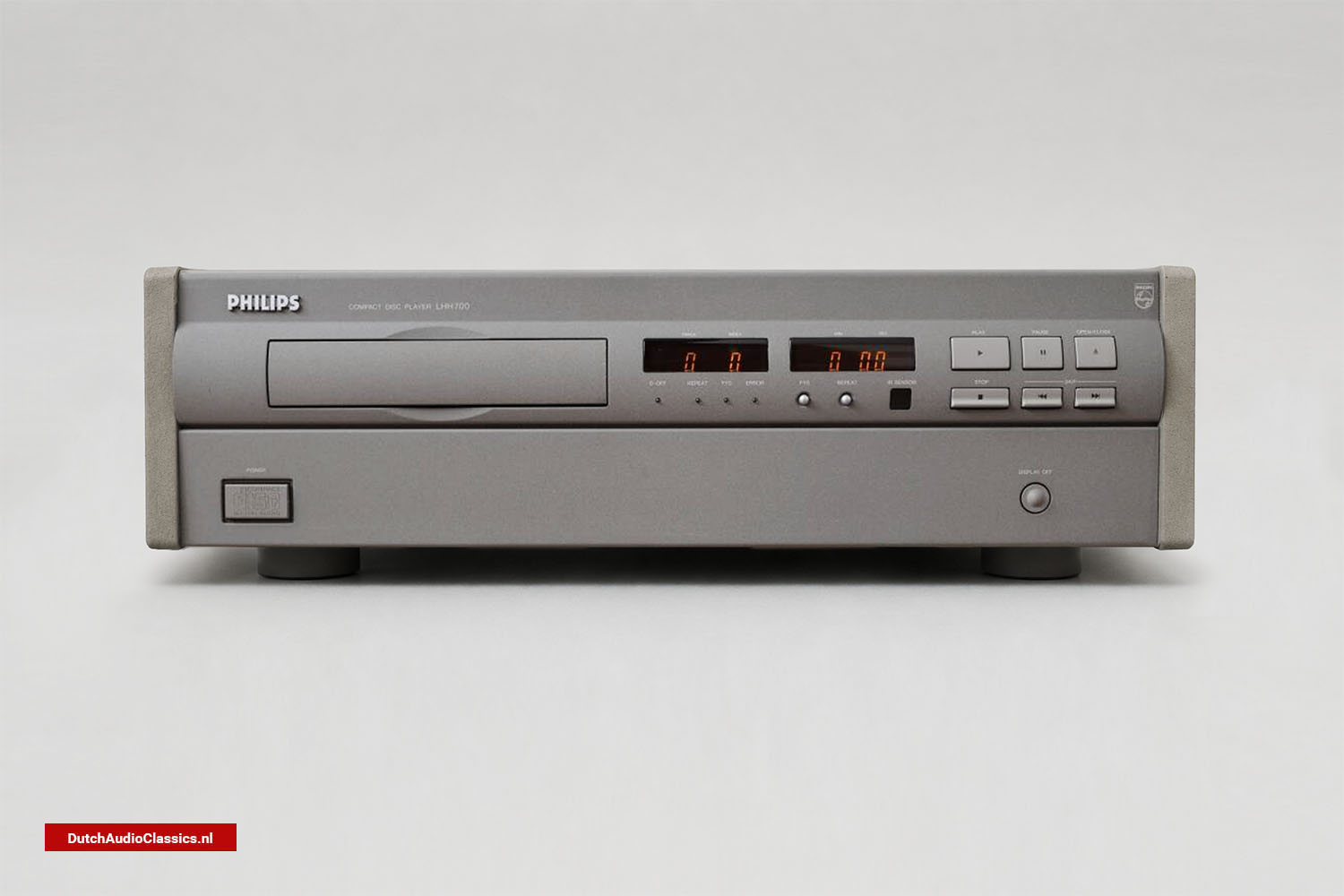 Philips LHH700 cdplayer
A change in design philosophy
The LHH600B also occupies an interesting position in the development of Philips and Marantz Japan CD players. This becomes particularly clear from comments made by engineer Tetsu Suzuki during the development of the later LHH800R.
Suzuki explicitly used the LHH700 and LHH600B as reference points when explaining the new machine. Compared with those players, the LHH800R had been simplified and the number of amplifier stages significantly reduced. Its development themes included simplifying the circuits, concentrating on the intrinsic performance of individual stages and moving away from what the engineers regarded as excessive negative feedback.
That makes the LHH600B useful for understanding the transition. Its Double Differential DAC7 architecture represents a highly developed version of the earlier approach, in which excellent measured performance was pursued through differential conversion, multiple amplification stages, carefully separated power supplies and extensive shielding.
The LHH800R retained DAC7 but reconsidered some of the circuitry around it. Double Differential conversion gave way to a simpler Single Differential arrangement, while conventional amplifier stages were replaced by specially developed discrete Non-NFB circuits.
Suzuki also noted the sensitivity of the TDA1547 to grounding layout and acknowledged the trade-offs associated with increasingly elaborate differential circuitry. His comments do not mean that the LHH600B directly caused the development of the LHH800R. They do establish that the LHH700 and LHH600B were explicitly considered when the engineering team decided to simplify the next generation.
The subsequent LHH900R took this philosophy considerably further. Hideki Kato later described how its designers even avoided the conventional internal I/V arrangement of the TDA1547 and pursued a more radical Non-NFB signal path.
The position of the LHH600B today
Looking at the LHH600B in isolation can make it seem like an unusual derivative of the better-known LHH700. Looking at the technical development of the LHH series gives it a much clearer identity.
It retained almost all of the elements that made the LHH700 technically interesting: the CDM-4 swing-arm mechanism, SM5803AP filtering, SAA7350 noise shaping, two TDA1547 converters in Double Differential Mode, extensive copper shielding, a substantial power supply and an exceptionally heavy chassis. Philips reduced the Japanese retail price from ¥330,000 to ¥280,000 and omitted the transformer-coupled balanced outputs, while contemporary sources also point to revisions in components and grounding.
The Japanese listening assessment is an important addition to the technical picture. Yanagisawa heard greater definition and particularly convincing spatial reproduction, and even preferred aspects of the LHH600B to the LHH700. That gives the player more significance than its position below the earlier flagship might initially suggest.
For me, however, its place in the development of the LHH series is what makes the LHH600B particularly interesting. It represents a mature implementation of the elaborate Double Differential DAC7 philosophy, immediately before Philips and Marantz Japan began simplifying that architecture for the LHH800R.
The LHH600B therefore deserves to be viewed as a distinct model within the Japanese LHH series rather than simply as the black, less expensive version of the LHH700. Its combination of established LHH700 technology, detailed revisions and its position immediately before the move towards Non-NFB makes it one of the more revealing Philips CD players of the early 1990s.
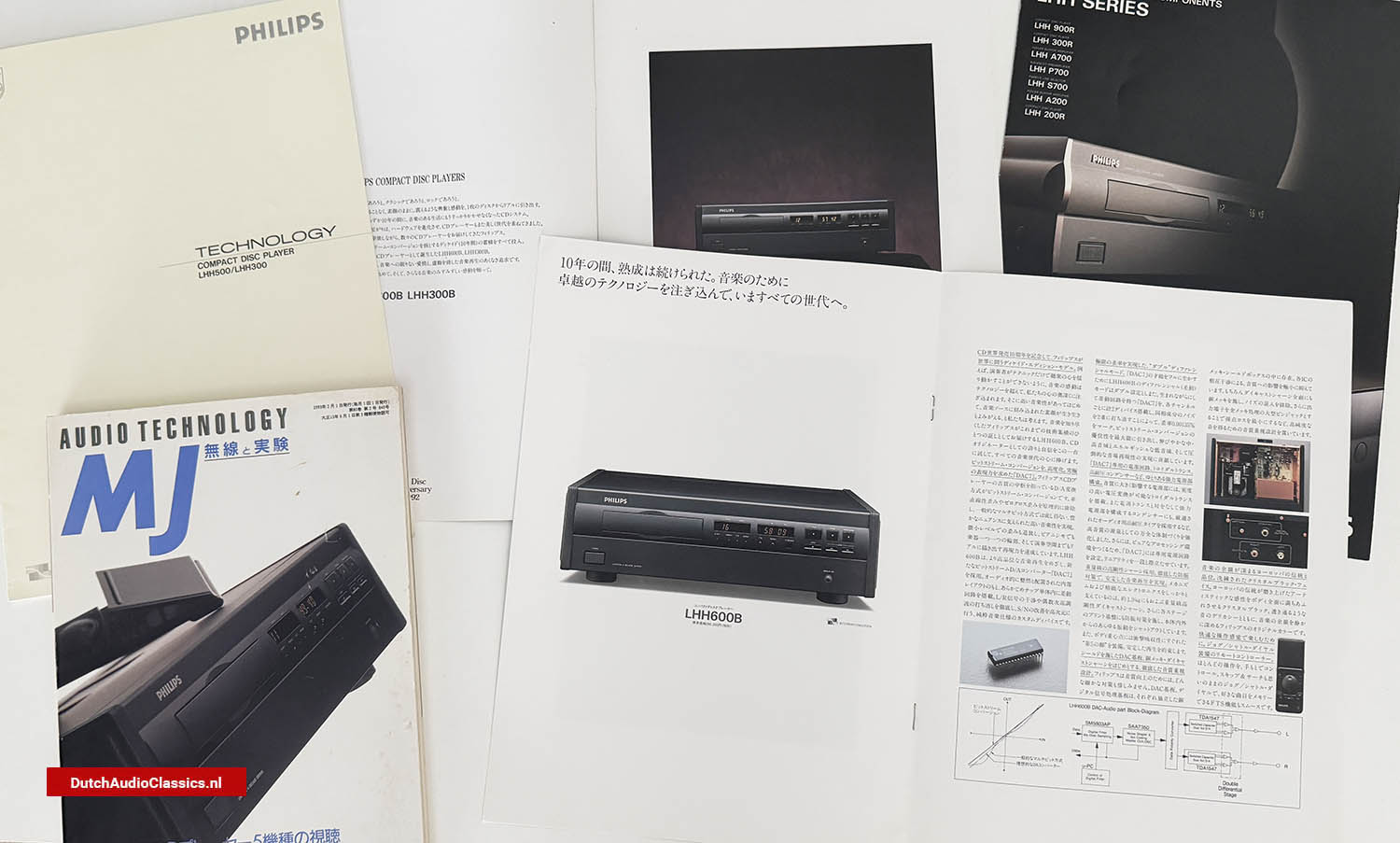
Introduced in 1992 as part of Philips’ A Decade Edition, the LHH600B followed closely in the footsteps of the LHH700 while taking a somewhat different position within the Japanese LHH range. It retained much of the earlier player’s high-end engineering, including the CDM-4 swing-arm transport and the elaborate Double Differential DAC7 architecture with two TDA1547 converters, but omitted the transformer-coupled balanced outputs and carried a lower price of ¥280,000.
The LHH600B is particularly interesting when viewed as one of the final developments of this design approach. Its substantial mechanical construction, extensive shielding and sophisticated digital architecture reflect the engineering philosophy established with the LHH700, while revisions to components and grounding show that the design continued to evolve. Soon afterwards, Philips and Marantz Japan moved towards the simpler DAC configurations, shorter signal paths and Non-NFB circuitry of the LHH800R and LHH900R. This places the LHH600B at an interesting point in the development of Philips’ high-end CD players, combining a mature implementation of Double Differential DAC7 with refinements made just before a significant change in design philosophy.