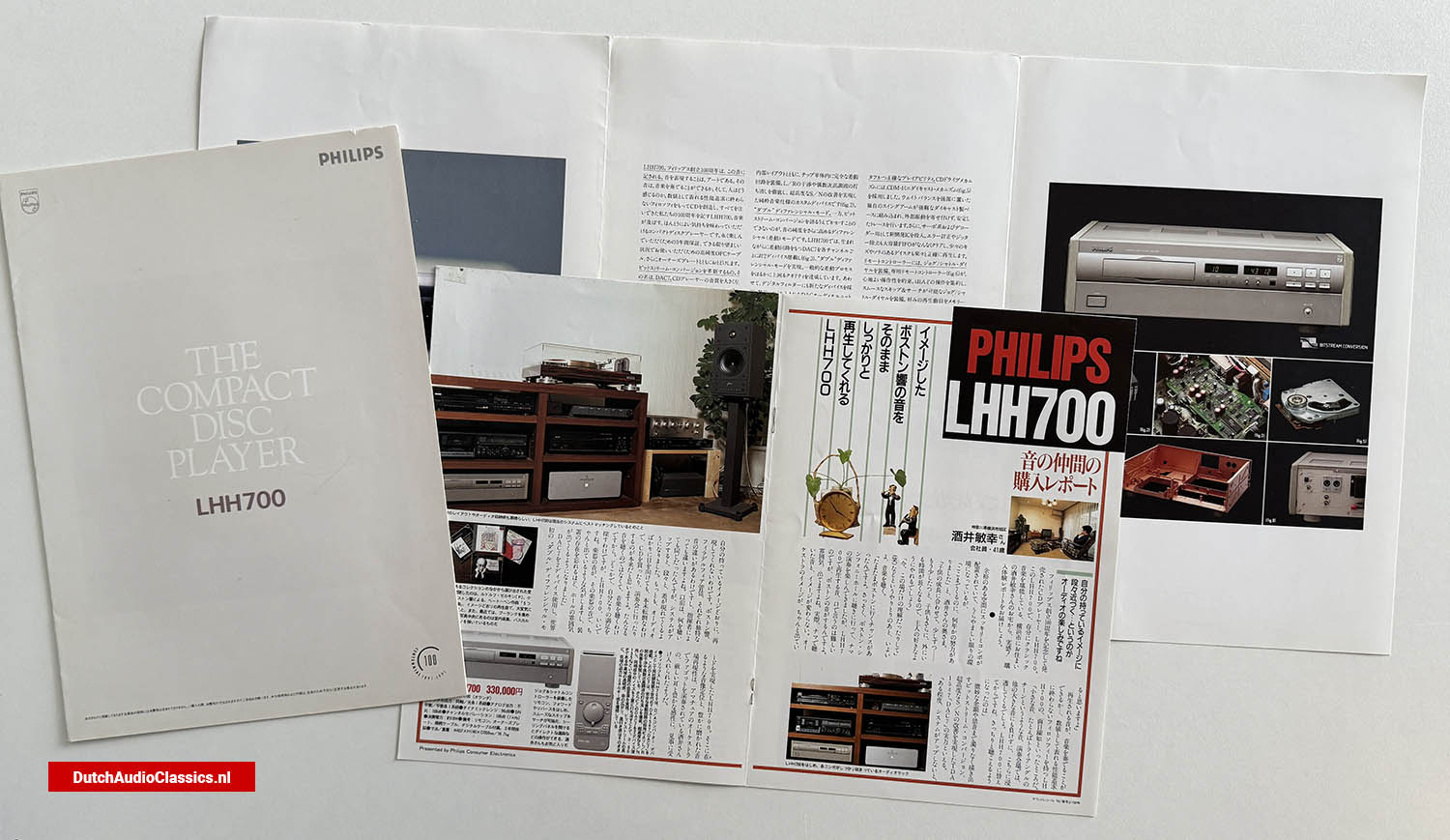
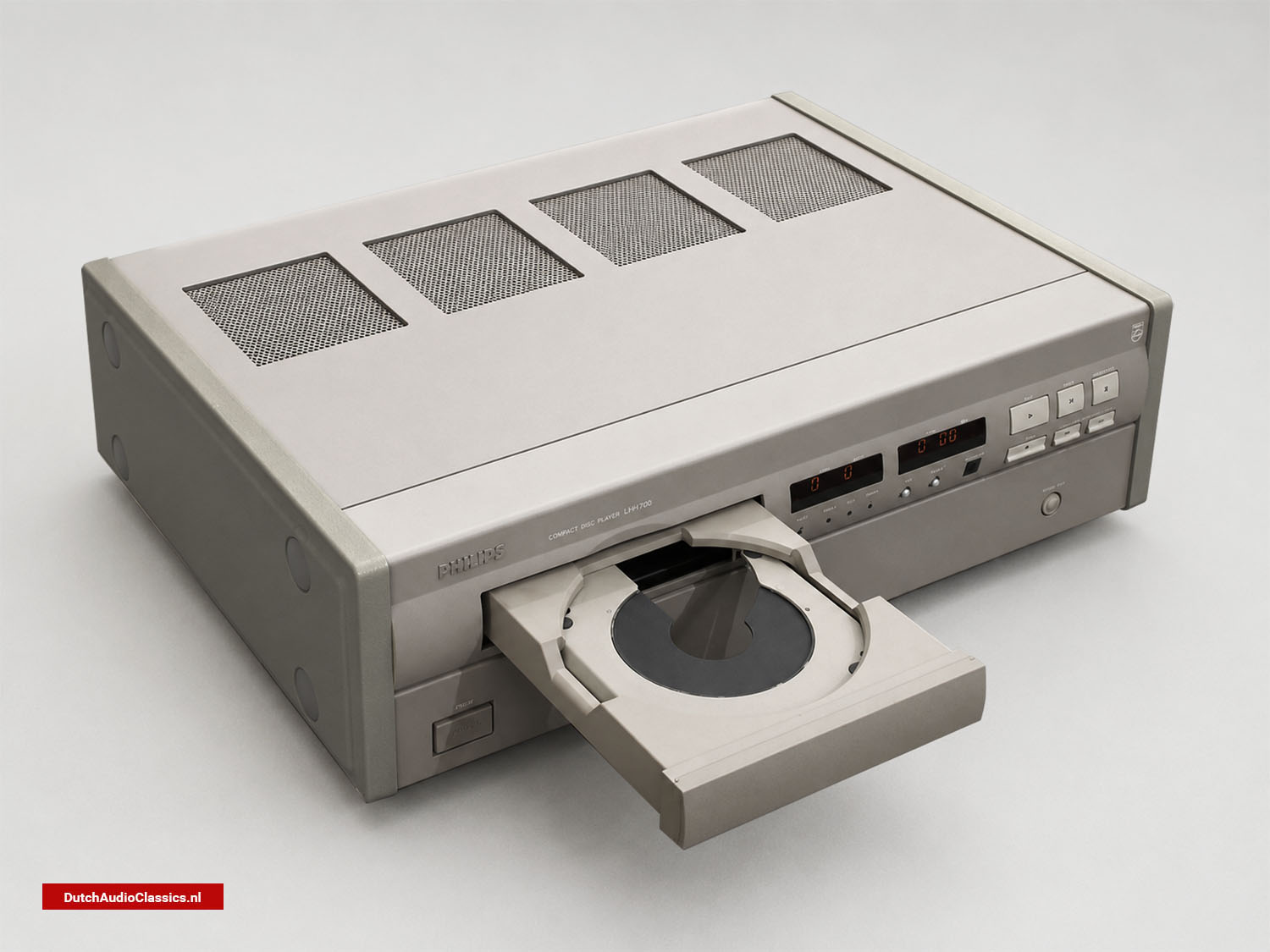
When Philips celebrated its 100th anniversary in 1991, the company introduced a special CD player for the Japanese market. The Philips LHH700 cost ¥330,000, weighed 16.7 kilograms and was built as one of the most ambitious models in the Philips LHH series.
Philips LHH700: The Centennial CD Player That Introduced DAC7
August 9, 2026
This blog examines the Philips LHH700 (1991) within the broader development of Philips' high-end CD players at the beginning of the 1990s. It explores how the player introduced the DAC7 Bitstream platform at reference level, combining the TDA1547 converter with a Double Differential architecture, Philips' CDM-4 swing-arm transport and the heavy mechanical construction developed in cooperation with Marantz Japan.
Placed within the context of the Japanese LHH series, the discussion highlights the LHH700 as an important transitional model between the earlier multibit and first-generation Bitstream players and the later Reference models such as the LHH800R and LHH900R. Particular attention is given to its digital architecture, mechanical isolation, power supply design and transformer-coupled balanced outputs, as well as the design ideas that Philips and Marantz Japan would later simplify or reconsider.
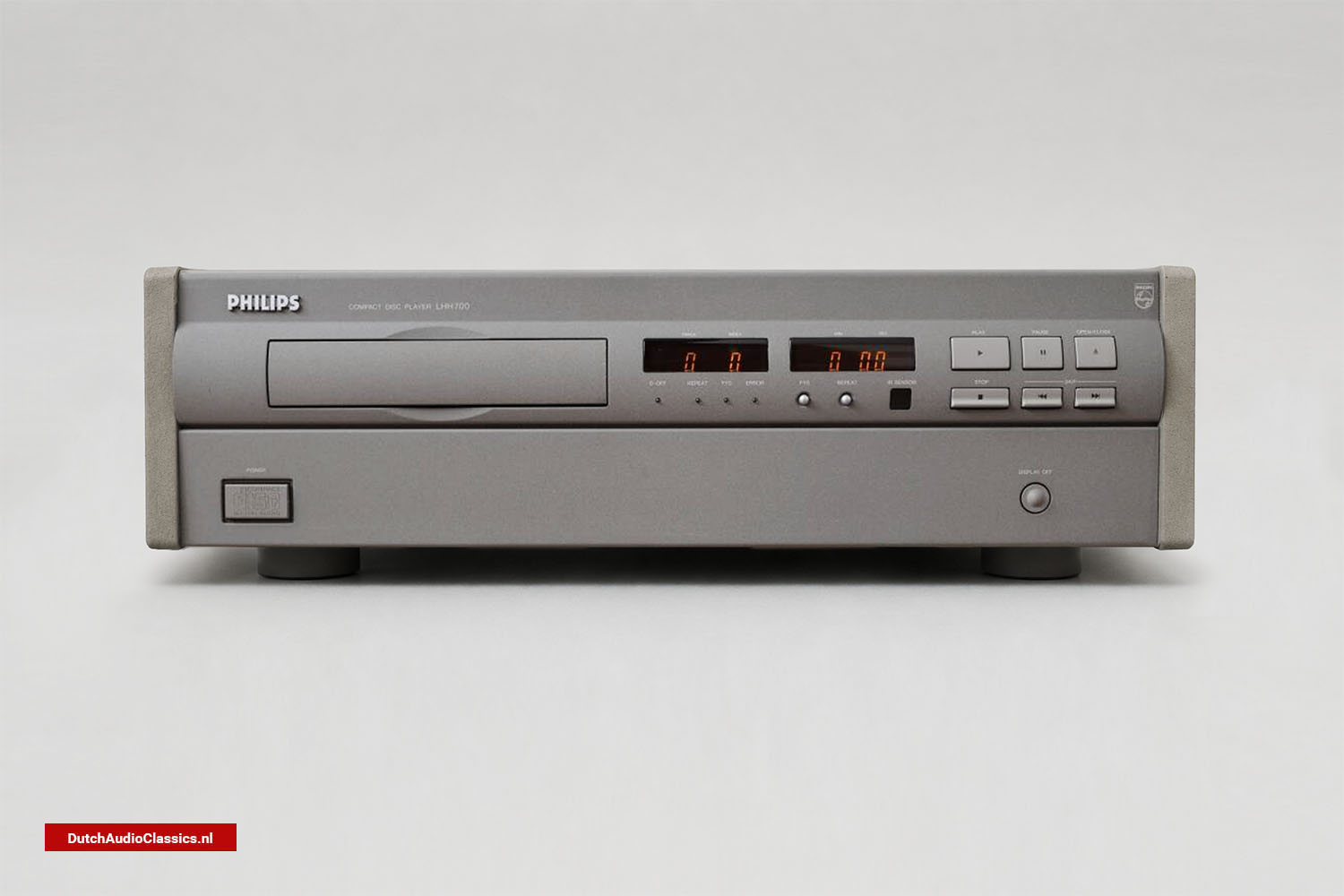
The timing was important. Philips was moving from the multibit converters used in earlier high-end players towards its newer 1-bit Bitstream technology. The LHH700 introduced a new generation of this technology at reference level, using the TDA1547 converter, better known as DAC7.
Philips and Marantz Japan built an unusually elaborate player around the new converter. Two TDA1547 chips were used in a Double Differential configuration, together with a Philips CDM-4 swing-arm mechanism, a copper-plated die-cast chassis, heavy steel panels, a carefully separated power supply and transformer-coupled balanced outputs.
The LHH700 also appeared at an interesting point in the development of the LHH series. Its digital section introduced technology that Philips would continue to use in later reference players, while much of its analog circuitry still followed the more complex design approach of the previous generation. When the LHH800R arrived in 1993, the Japanese engineers had started moving towards simpler signal paths and a very different analog design.
A CD Player for Philips’ 100th Anniversary
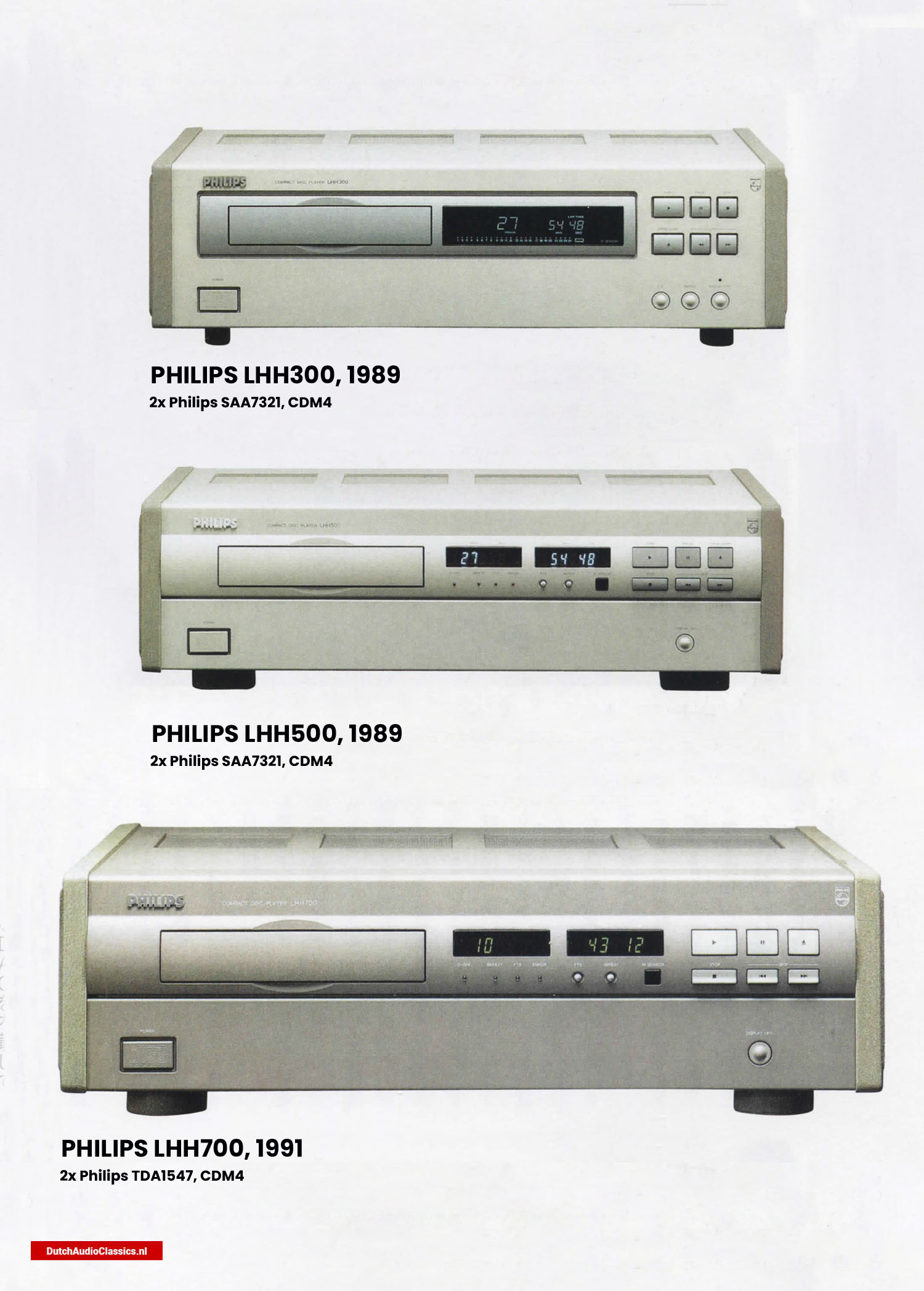
Philips was founded in Eindhoven in 1891, and the LHH700 was introduced exactly one hundred years later as a centenary model. It was developed and manufactured in Japan and mainly intended for the Japanese market, where its official price of ¥330,000 placed it above models such as the LHH300 and LHH500.
Japan had one of the world’s most developed audiophile markets during the late 1980s and early 1990s. Expensive CD players from Sony, Accuphase, Esoteric and other Japanese manufacturers competed through increasingly advanced digital technology, better components and heavier construction.
The LHH series combined Philips technology with the high-end development and manufacturing experience of Marantz Japan. Philips had played a central role in the development of the Compact Disc system and supplied important technologies such as its swing-arm mechanisms and digital conversion systems. Marantz Japan used these technologies as the basis for CD players designed specifically for the high-end Japanese market.
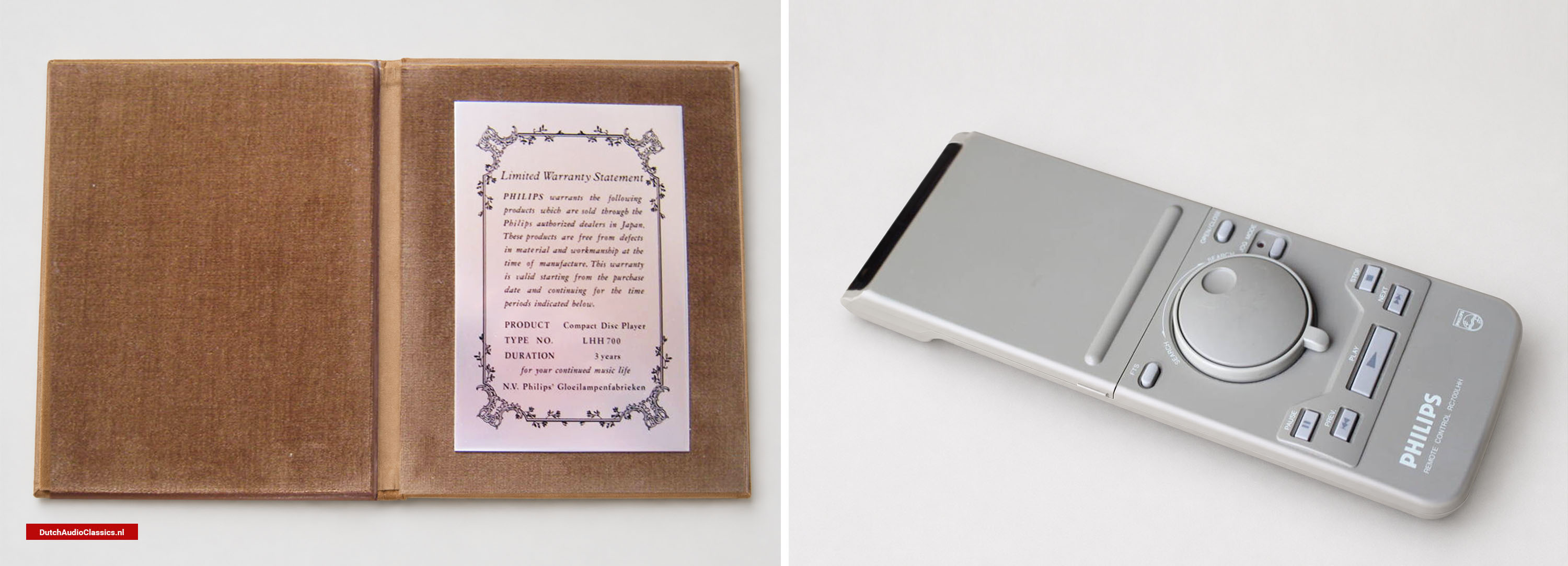
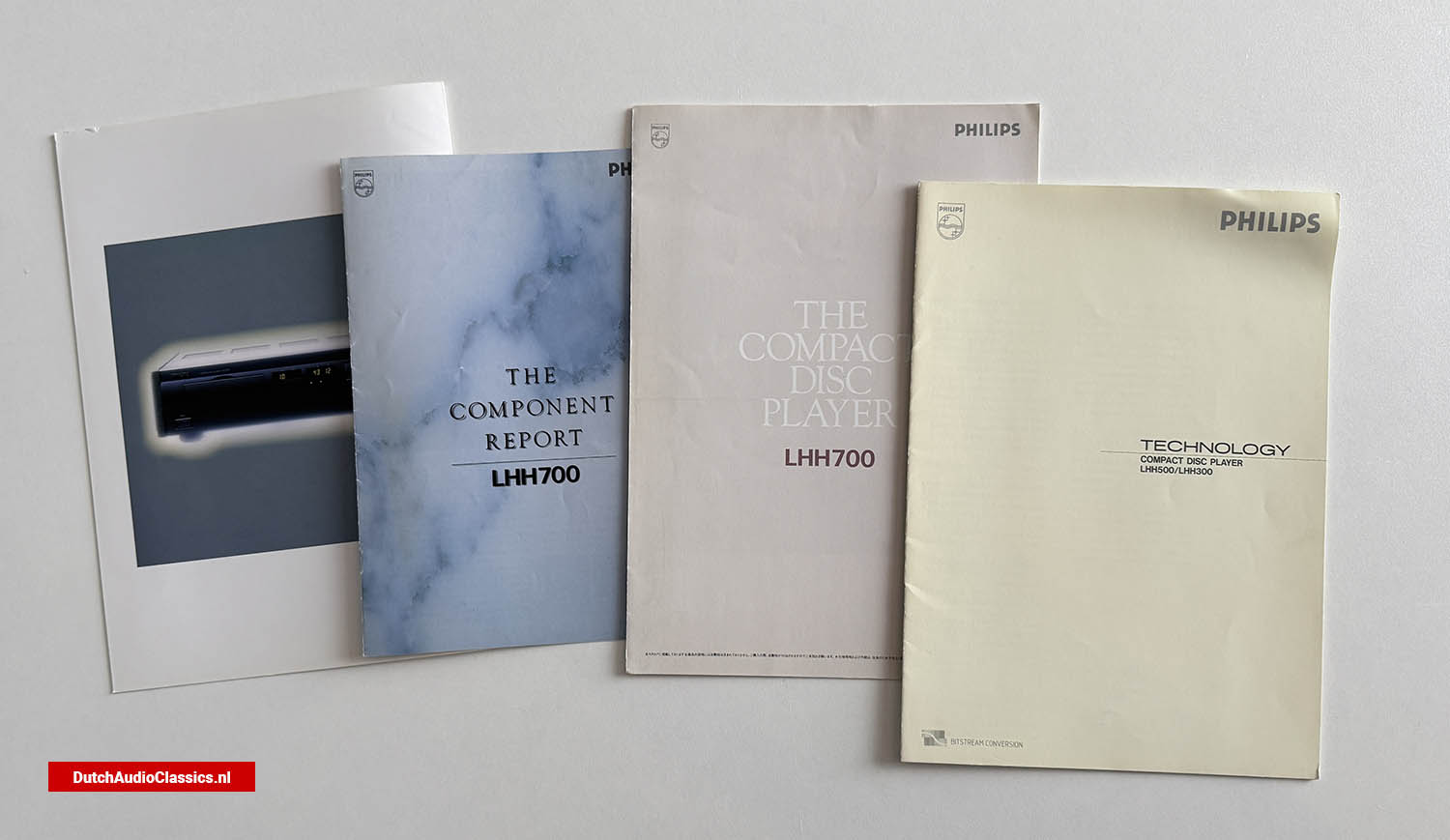
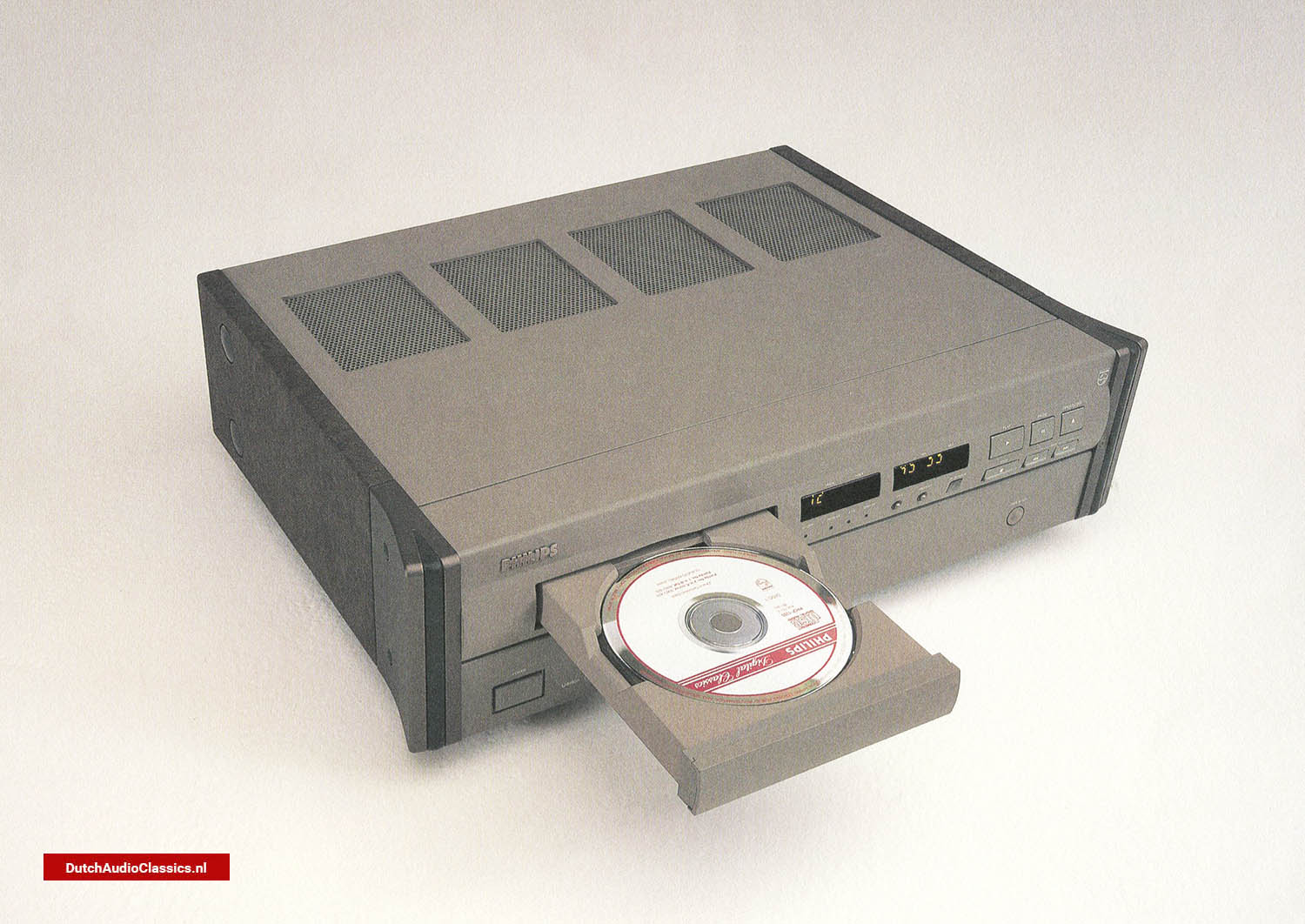
The LHH700 was given several details that underlined its position as a special anniversary product. Philips supplied it with an unusually long three-year warranty, the RC700LHH remote control, audio and digital cables and a special owner’s plate.
From the LHH500 to the LHH700
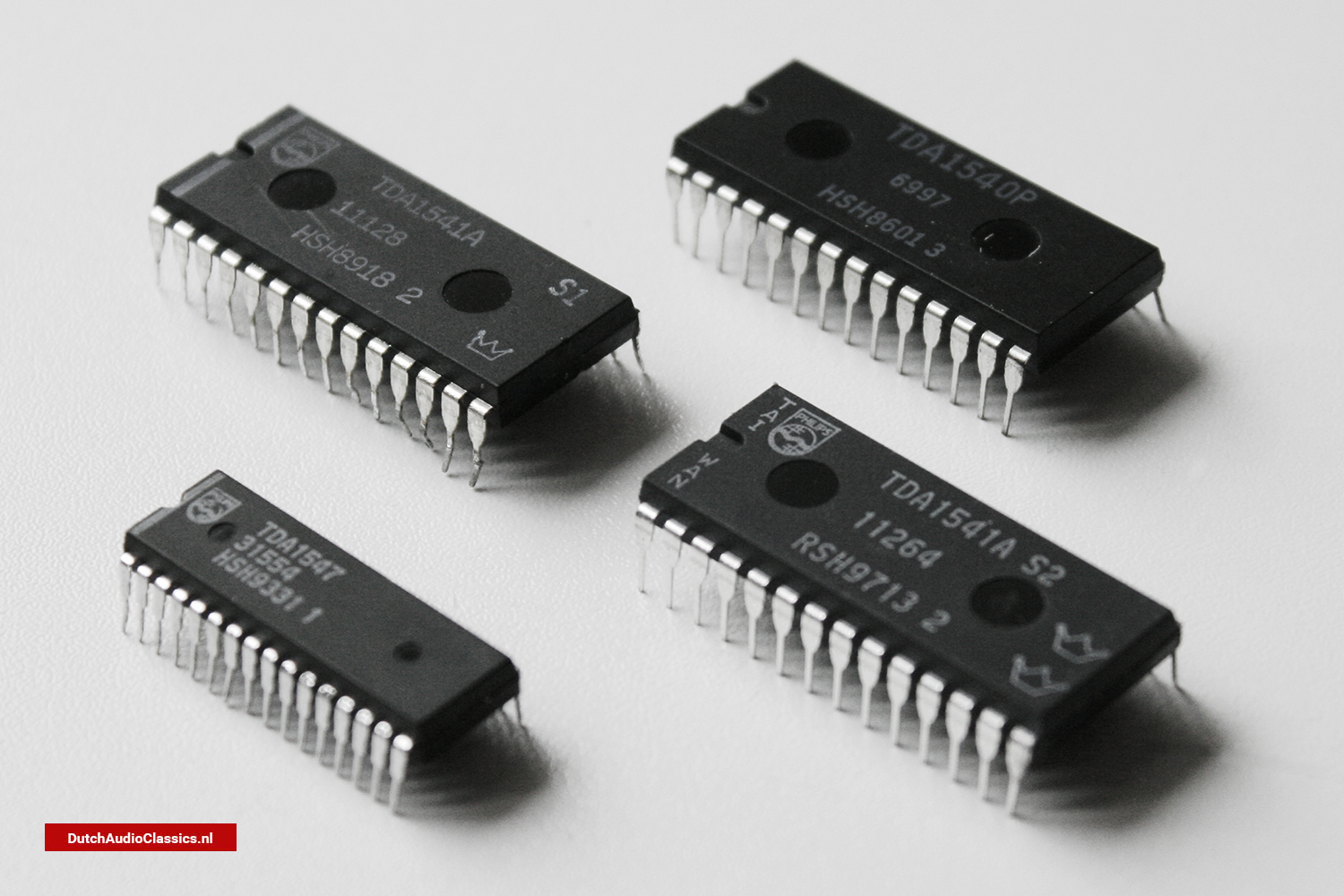
Earlier Philips reference players such as the LHH1000 belonged to the multibit era. Its TDA1541A converter represented one of the most developed versions of Philips’ multibit technology and became one of the company’s best-known DACs.
By the time models such as the LHH300 and LHH500 appeared, Philips was already using a different form of digital conversion. Bitstream converted the audio signal into a very fast 1-bit stream and used noise shaping to move much of the quantization noise above the audible frequency range.
A multibit DAC depends on several accurately matched levels to reconstruct the audio signal. Small differences between those levels can cause errors. A 1-bit converter only has to switch between two states, which allowed Philips to avoid many of these linearity problems.
The LHH500 had already shown the possibilities of Bitstream within the Japanese LHH range. For the LHH700, Philips introduced the TDA1547 DAC together with a separate SAA7350 noise shaper. This allowed the high-speed digital processing and the final D/A conversion to be handled by separate chips.
The DAC7 Architecture
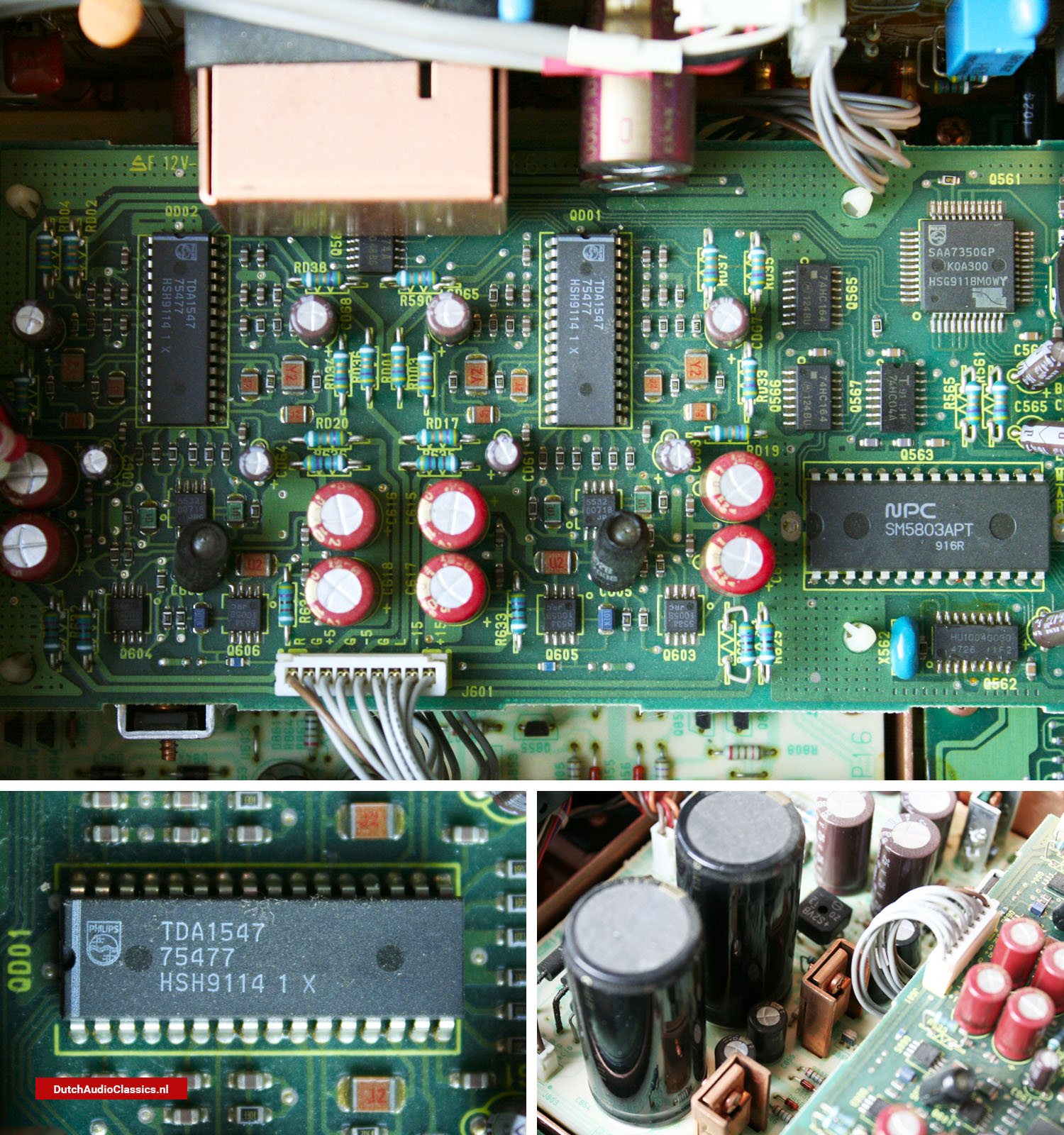
After the LHH700 reads the digital data from the CD, it passes through the normal CD decoding process, including error detection and correction when required. The 16-bit audio data is then sent to an NPC SM5803AP digital filter, which performs 8-times oversampling and outputs the processed data at 20-bit resolution.
The filtered signal then goes to the Philips SAA7350, which performs the noise shaping needed for Bitstream conversion. The resulting high-frequency 1-bit signal is passed to the TDA1547 converters, where the actual digital-to-analog conversion takes place.
Separating these functions allowed the TDA1547 to concentrate on the final conversion stage while the SAA7350 handled the high-speed digital processing. This also helped keep electrical noise from the digital processing away from the more sensitive conversion circuitry.
Marantz Japan used two TDA1547 chips in the LHH700 instead of the single chip that would normally have been enough for stereo playback.
Double Differential DAC7
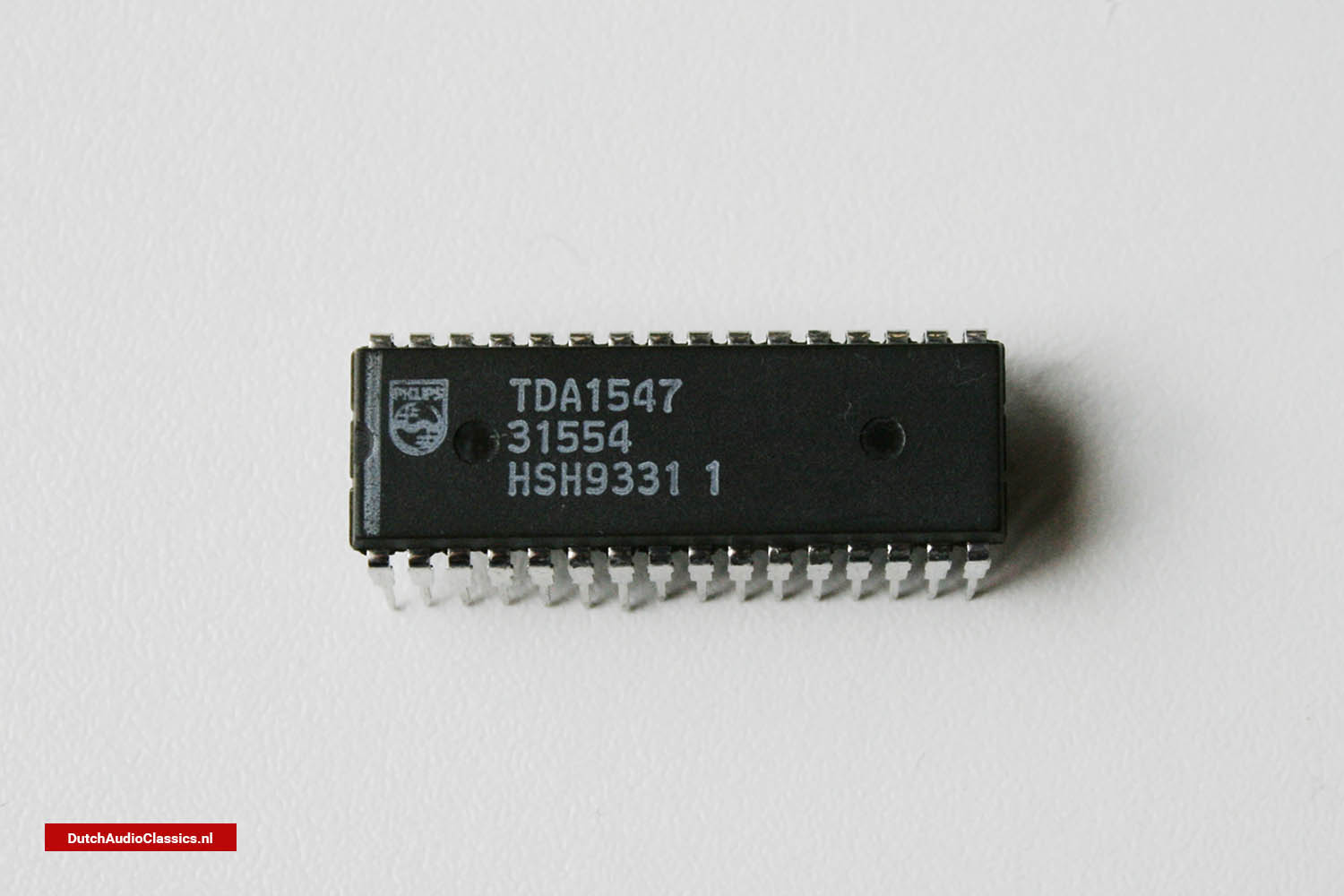
Each TDA1547 contains two 1-bit DAC sections and can normally handle both channels of a stereo signal. In the LHH700, one complete TDA1547 is used for the left channel and another for the right channel. The two DAC sections inside each chip can therefore work together on a single audio channel.
Before conversion, a Data Polarity Converter creates a normal and an inverted version of the digital signal. The two versions are converted separately and combined afterwards. Philips called this Double Differential Mode.
Noise that appears equally in both signal paths can be reduced when the two signals are combined. The same method can also reduce certain even-order distortion components. Using a separate TDA1547 for each channel also keeps the left and right channels more independent from each other.
This required twice as many TDA1547 chips as a conventional stereo implementation, but the LHH700 was intended as a reference model rather than an economical way of using DAC7. Philips specified a signal-to-noise ratio of 108 dB, channel separation of 100 dB at 1 kHz and total harmonic distortion of 0.00135 percent.
From Multibit to Bitstream
The move from the TDA1541A used in earlier reference players to DAC7 was a major change in Philips’ digital audio technology. The LHH300 and LHH500 had already brought Bitstream into the Japanese LHH range, but the LHH700 used the technology in a much more ambitious way.
Early Bitstream CD players were often described as smooth and spacious, although some listeners felt that they lacked the weight and solidity of the best multibit players. Philips and Marantz Japan surrounded DAC7 in the LHH700 with a large power supply, heavy mechanical construction and the Double Differential conversion system.
Japanese reviewer Makoto Fujioka later described the LHH700 as the player that changed his opinion of 1-bit conversion. Earlier 1-bit players had sometimes sounded light in the bass to him, while the LHH700 produced a much more solid and powerful low-frequency foundation together with high resolution in the midrange and treble.
The LHH700 was therefore an important step in bringing Bitstream from the first generation of Philips players into the company’s reference-class designs.
The CDM-4 Mini Die-Cast Transport
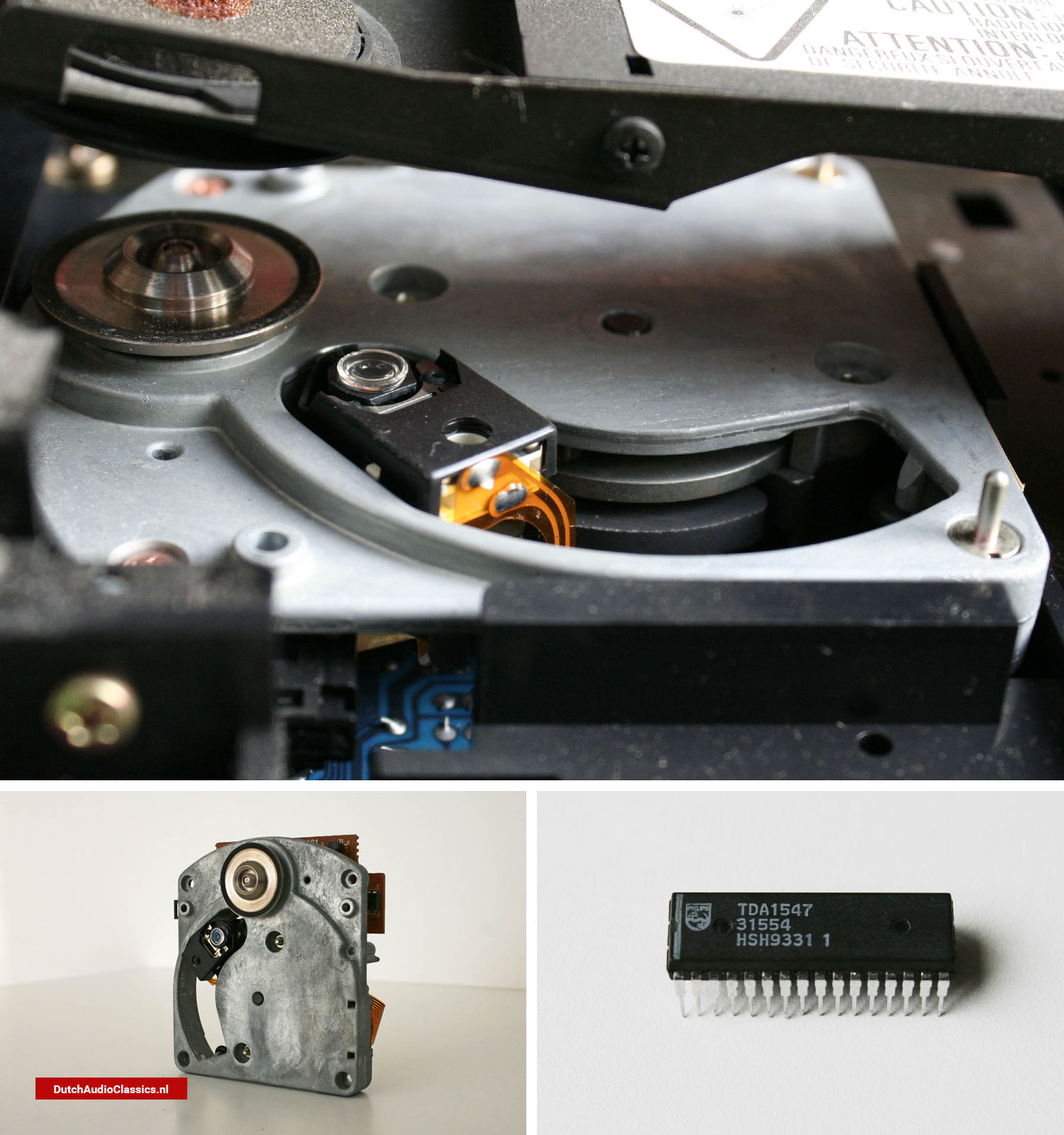
The LHH700 uses the Philips CDM-4 Mini Die-Cast mechanism to read the disc. It belongs to Philips’ well-known family of swing-arm CD mechanisms, in which the optical pickup moves in an arc around a pivot instead of travelling in a straight line along rails.
Philips had developed this system over several generations of CD mechanisms. In the LHH700, the optical assembly is mounted in a rigid die-cast structure and a counterweight on the swing arm helps keep the mechanism mechanically balanced.
The servo and decoder electronics were also updated. Contemporary descriptions mention newly developed servo and decoder ICs together with a large FIFO memory for improved reading stability and error handling. This helped the player continue reading discs that were slightly damaged or warped.
The mechanism was mounted inside a chassis that was much heavier than those found in most CD players of the period.
Built Like a Mechanical Vault
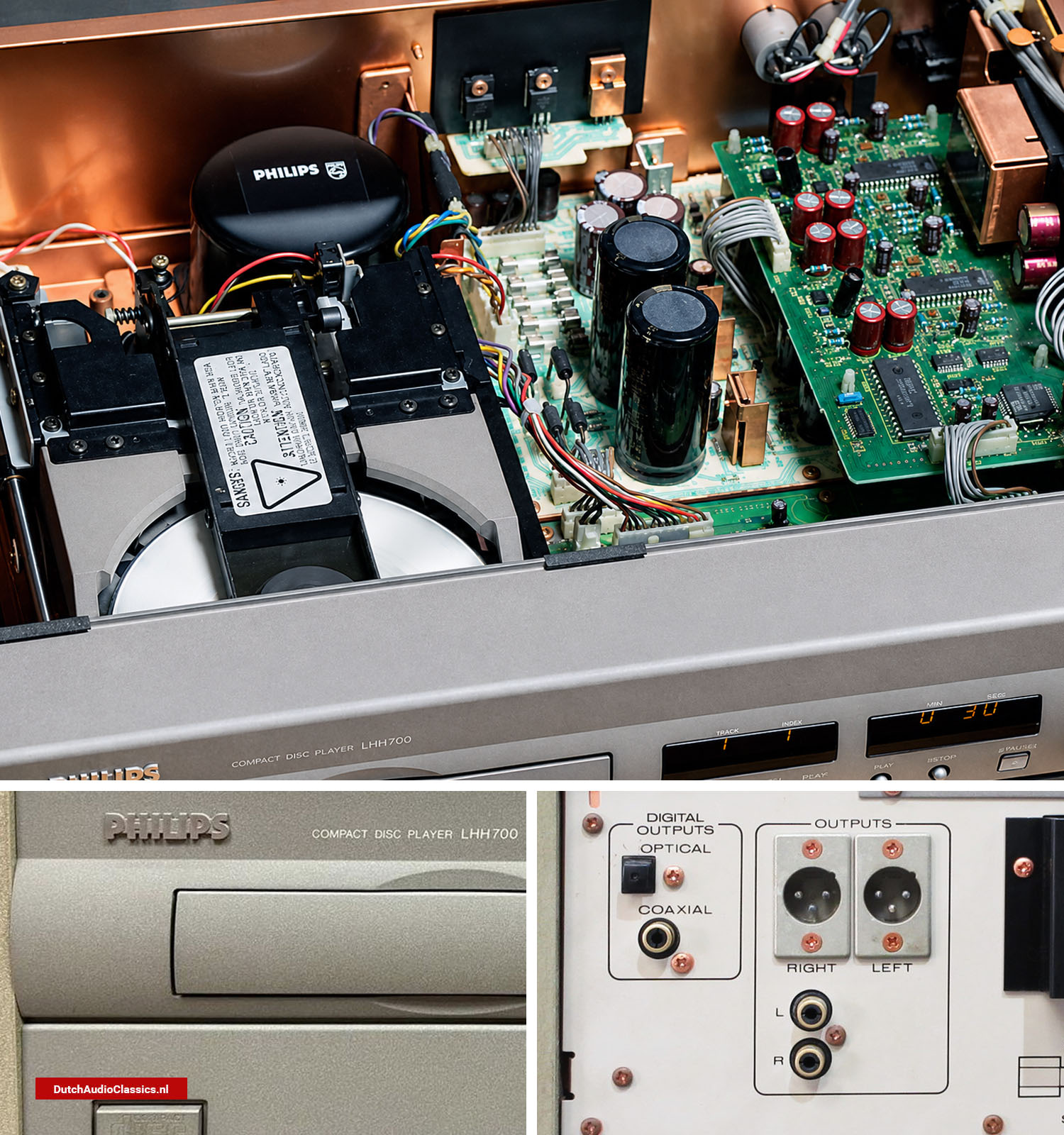
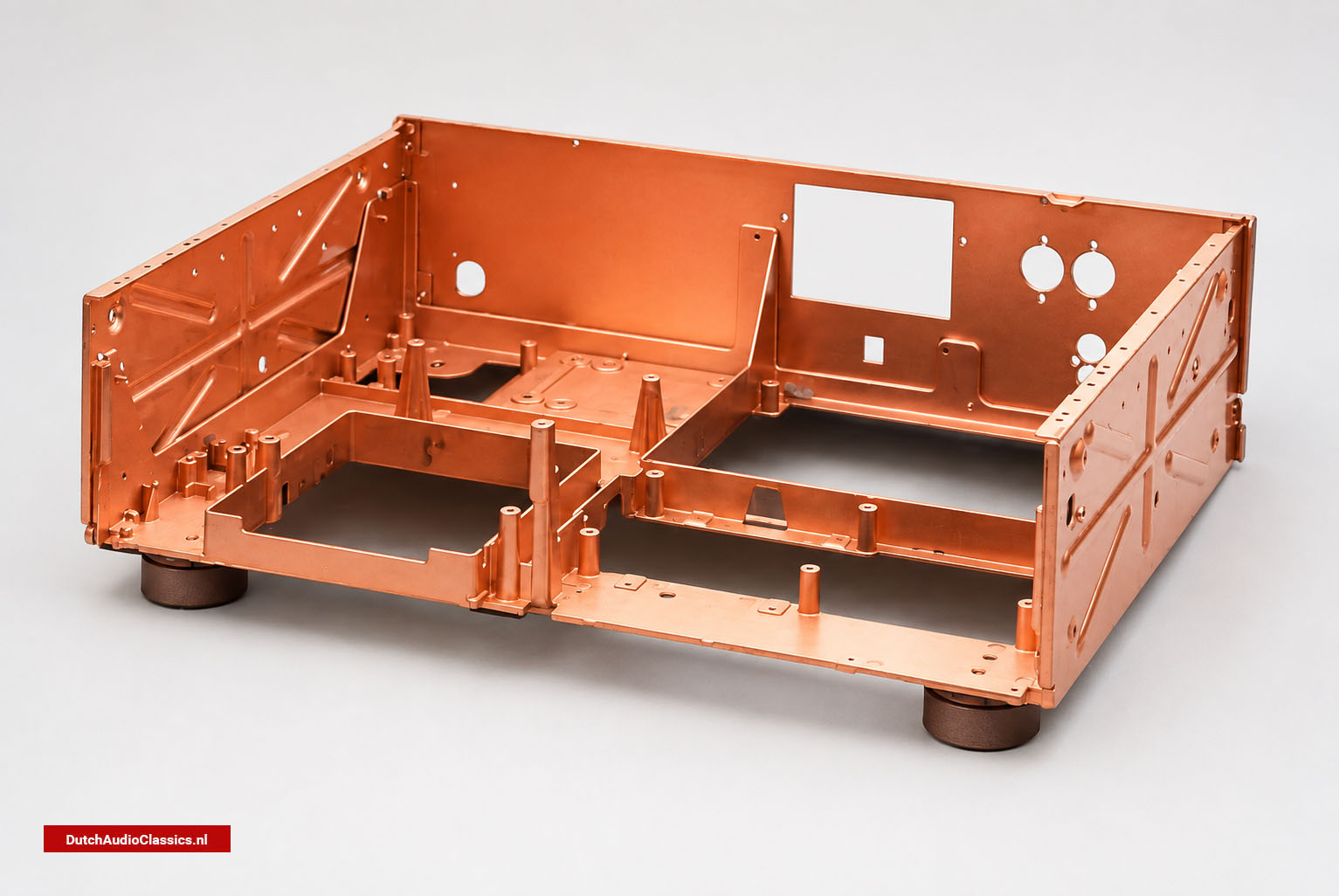
The LHH700 measures 457 mm wide, 140 mm high and 359 mm deep, yet weighs 16.7 kilograms. Much of that weight comes from its die-cast internal structure and unusually heavy exterior panels.
The bottom plate is made from 3.2 mm thick steel and weighs about 2.95 kilograms including the feet. The top plate is also 3.2 mm thick and weighs around 2.35 kilograms, while each of the die-cast zinc side panels weighs approximately 1.8 kilograms. The top plate is fixed to the chassis at six points to create a rigid enclosure around the mechanism and electronics.
The internal die-cast structure is copper plated. Besides adding to the quality of the construction, the copper provides electrical shielding in a machine filled with high-frequency digital circuitry. This helps reduce interference between digital circuits and the sensitive analog sections of the player.
The heavy construction therefore served more than one purpose. The mass and rigidity provided a stable environment for the CDM-4 mechanism, while the copper plating helped control electrical interference inside the player.
The Fifth Foot - E-SAC insulator
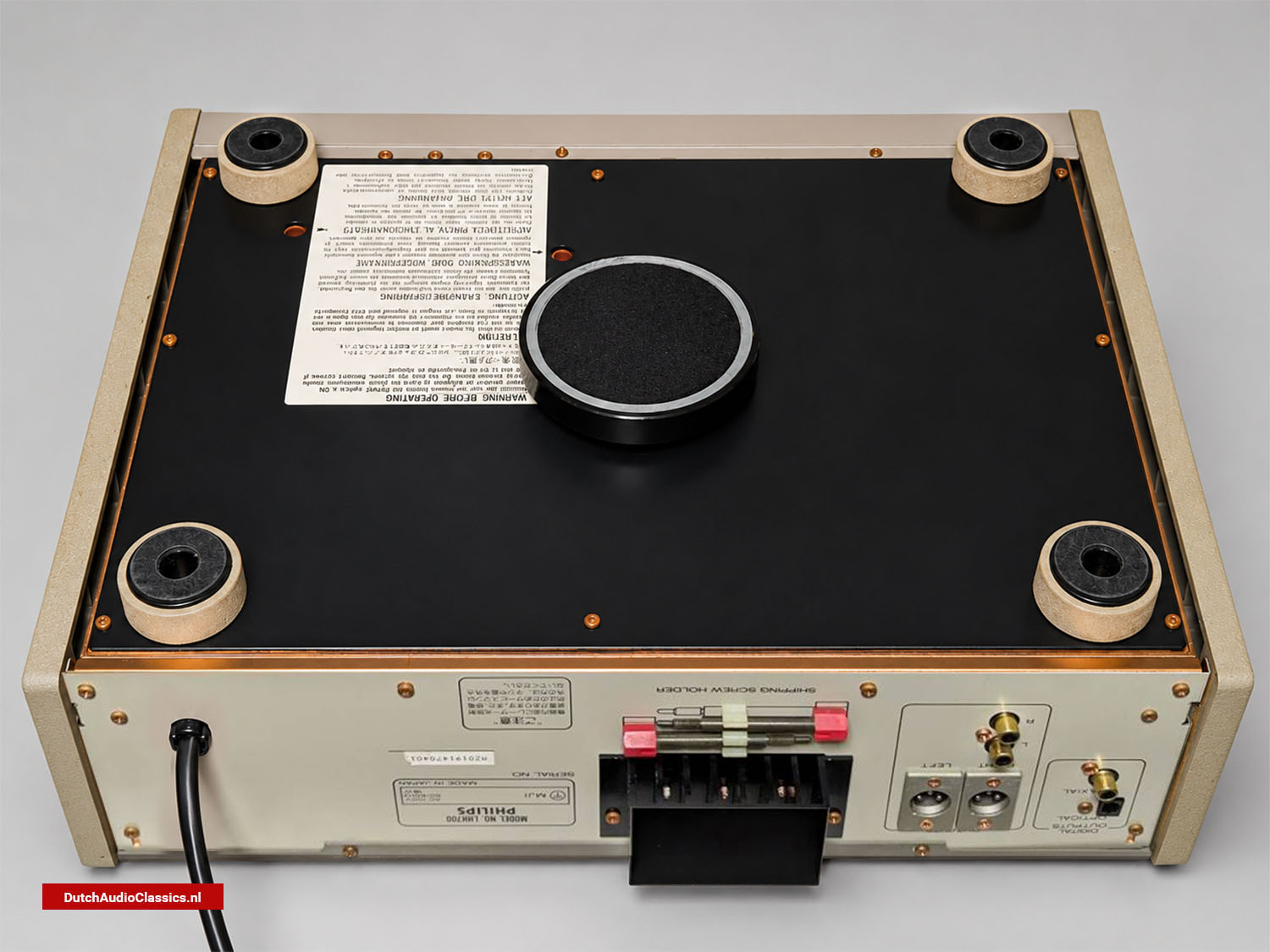
Underneath the LHH700 are five supports instead of the usual four. The extra support is a large central foot with a diameter of approximately 100 mm, which Philips called the E-SAC insulator.
It is positioned close to the centre of gravity and directly underneath the central mechanical structure of the player. With four conventional feet positioned near the corners, the middle of a large and heavy chassis can remain relatively unsupported. The fifth foot provides direct support in this area and was designed to help absorb shocks and control vibration.
This worked together with the other mechanical parts of the player. The CDM-4 mechanism had a rigid die-cast structure, the thick steel plates made the chassis more rigid, the zinc side panels added mass and the E-SAC insulator supported the centre.
Later LHH models continued to use elaborate mechanical solutions, although Philips and Marantz Japan did not always use the same approach. The LHH800R, for example, moved to a three-point support system.
Powering the DAC7
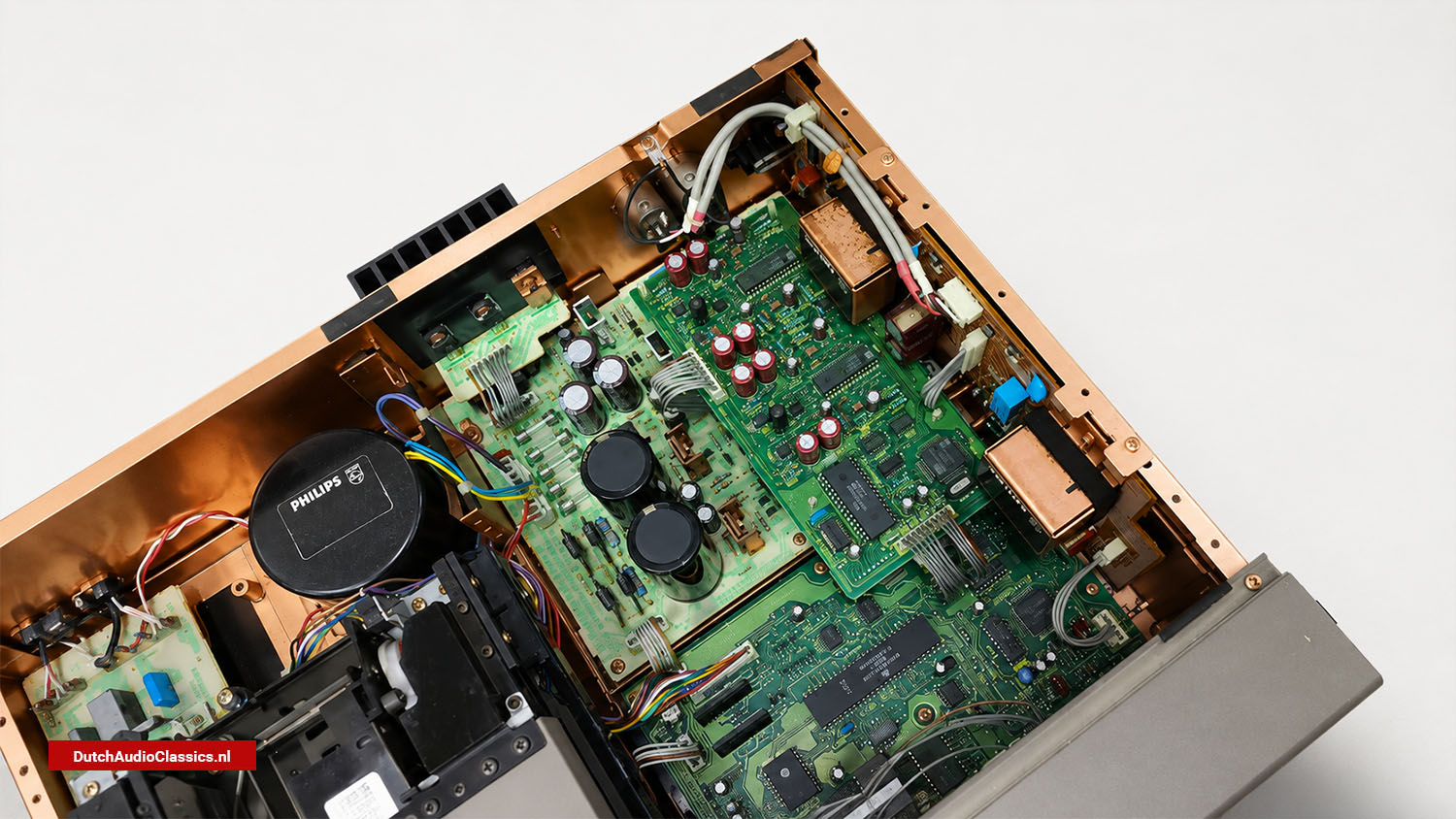
A large toroidal transformer supplies power to the LHH700, together with substantial reservoir capacitors. Two 6,800 µF / 35 V capacitors form part of the main power supply.
Toroidal transformers combine a high power capacity with relatively low stray magnetic fields, which is useful in a CD player where digital, servo and analog circuits are located close together.
The DAC7 section has its own dedicated supply circuitry. This reduces the effect of changes in current and electrical noise produced elsewhere in the player.
A CD player contains several circuits with very different jobs. The servo electronics constantly adjust the disc motor, tracking and focus, while digital processors switch at high frequencies. At the same time, the DAC and analog output stages handle much smaller and more sensitive signals.
Separating the power supplied to these sections reduces the chance that one part of the player will interfere with another. The LHH700 therefore treats the power supply as part of the complete audio design rather than simply as a source of electricity for the different circuits.
The Analog Output Stage
After the TDA1547 converters have produced the analog signal, it passes through the LHH700’s analog output circuitry. This section uses several amplifier stages and conventional negative feedback.
The later LHH800R would use a different approach. Engineer Tetsu Suzuki described its analog circuit as considerably simpler than those used in the LHH700 and LHH600B. The number of amplifier stages was reduced and specially developed discrete amplifiers were used instead.
The LHH700 therefore belongs to the earlier design generation, in which Philips and Marantz Japan used a more complex analog circuit to achieve the required performance. The experience gained with players such as the LHH700 and LHH600B would later contribute to a different way of designing the analog stages of the LHH series.
Transformer-Coupled Balanced Outputs
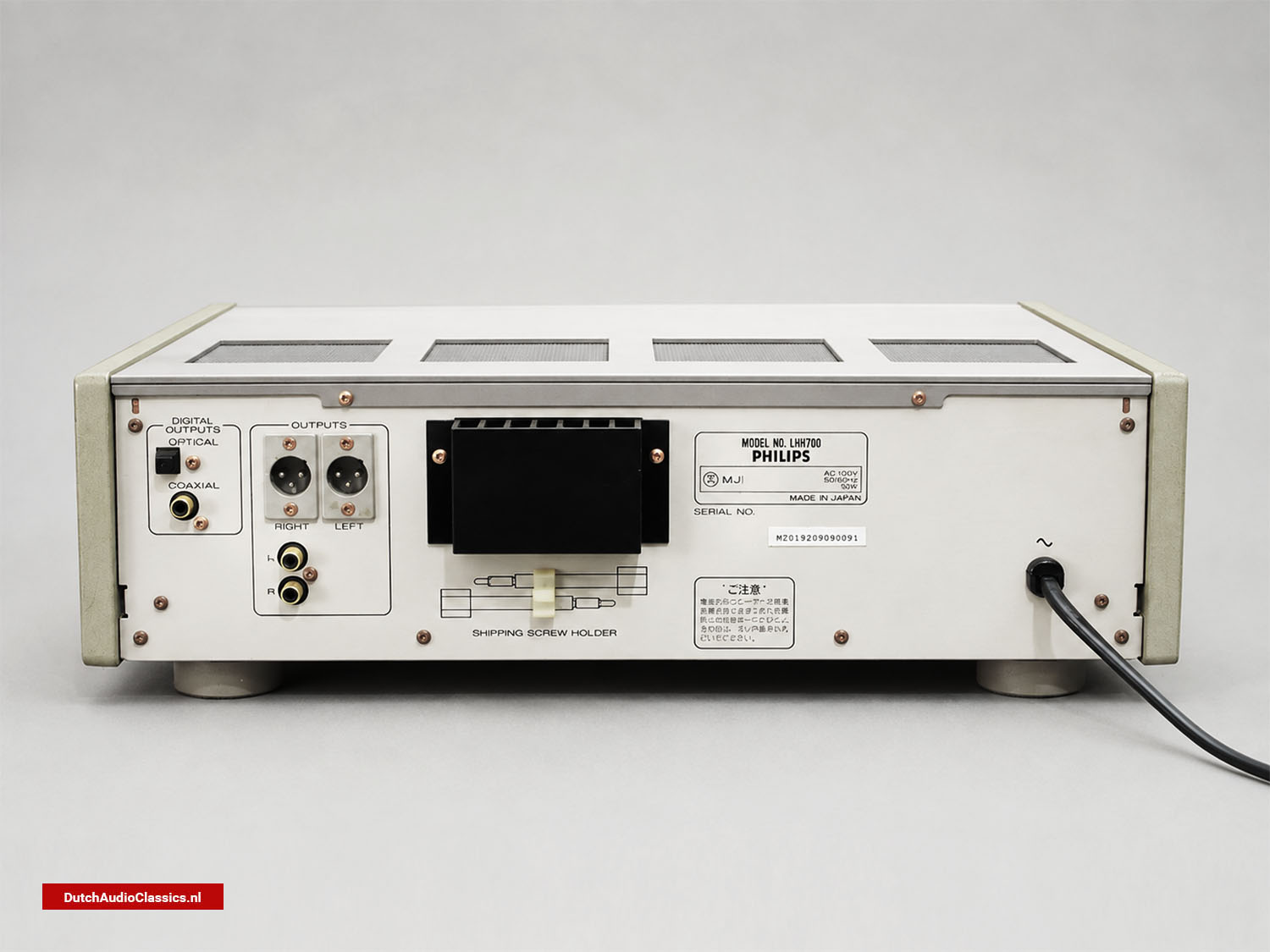
The LHH700 provides both RCA and balanced XLR analog outputs. The RCA connections deliver a conventional unbalanced signal at 2 V RMS, while the XLR outputs provide 3 V RMS.
The balanced outputs use high-quality audio line transformers with nickel cores instead of relying entirely on additional active circuitry to create the balanced signal.
These transformers provide galvanic isolation between the CD player and the connected amplifier. They also allow the output ground of the player to remain separated from the ground of the amplifier, which can help prevent ground loops.
The idea came partly from professional audio engineering and had also been used in earlier Philips LHH equipment.
Measurements of the closely related Marantz CD-11 LE show that this solution also had practical compromises. The Audio Critic measured excellent performance from its unbalanced outputs, while the transformer-coupled balanced output showed more 60 Hz interference.
The transformer output therefore offered clear advantages in electrical isolation, but it did not automatically improve every measurable aspect of the signal.
Philips Technology, Japanese Execution
Many of the technologies inside the LHH700 came from Philips. The Compact Disc system, the swing-arm optical mechanisms, Bitstream conversion, the SAA7350 and the TDA1547 all had their roots in Philips’ research and development.
Marantz Japan used these technologies to build a CD player for the Japanese high-end market. Its engineers worked on the chassis, circuit implementation, power supplies, grounding, component selection and listening evaluation. The Marantz facility in Sagamihara played an important role in the development and manufacture of this generation of equipment.
This combination also makes the way Japanese reviewers described the LHH700 interesting. Some heard a warm, smooth and rich presentation that they associated with European audio equipment, even though the machine itself had been developed and manufactured in Japan.
The LHH700 was therefore a Japanese-built high-end CD player based around Philips digital technology and Philips’ approach to optical disc playback.
The People Behind the LHH700
The LHH700 was the work of a larger development team at Marantz Japan. Engineers worked on the digital and analog circuits, power supplies, mechanical construction and the final tuning of the player. A complete list of everyone involved and their exact responsibilities has not been documented, so it is difficult to connect individual parts of the LHH700 to specific engineers.
Yoshiyuki Tanaka is one of the people most closely connected with CD player development at Marantz Japan during this period. He joined Standard Kogyo, the company that later became Marantz Japan, in 1960 and remained involved in CD development until his retirement in 2002.
Tanaka combined technical measurements with extensive listening tests, and the LHH700 was refined through this process. Circuits, components and mechanical solutions were not only measured, but also compared by listening to the complete player.
Other engineers were part of this wider development environment. Takashi Sato had been involved with Standard Kogyo and later Marantz Japan for many years and helped connect the technical work with the direction of the Marantz brand. Tetsu Suzuki and Hideki Kato were also part of the Japanese development team, although their individual roles became much better documented with later models such as the LHH800R and LHH900R.
Their later work is especially interesting because several ideas used in the LHH700, including its complex analog circuitry and Double Differential DAC7 implementation, were reconsidered when the next generation of LHH players was developed.
He also listened to Poulenc chamber music with Pascal Rogé. During complex musical passages, very small sounds remained easy to follow. He mentioned a softly struck triangle that stayed clearly audible without being covered by the other instruments.
A listening report cannot tell us whether these impressions came from the DAC architecture, analog circuitry, transport, mechanical construction or a combination of them. It does show what listeners were looking for in a high-end CD player at the time. Musical texture, space and small dynamic details were considered alongside conventional technical performance.
How the Japanese Press Received the LHH700
The Japanese audio press received the LHH700 very positively.
Makoto Takashima described a warm, rich and smooth presentation that he associated with a European approach to sound. This made the Philips an interesting alternative to some of the more analytical Japanese high-end CD players available at the time.
Makoto Fujioka was especially interested in the bass performance. Earlier 1-bit players had sometimes sounded too light to him, but the LHH700 changed his view of the technology. He heard a much stronger low-frequency foundation while the midrange and treble retained a high level of resolution.
Fujioka was also unusually positive about the price. He wrote that he would still have considered the LHH700 a bargain if Philips had priced it at ¥400,000 or even ¥500,000 instead of ¥330,000.
The LHH700 also received recognition in Stereo Sound’s Component of the Year selections and from several other Japanese specialist publications. This was a significant achievement in a market where Philips was competing with some of Japan’s most ambitious high-end CD players.
Listening to the Boston Sound
Toshiyuki Sakai gave one of the more detailed descriptions of the LHH700 in the spring 1992 edition of Sound Copal. As a classical music enthusiast and amateur bassoon player, he described what he heard through specific recordings instead of relying only on general audiophile terms.
One of the recordings was Beethoven’s piano concertos with Rudolf Serkin, Seiji Ozawa and the Boston Symphony Orchestra. Sakai felt that the LHH700 made the character he associated with the Boston Symphony easier to recognise, including differences between orchestras and the acoustic spaces in which they had been recorded.
Recognition in the Japanese Audio Press
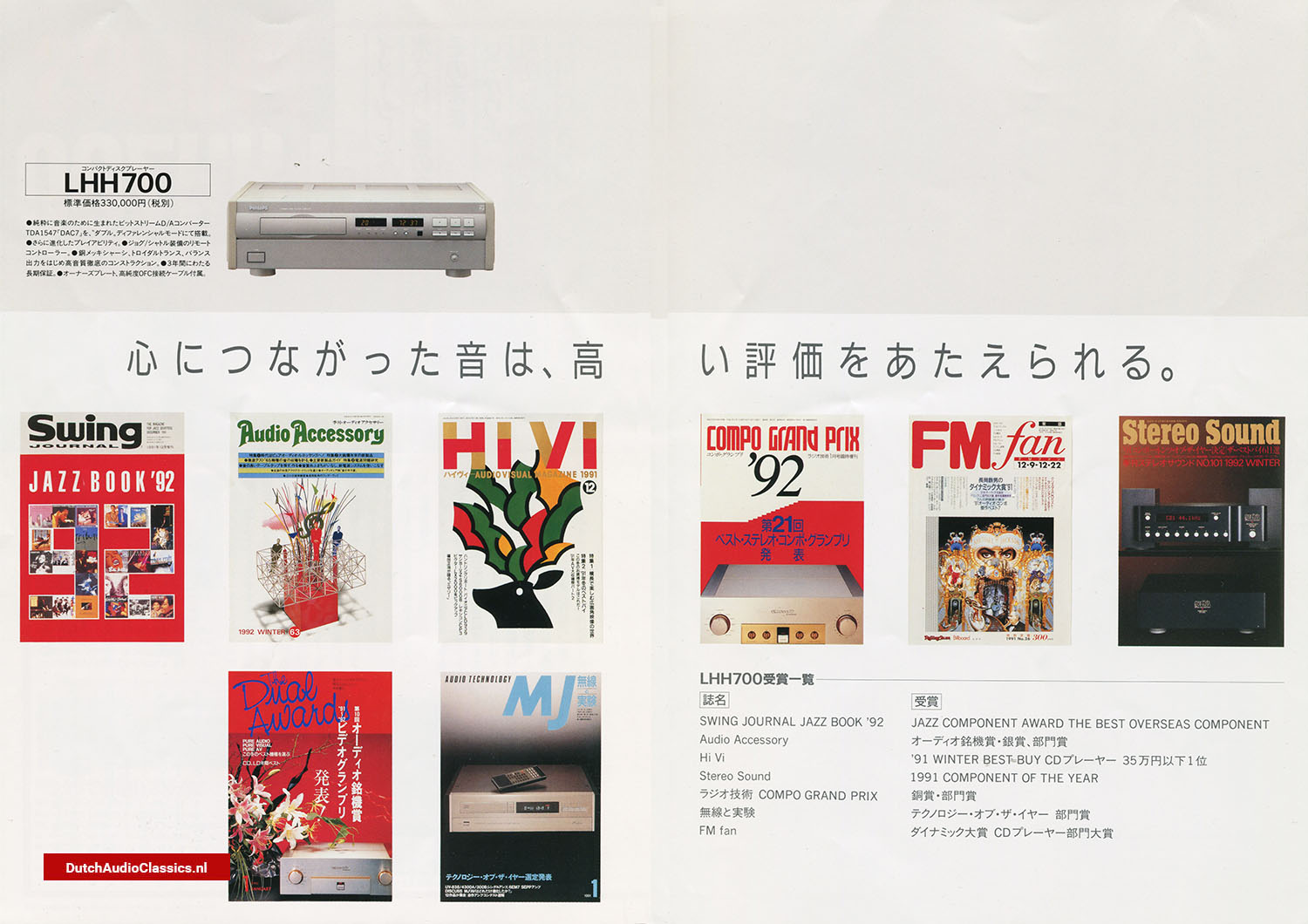
The LHH700 received wide recognition from the Japanese audio press shortly after its introduction. Its awards came from several of Japan’s leading specialist audio publications, showing that the player was well received across different parts of the Japanese hi-fi press.
Stereo Sound selected the LHH700 for its 1991 Component of the Year awards, while HiVi ranked it first among CD players priced below ¥350,000 in its 1991 Winter Best Buy selection. Radio Technology awarded it a Bronze Award and Category Award in its Compo Grand Prix, and Musen to Jikken recognised it with a Technology of the Year Category Award.
The LHH700 also received the CD Player Category Grand Prix from FM fan, a Silver Award and Category Award from Audio Accessory, and was named Best Overseas Component in the Jazz Component Awards published in Swing Journal Jazz Book ’92.
The Marantz Connection
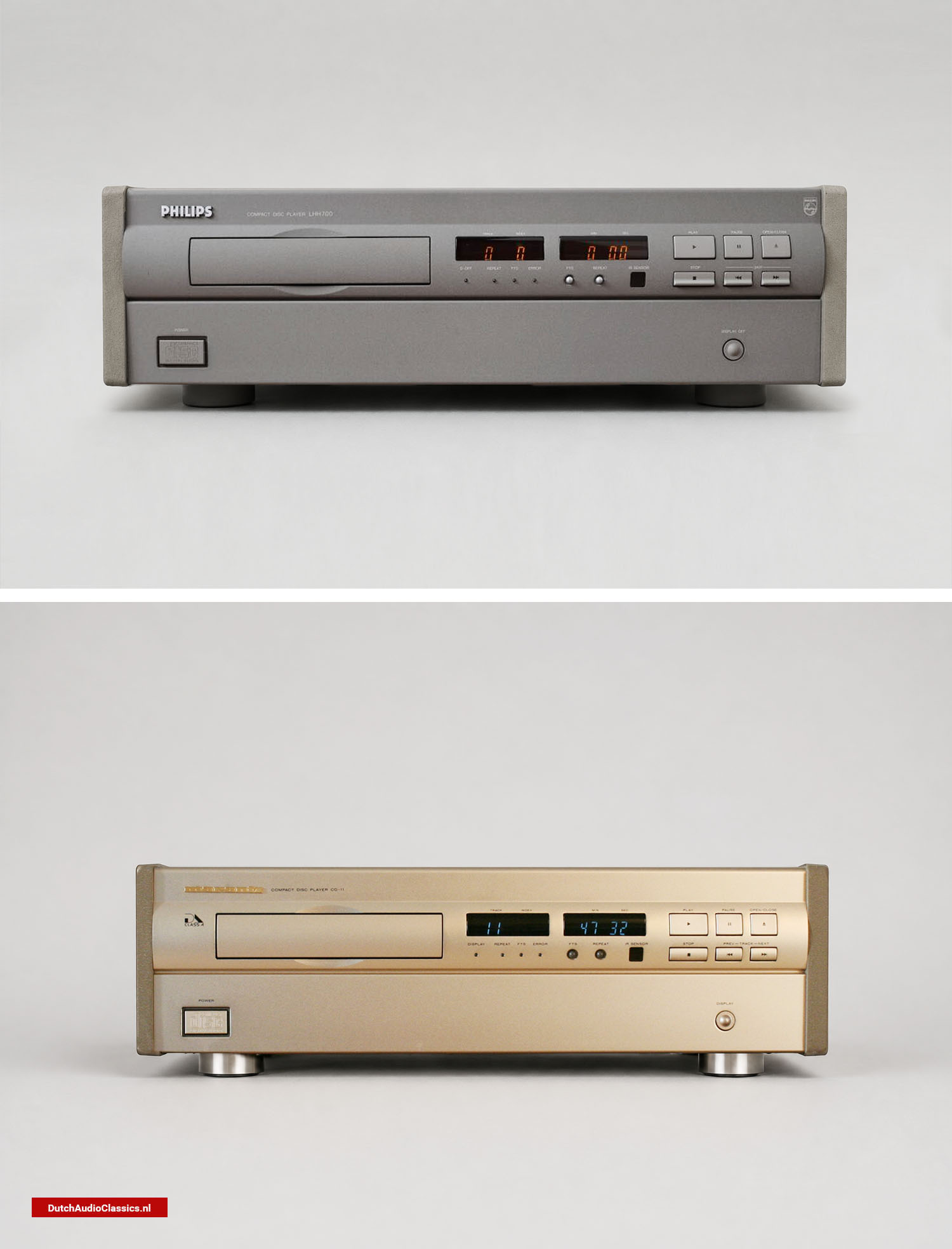
The Philips LHH700 and Marantz CD-11 LE were technically identical CD players, developed from the same design and built in Japan. The main difference was the market for which they were intended. Philips sold the LHH700 on the Japanese domestic market, while the Marantz CD-11 LE was the export version for Europe and the United States.
Both players use the same CDM-4 mechanism, NPC digital filter, SAA7350 noise shaper and two TDA1547 DAC7 converters in Double Differential Mode. The heavy chassis construction, power supply and transformer-coupled balanced outputs are also shared between the two models. Behind the different Philips and Marantz front panels was essentially the same CD player. Their heavy mechanical construction and transformer-coupled balanced outputs also show clear similarities to the Philips.
This shared technology was a natural result of the relationship between Philips and Marantz Japan. Philips technology could be used in products from both brands, while individual models received different styling, market positioning and circuit changes.
The later Marantz CD-15 continued with DAC7 but developed the analog section further with Marantz’s HDAM circuitry. The LHH700 therefore belongs to a wider group of Japanese-built Philips and Marantz CD players that shared both technology and engineering ideas.
The Philips LHH600B
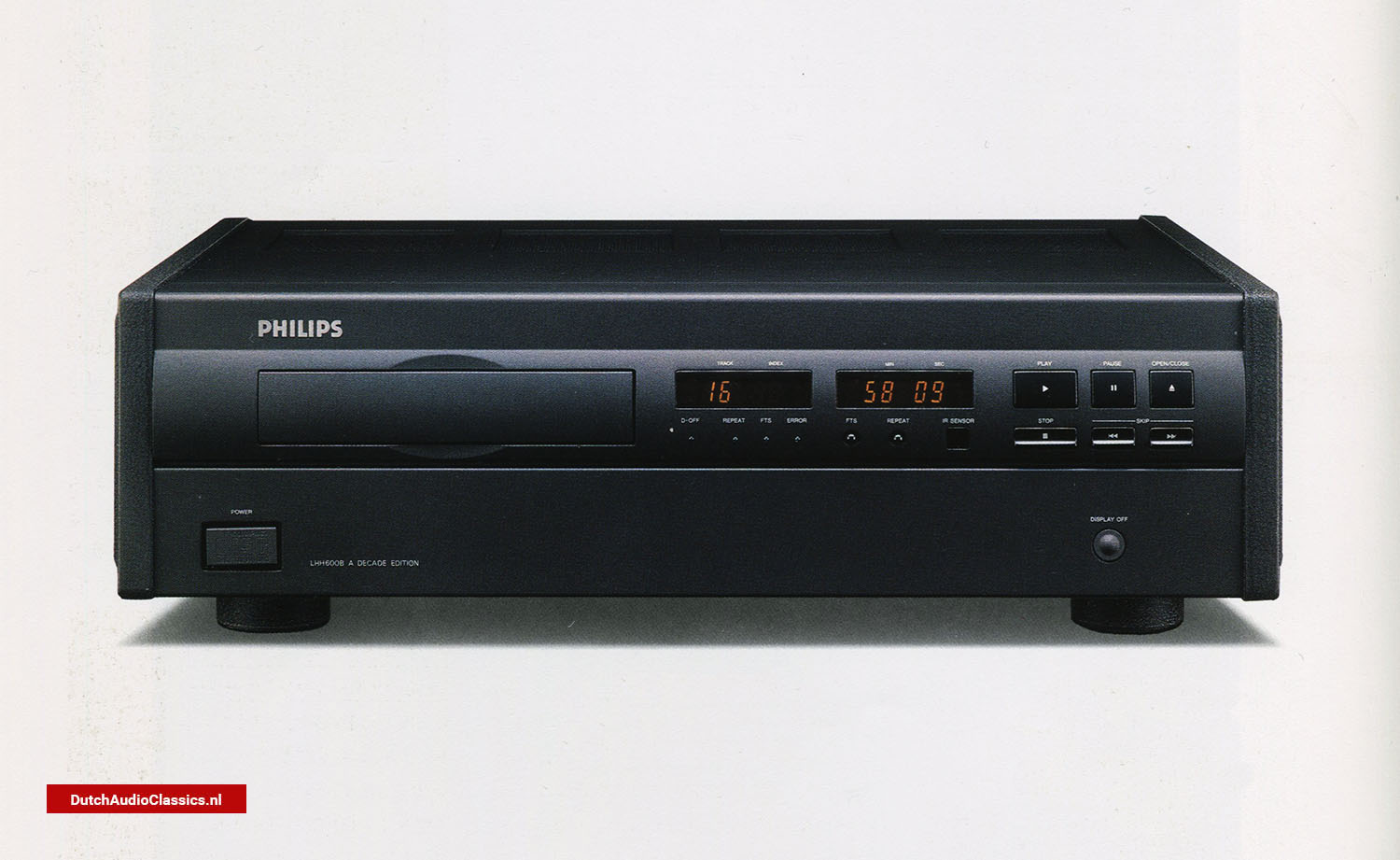
Philips followed the anniversary LHH700 with the closely related LHH600B.
The LHH600B retained much of the same technical foundation, including the CDM-4 mechanism and differential DAC7 architecture, but was positioned as a less exclusive model. It came in a Crystal Black finish and did not have the expensive transformer-coupled balanced XLR outputs.
Its official Japanese price was ¥280,000 compared with ¥330,000 for the LHH700.
Much of the technology developed for the centenary player could therefore be offered at a lower price, while the LHH700 remained the more elaborate anniversary model.
From the LHH700 to the LHH800R
When Philips introduced the LHH800R in 1993, the outside still looked familiar, but the circuitry showed a clear change in thinking. The LHH700 used two TDA1547 converters in Double Differential Mode together with several conventional analog amplifier stages. In the LHH800R, the number of amplifier stages was reduced, specially developed discrete circuitry was introduced and the DAC7 configuration was simplified to Single Differential.
The Japanese engineers also started looking more closely at negative feedback. They were concerned about the way feedback circuits could react to high-frequency noise from the digital section and began developing very fast analog circuits with less or no conventional global negative feedback. This approach became an important part of the LHH800R, LHH900R and several later LHH models. The LHH700 still belongs to the generation before this change, with a more complex analog design and conventional feedback.
The later Reference models continued to simplify the signal path. The LHH900R combined DAC7 with passive I/V conversion, a fully discrete Non-NFB balanced amplifier and specially developed high-speed power supplies. The same basic DAC7 technology was therefore used in very different ways across these models: the LHH700 relied on a more elaborate Double Differential architecture, while the later Reference players increasingly focused on fewer stages, shorter signal paths and simpler circuit design.
A Turning Point in the LHH Series
The LHH700 brought together many of the ideas Philips and Marantz Japan were using at the beginning of the 1990s. DAC7 appeared at reference level in a player with Double Differential conversion, extensive shielding, a dedicated DAC power supply, a very heavy chassis and transformer-coupled balanced outputs.
Several of these ideas continued into later LHH models. Philips kept using DAC7 and the CDM-4 mechanism, while heavy construction, shielding and carefully designed power supplies remained important.
Other parts changed much more quickly. The analog circuitry became simpler, the DAC configuration changed, different mechanical support systems appeared and the engineers began reducing their use of global negative feedback.
This places the LHH700 between two generations of Philips high-end CD players. It was one of the most elaborate examples of the design approach used at the beginning of the 1990s, while the LHH800R and LHH900R that followed show how quickly the ideas at Marantz Japan continued to develop.
Technical Specifications
Frequency response: 20 Hz – 20 kHz, ±0.2 dB
Dynamic range: 96 dB
Signal-to-noise ratio: 108 dB
Channel separation: 100 dB at 1 kHz
Total harmonic distortion: 0.00135% at 1 kHz
Wow and flutter: quartz precision, below measurable limits
D/A conversion: Philips DAC7 / TDA1547 Bitstream
DAC configuration: two TDA1547 chips, Double Differential Mode
Digital filter: NPC SM5803AP
Noise shaper: Philips SAA7350
Transport: Philips CDM-4 Mini Die-Cast swing-arm mechanism
RCA output: 2 V RMS
Balanced XLR output: 3 V RMS
Digital outputs: coaxial 75 ohm and optical
Power supply: AC 100 V, 50/60 Hz
Power consumption: approximately 18 W
Dimensions: 457 × 140 × 359 mm
Weight: approximately 16.7 kg
Original Japanese price: ¥330,000
Historical Perspective
More than three decades after its introduction, the LHH700 remains one of the most important CD players in the Philips LHH series. It was created for Philips’ 100th anniversary, but it also appeared during a major change in the company’s digital audio technology.
Earlier reference players such as the LHH1000 had been built around multibit conversion. The LHH700 brought the new DAC7 Bitstream system to the top of the range and used it in an unusually ambitious way. Two TDA1547 converters worked in Double Differential Mode, while the CDM-4 transport, heavy chassis, dedicated power supplies and transformer-coupled outputs made the rest of the player equally elaborate.
The models that followed show how quickly high-end CD player design was still changing. Philips and Marantz Japan continued using DAC7, but began simplifying the circuitry around it. The LHH800R reduced the number of amplifier stages and introduced discrete Non-NFB circuitry, while the LHH900R developed these ideas even further.
The LHH700 therefore represents a very specific moment in the history of Philips digital audio. It combines the new DAC7 technology with the complex high-end engineering approach used by Philips and Marantz Japan at the start of the 1990s. Later players kept some of its technology but changed many of the ideas around it.
For a CD player built to celebrate Philips’ first hundred years, that gives the LHH700 an interesting position. It was an anniversary model based on decades of Philips audio and Compact Disc development, while its DAC7 technology became part of the next generation of LHH reference players.
The Philips LHH700 is therefore not only a centenary model, but also one of the clearest links between two periods in the development of the LHH series.
This blog places the Philips LHH700 (1991) within the broader evolution of Philips’ high-end digital audio technology at the beginning of the 1990s. Created for Philips’ 100th anniversary, the player brought the new DAC7 Bitstream architecture to reference level through an elaborate Double Differential implementation of the TDA1547, combined with Philips’ CDM-4 swing-arm transport and the mechanical engineering of Marantz Japan.
Seen in the context of the LHH series, the LHH700 also marks an important transition. It represents the culmination of an increasingly elaborate approach to digital and analog design, just before the engineers in Japan began questioning that complexity and moved towards the shorter signal paths, simplified DAC configurations and Non-NFB circuitry of later models such as the LHH800R and LHH900R. This makes the LHH700 not only a centenary model, but an important link between two generations of Philips high-end CD player design.