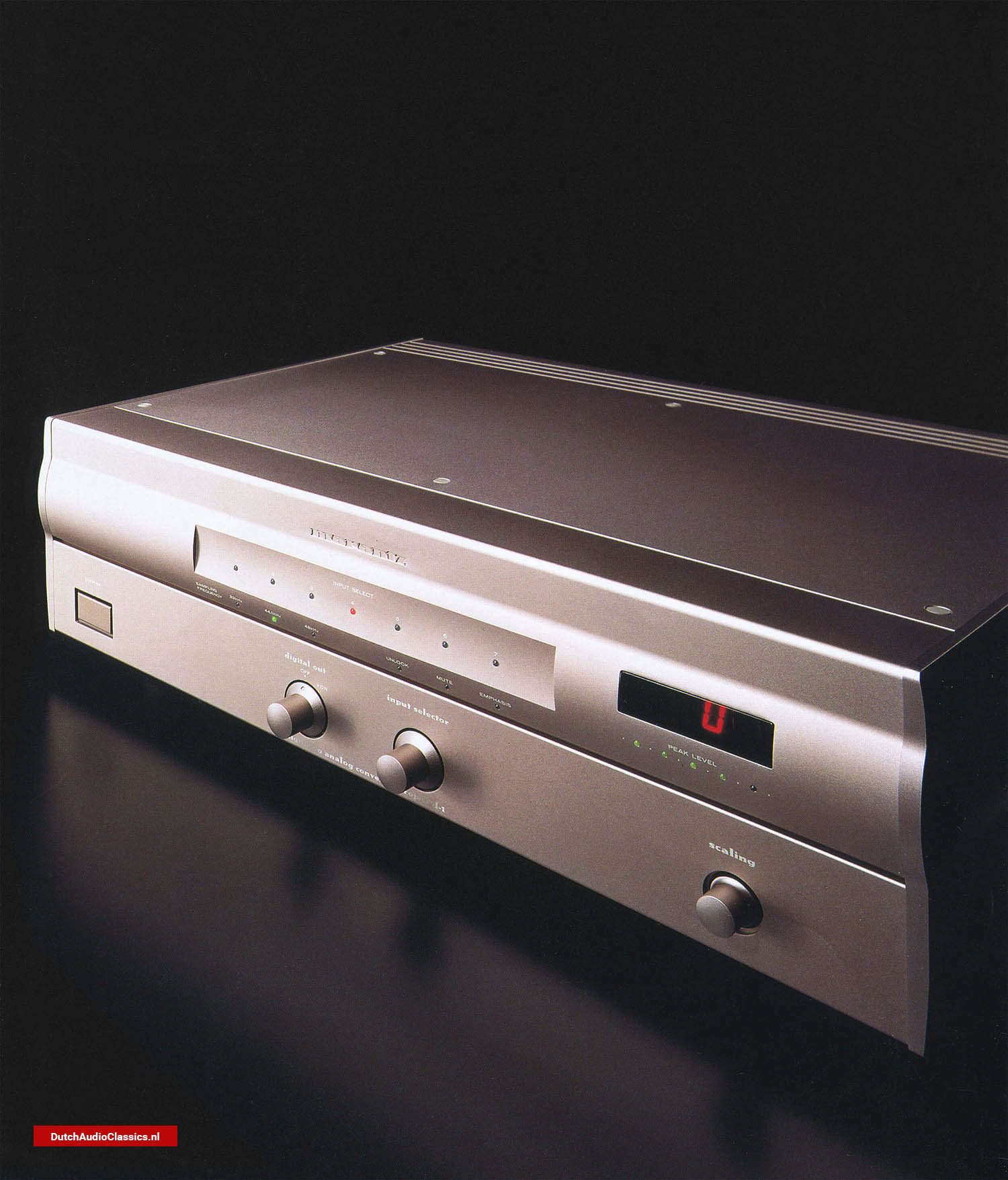
Marantz Project D-1The ultimate conclusion of the 16-bit era
March 26, 2026
In this blog, I take a closer look at the Marantz Project D-1, one of the most ambitious digital audio designs from the final years of the CD era. Developed in 1998 by the Marantz team in Sagamihara, the D-1 stands out as a deliberate attempt to push the limits of the compact disc using a fully uncompromised approach.
What fascinates me is how the D-1 does not follow the dominant direction of its time, but instead re-examines the potential of multibit technology. By combining dual TDA1541A S2 DACs with a custom DSP and a Non-NFB design philosophy, it offers a very specific vision on digital playback. In this article, I explore how those choices come together into a design that challenges conventional thinking about the CD format.
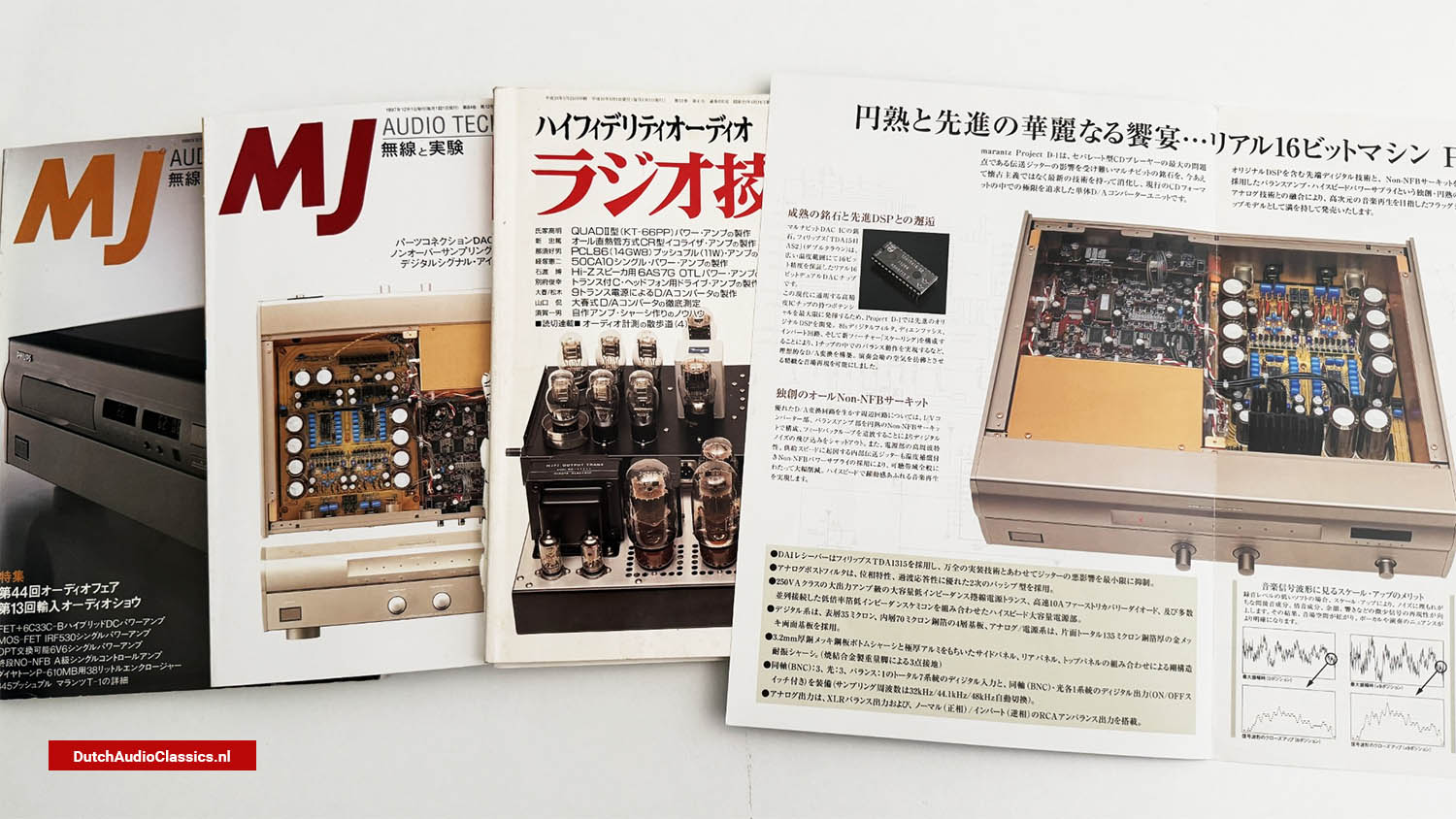 Original documentation and period publications supporting the research and technical accuracy of this blog.
The Marantz Project D-1 is not an ordinary DAC from the late 1990s. This device was developed as a no-compromise statement, in a period when the audio world was moving massively in a different direction. While 1-bit bitstream technology had taken over the market and new formats such as DVD and DSD were receiving a lot of attention, Marantz Japan decided to push the absolute limits of the classic 16-bit multi-bit approach one final time.
The result was the Project D-1: an extremely limited, technically ambitious and now legendary D/A converter, built in a production run of only 500 units.
What makes the D-1 so special is not only its rarity, but especially the combination of technology, philosophy and timing. This device was created at a turning point in digital audio history. Precisely because of that, the D-1 does not feel like an intermediate step today, but rather like a definitive endpoint of a particular era. For many enthusiasts, it represents the ultimate expression of what was possible with the Philips TDA1541A S2 Double Crown chip and a no-compromise design philosophy.
Origin of the D-1 and the spirit of its time
To properly understand the Project D-1, you have to go back to the late 1990s. In those years, the market had almost completely switched to 1-bit DAC technology. That solution was cheaper, easier to produce and commercially attractive. Philips and Marantz also largely followed that direction. At the same time, attention for new digital formats grew, which were expected to eventually replace the compact disc.
Yet for many music lovers, the CD simply remained the main music carrier. Tetsu Suzuki, one of the key figures behind the D-1, recognized this. In his personal reflection, he made it clear that the Project D-1 did not arise from fashion or marketing, but from the desire to do justice to the enormous musical treasure already available on CD. His starting point was clear: as long as the CD remains the core of many listeners’ music collections, that medium deserves the best possible reproduction.
The Project D-1 also arose from a unique practical situation. Marantz still had a limited stock of the Philips TDA1541A S2 Double Crown, one of the most highly regarded multi-bit DAC chips ever made. Because production of this chip had already been discontinued, it was clear from the outset that the D-1 could only be built in very small numbers. This immediately gave the device an almost mythical status: not only because it represented top-level technology, but also because it literally could not be reproduced in the same form again.
The relationship with the LHH series and specifically the Philips LHH900R
The Marantz Project D-1 does not stand alone. In many ways, it is directly related to the Philips LHH series, especially the Philips LHH900R. The D-1 was developed by the same team that was previously responsible for the LHH900R, and this is visible not only technically but also physically. The chassis, construction layout and design language are strikingly similar. The Project D-1 even shares the heavy base plate, side panels and top cover with the LHH900R.
The relationship goes beyond just the enclosure. The underlying design philosophy is also the same. Both the LHH900R and the D-1 are products of a school that emphasized maximum mechanical stability, extreme power supply quality and, above all, Non-NFB — an analog architecture without negative feedback. The major difference lies in the choice of D/A conversion.
Where the LHH900R used a high-quality 1-bit DAC7 platform, the D-1 deliberately chose the older multi-bit approach. In that sense, the D-1 became an alternative top-level interpretation of the same design mentality. You could say that the LHH900R represented the ultimate refinement of the bitstream direction, while the Project D-1 became the ultimate tribute to the classic multi-bit philosophy.
The fact that the D-1 was marketed under the Marantz name rather than Philips also had a clear strategic reason. High-end audio products were increasingly being unified under the Marantz brand, because it had a more exclusive and audiophile image worldwide. Technically, the D-1 clearly carries Philips LHH DNA, but in terms of positioning it was deliberately presented as a Marantz statement.
The developers of the Marantz Project D-1
The Project D-1 was developed by a team of top engineers from Marantz Japan. Their names are even immortalized on the internal circuit boards of the device. The team included T. Ozawa, T. Suzuki, H. Miyamoto, K. Atsuta, A. Shinozaki and M. Hanzawa. In addition, Hideki Kato played an important role in the background, especially in the application and further development of the Non-NFB philosophy.
Among this team, Tetsu Suzuki is particularly interesting because a personal reflection from him has been preserved. This note shows that the D-1 was not only technically ambitious, but also developed with a strong underlying conviction. Suzuki described the central theme of the D-1 as a “real 16-bit machine.” By this, he did not simply mean a DAC using a 16-bit chip, but a device that would finally make full use of the potential of the CD format.
Hideki Kato also provided an insightful reflection. He looked back on the pure, feedback-free I/V conversion of the D-1 as something exceptional, and even stated that this was probably the first non-feedback DAC in the world to use this method. This reveals how the device was viewed internally: not just as a luxury product, but as a reference point.
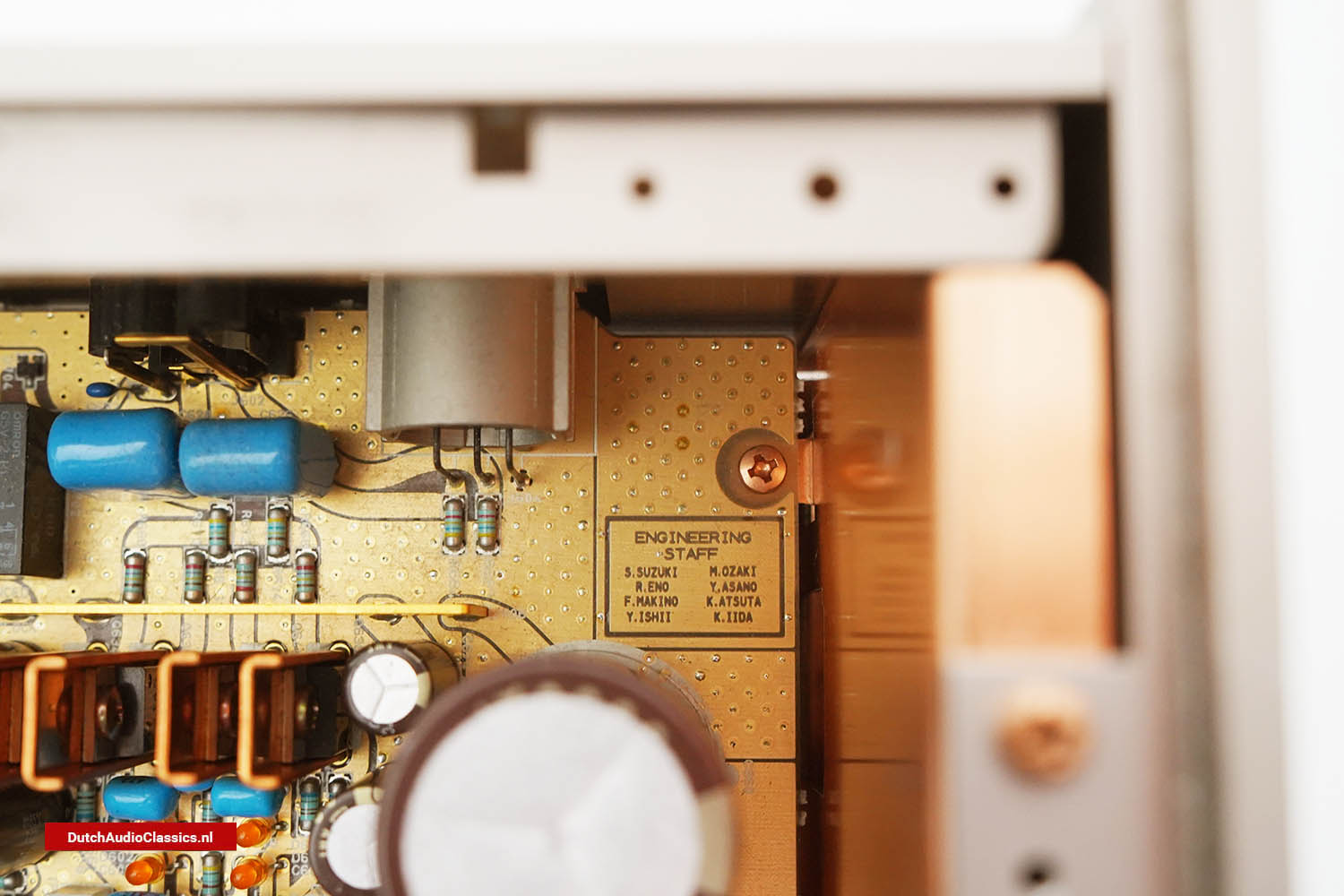 The names of the engineering team behind the Marantz Project D-1, as inscribed on the PCB.
The goal of the Marantz Project D-1
The Project D-1 had a clear goal: to reveal what is truly contained within the compact disc. Not according to marketing claims, not according to theoretical specifications, but in practice. The designers were convinced that earlier hardware often failed to fully unlock the content of CD recordings. Not because the CD itself falls short, but because playback equipment did not always make optimal use of the available 16 bits in real-world conditions.
This insight defined everything about the D-1. The device had to become a machine that fully engages the potential of the CD format. Not by simply sounding louder or more spectacular, but by enabling more nuance, more space, more dynamics, and more emotional transfer. The goal was for the listener to hear more of the recording without artificiality, without digital harshness, and without loss of naturalness.
In this way, the D-1 positioned itself not as a DAC for effects, but as an instrument to reduce the distance between the recording and the listener.
The technologies used
The most impressive characteristic of the Project D-1 is that almost every important design layer has been reconsidered. The designers did not simply place a classic chip in a luxurious enclosure. They built a complete system in which digital reception, DSP, D/A conversion, analog output stage, power supply, and mechanical construction reinforce each other.
At the center is the combination of three major pillars. First, the rare TDA1541A S2 Double Crown DACs. Second, a fully self-developed DSP solution, because the classic Philips filter chip was no longer available. Third, a uncompromising analog and power supply design based on Non-NFB, meaning without negative feedback.
It is precisely this combination that makes the D-1 unique. Much high-end equipment excels in one specific area. The D-1 is exceptional because it is executed to an extreme level in almost every critical aspect.
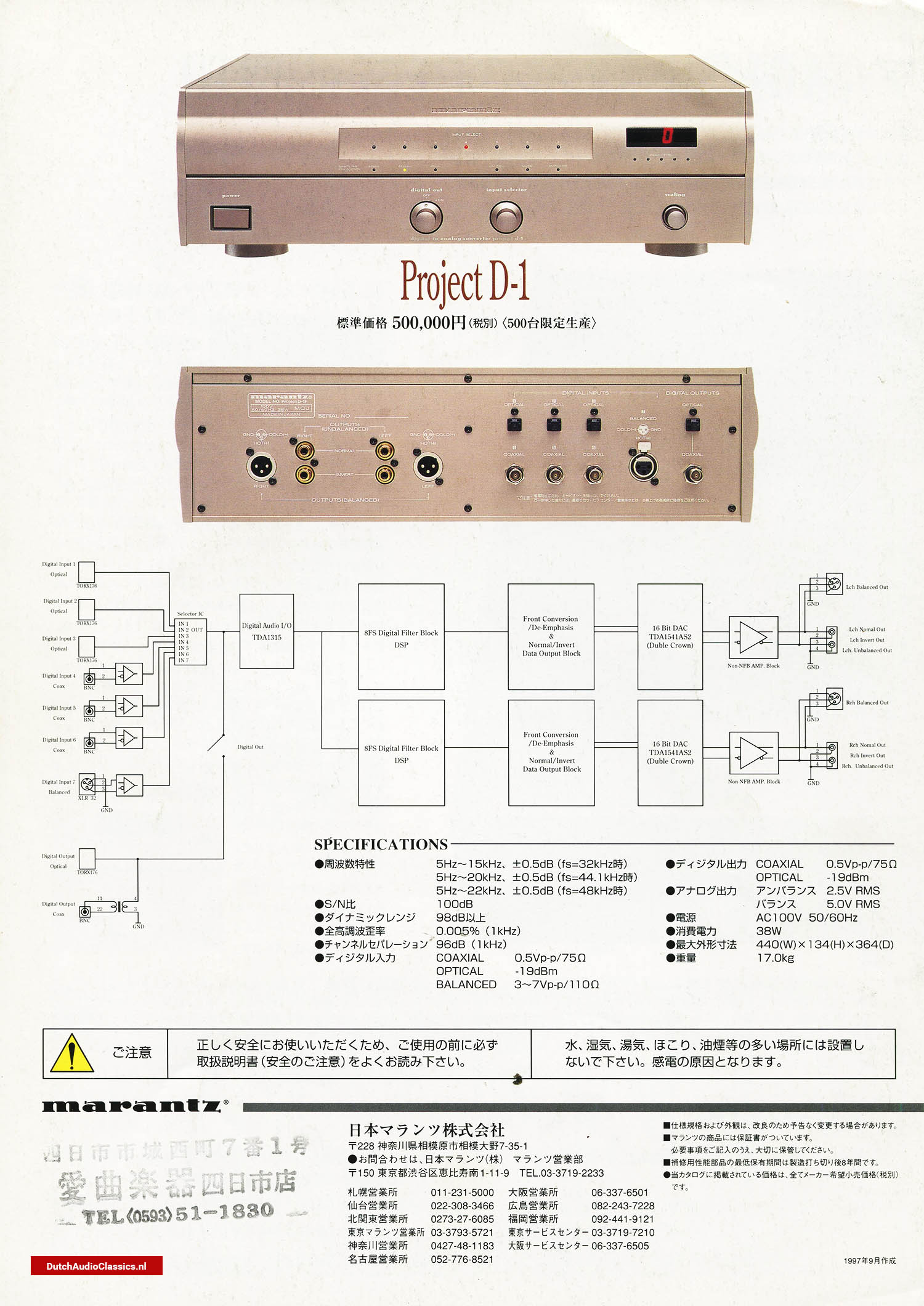
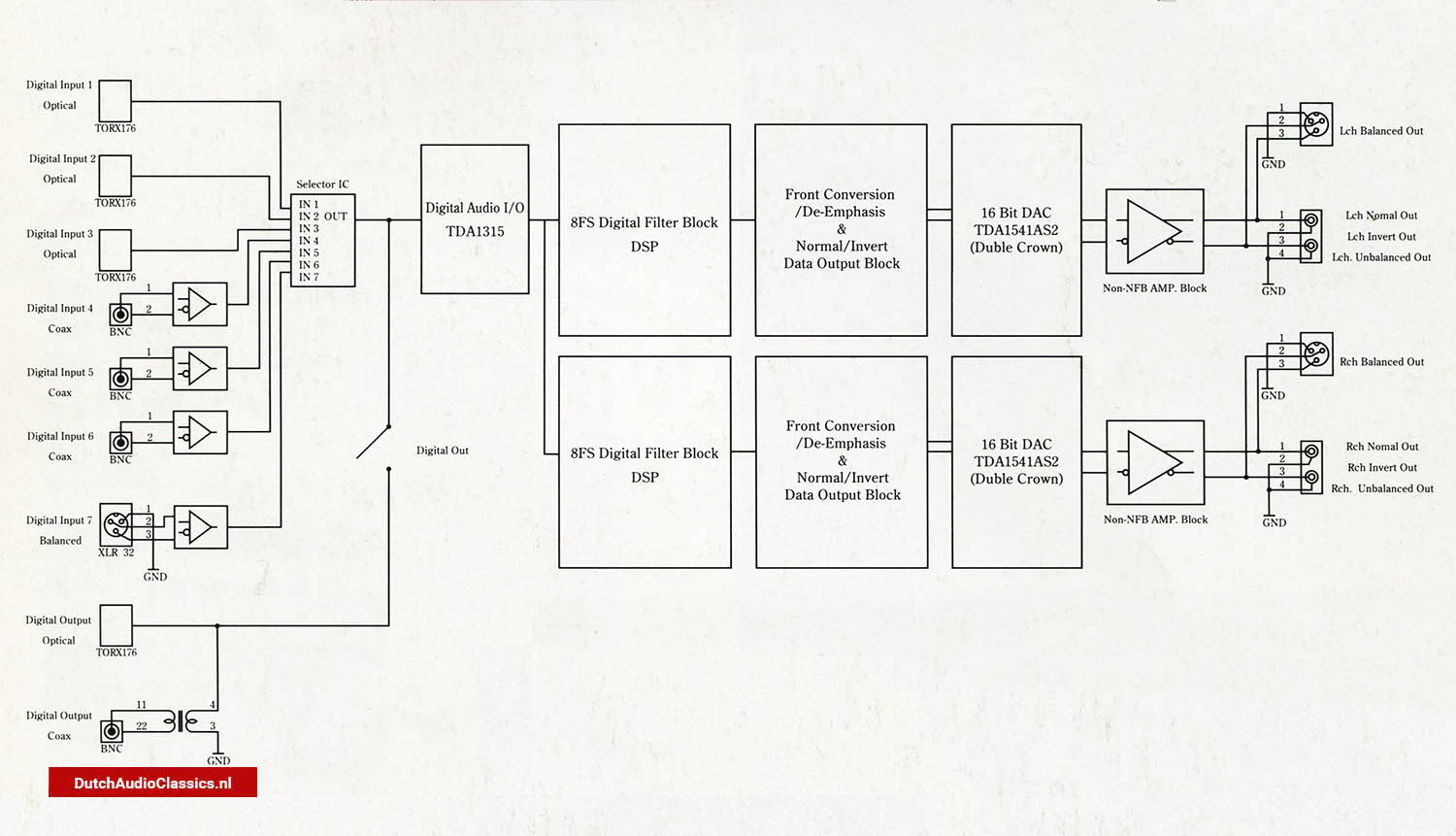 Audio signal path block diagram of the Marantz Project D-1
The D/A conversion
The heart of the D-1 is formed by two Philips TDA1541A S2 Double Crown chips. Among enthusiasts, this chip is regarded as the absolute top version of the famous TDA1541A series. The Double Crown version was known for its strict selection, high linearity, and exceptionally low distortion. In the D-1, units from the final production runs were used, which makes the device even more special.
The choice of this chip was anything but logical from a commercial perspective in 1998. After all, the industry had largely already moved to bitstream solutions. Precisely for that reason, this choice is so telling. The designers believed that the TDA1541A S2, when perfectly implemented and supported, could still deliver something that more modern chips did not inherently provide: a natural, rich, spacious, and convincing sound presentation.
In the D-1, the DACs are used in a dual differential configuration. This not only aims for maximum precision, but also provides an optimal foundation for the balanced analog processing that follows.
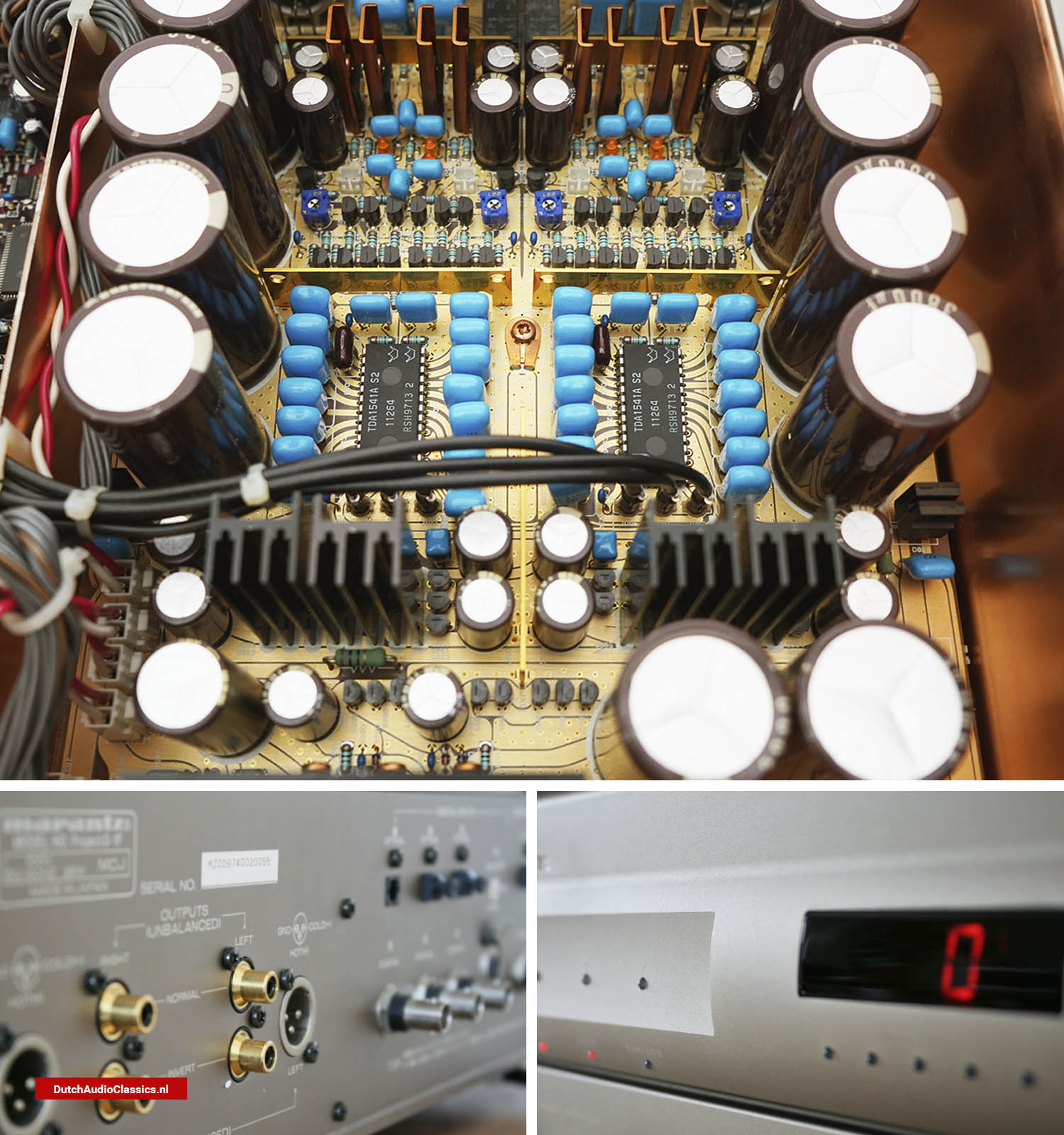
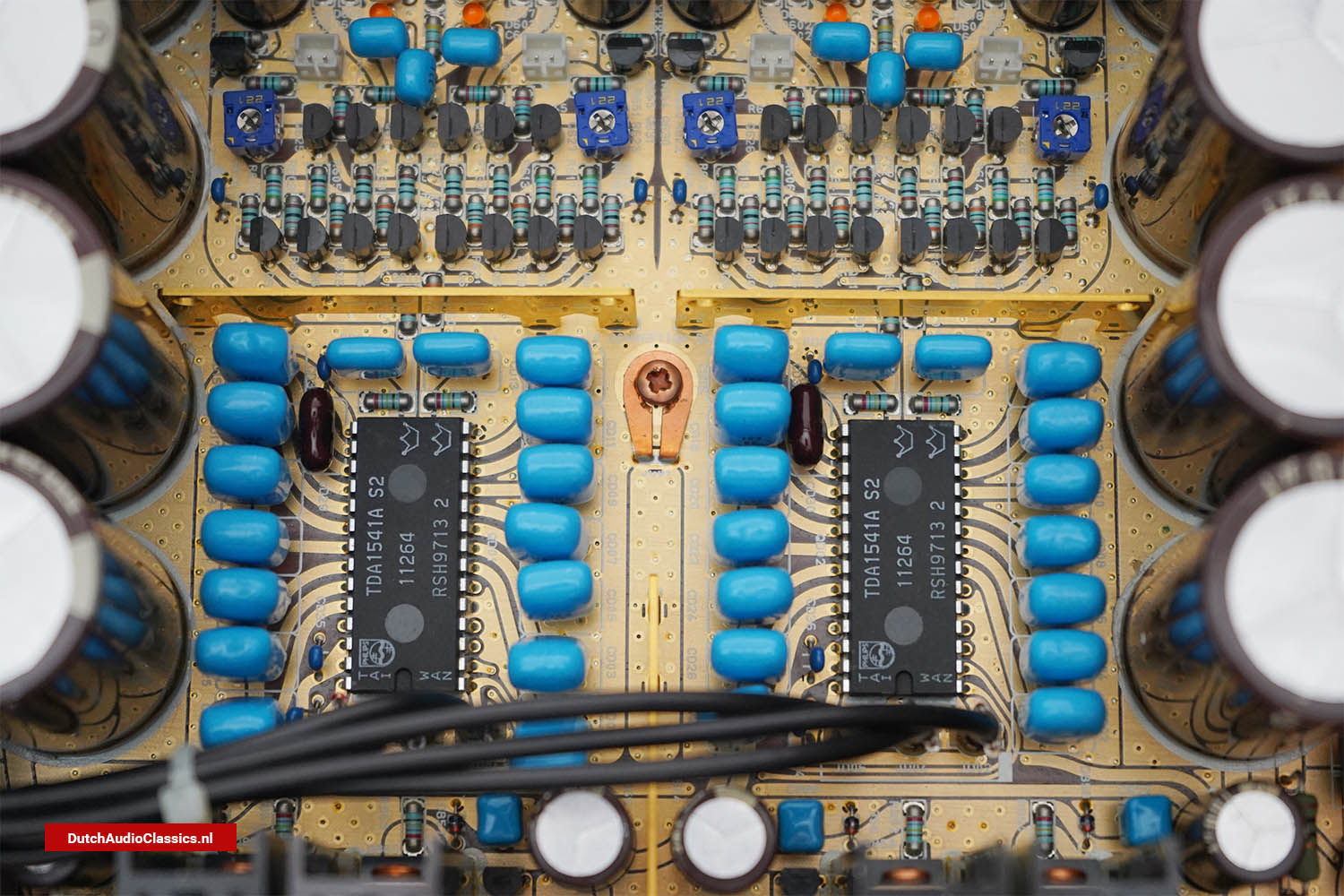 Two Philips TDA1541A S2 Double Crown chips used in the Marantz Project D-1
The DSP
The DSP section is perhaps the most innovative part of the Project D-1. Because the standard Philips SAA7220 digital filter chip was no longer available, the team faced a choice: adapt the project to the limitations of the moment, or develop something better themselves. They chose the latter.
Marantz therefore developed its own DSP solution with an 8x oversampling digital filter. That in itself was already ambitious, but the DSP did more than just filtering. It also handled de-emphasis, inverter functionality, and laid the foundation for the unique scaling function of the D-1.
From a technical point of view, this is an important aspect. The DSP was not a workaround, but became one of the major strengths of the design. It enabled functions that were not achievable with the old standard solutions. At the same time, it gave the designers more control over phase behavior, signal processing, and the balance between digital precision and analog musicality.
The scaling function
One of the most original features of the Project D-1 is the scaling or bit-shift function. This is where the philosophy of the device is perhaps expressed most clearly. The designers observed that CDs in practice differ greatly in recording level. As a result, a 16-bit DAC does not always use its full resolution. Some recordings are relatively soft, while others are so close to clipping that digital filtering comes under pressure.
The D-1 therefore gives the user the ability to adjust the digital signal level before the actual filtering and conversion. This is done in nine steps, with a total range of approximately plus or minus 3 dB.
With softly recorded CDs, the user can scale up. This brings the signal closer to the full operating range of the DAC. The audible effect is that small details, reverberation, breathing, and spatial information become more clearly audible. The recording does not sound artificially boosted, but instead seems more fully revealed.
With loudly or aggressively recorded CDs, the signal can be scaled down. This gives the digital filter more processing headroom again and reduces harsh, high-frequency distortion components. The result is often a calmer, smoother, and more spacious sound presentation.
This makes the D-1 special, because it does not approach the digital domain as something rigid and absolute, but as an area where intelligent processing can help make the true content of the recording more audible.
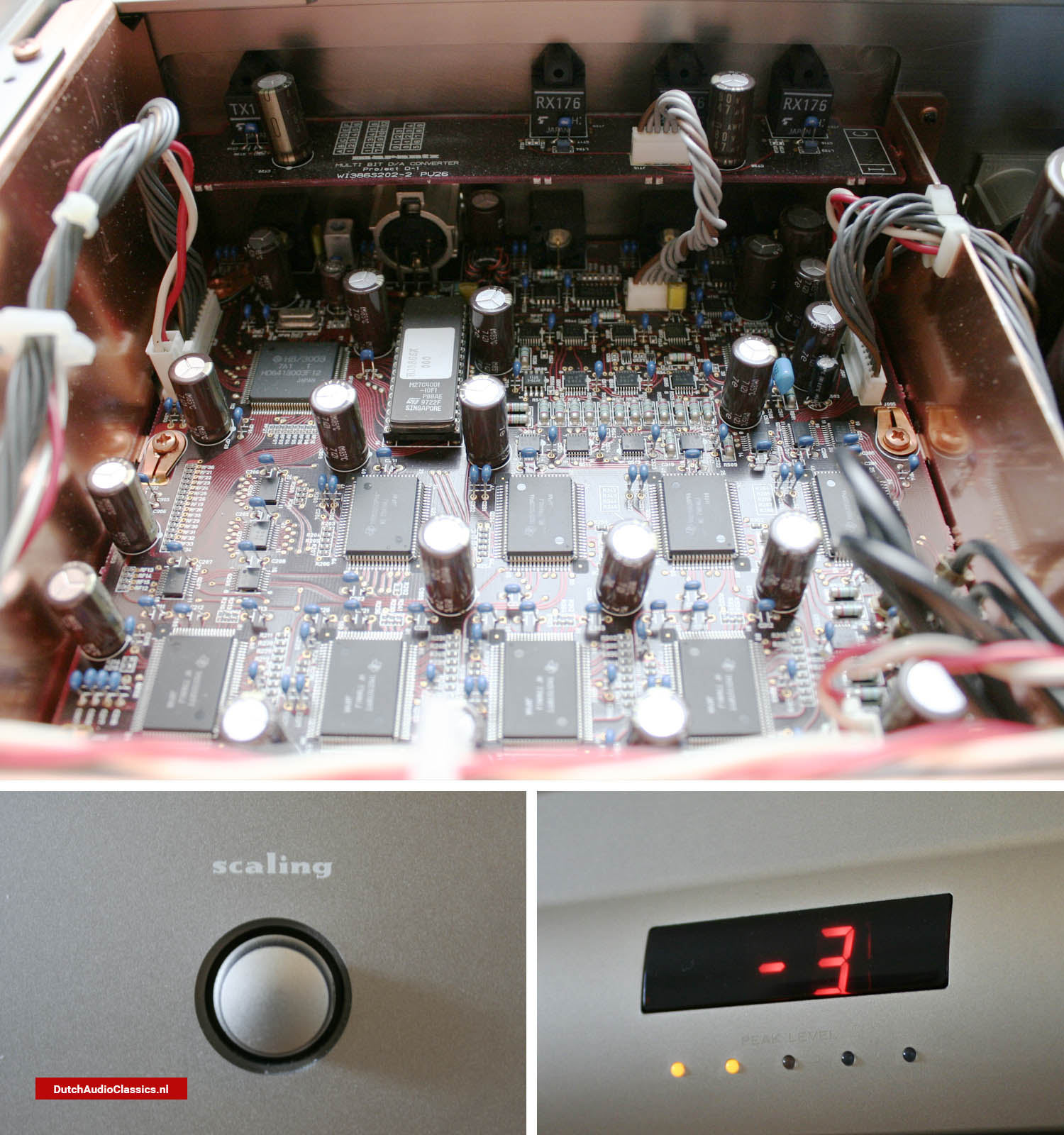 Internal DSP and scaling control of the Project D-1, enabling precise level adjustment before conversion.
The power supply
The power supply of the Project D-1 is extremely heavily executed and plays a central role in the performance of the device. The foundation is formed by a 250VA-class transformer, a size you would normally expect in serious power amplifiers rather than in a standalone DAC. This is not excess for the sake of excess, but a deliberate choice for stability, current reserve, and calmness.
Behind that follow ultra-fast 10A fast-recovery diodes and multiple parallel-connected low-impedance electrolytic capacitors. Here as well, the design is focused on speed, low impedance, and minimal contamination. The power supply must not only be powerful, but above all clean and immediately responsive.
It is noteworthy that the power supply is also designed according to the Non-NFB philosophy. Instead of traditional regulation circuits with negative feedback, a high-speed Non-NFB stabilization was chosen, built around a constant-current-driven zener diode and a Darlington configuration. The idea behind this was that feedback loops can both pick up digital noise and are not fast enough to respond to the direct current demands of the music signal.
In the context of the D-1, the power supply is therefore not a supporting element, but a fundamental building block of its sonic performance.
Refinement in the details
It is precisely in the details that the Project D-1 shows it was developed as a cost-no-object product. Even before the signal reaches the DSP, it is received by the Philips TDA1315 digital audio interface receiver. This choice was aimed at achieving extremely stable reception of the digital signal and minimizing jitter.
After the D/A conversion, Marantz did not choose a standard active filter solution with op-amps, but instead opted for passive post-filters. This is telling, because passive filtering requires more care in the overall design, but can result in better phase characteristics and a more natural impulse response.
High-quality components are also used in the output stage, including Elna stacked polypropylene capacitors. Such choices are less visible in a sales brochure, but are highly significant to those who understand the design. They show that not only the headline technology, but also the fine execution has been taken seriously.
In addition, the use of BNC connectors for the coaxial digital inputs and outputs is far more serious than standard RCA solutions. BNC allows for a proper 75-ohm impedance much more effectively and helps reduce reflections and transmission-related jitter.
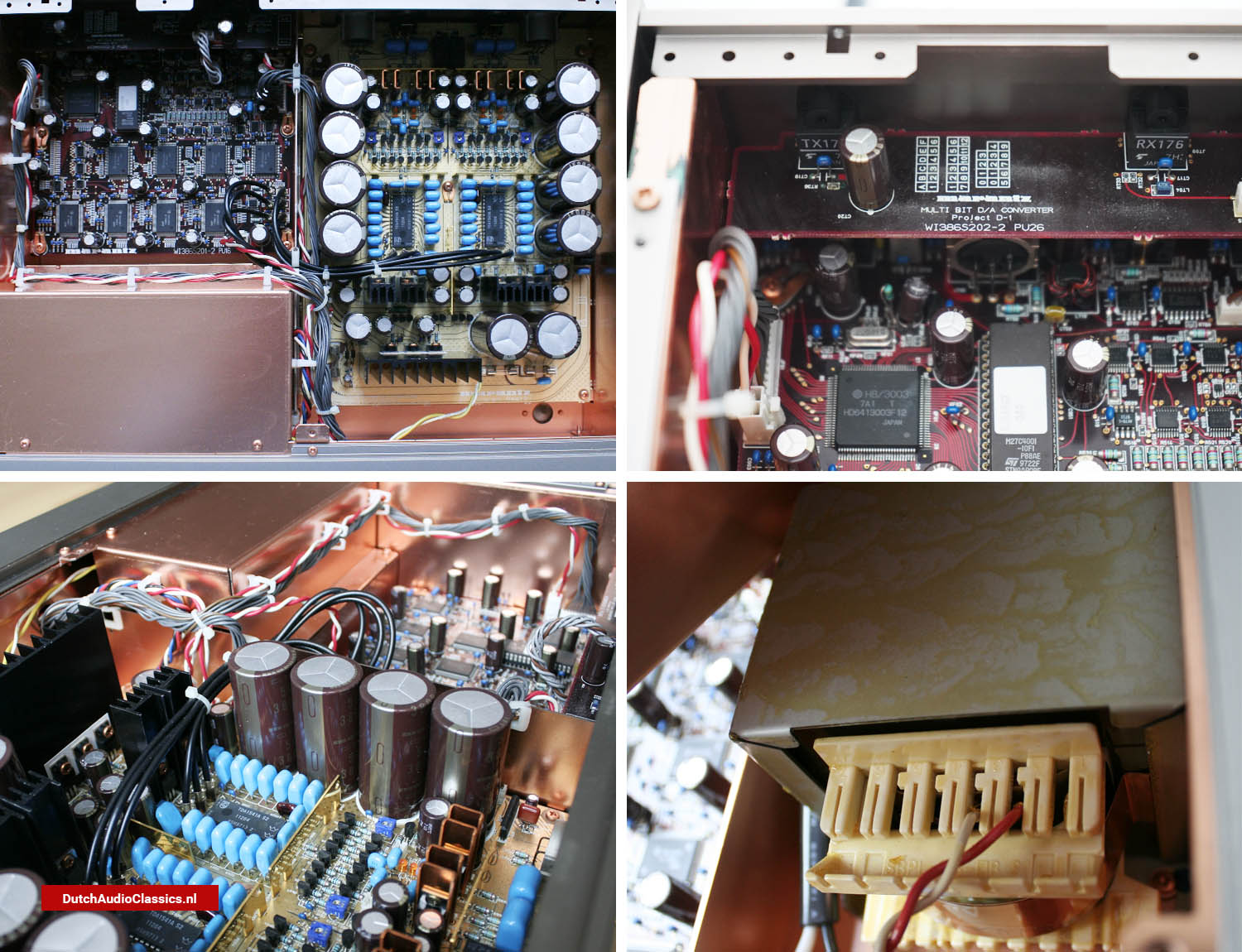 Detail view of internal components showing DSP, power supply, and high-quality signal path design choices.
The chassis construction
The Project D-1 is built like a vault. The device rests on a 3.2 mm thick copper-plated steel base plate, combined with extremely thick aluminum side, top, and rear panels. The total weight of 17 kilograms already makes it clear that nothing here is lightweight or casual.
This construction had a clear purpose. The sensitive Non-NFB circuits in the D-1 are vulnerable to microphony, resonances, and interference. The enclosure therefore had to be not only solid, but also mechanically inert and electrically favorable. The copper plating on the chassis lowers impedance and also helps to shield against high-frequency contamination.
Also notable is the choice of three feet made of sintered alloy. This aligns with the concept of a mechanical ground: three support points always ensure stable placement and help to dissipate vibrations in a controlled manner. In high-end audio, this may seem like a minor detail to outsiders, but in a device like the D-1 it is fully part of the design philosophy.
The well-known statement by chassis designer Toshio Yamakawa that 40% of a device’s sound comes from the chassis fits perfectly with the D-1. This device was built on the conviction that mechanical stability is a direct prerequisite for musical credibility.
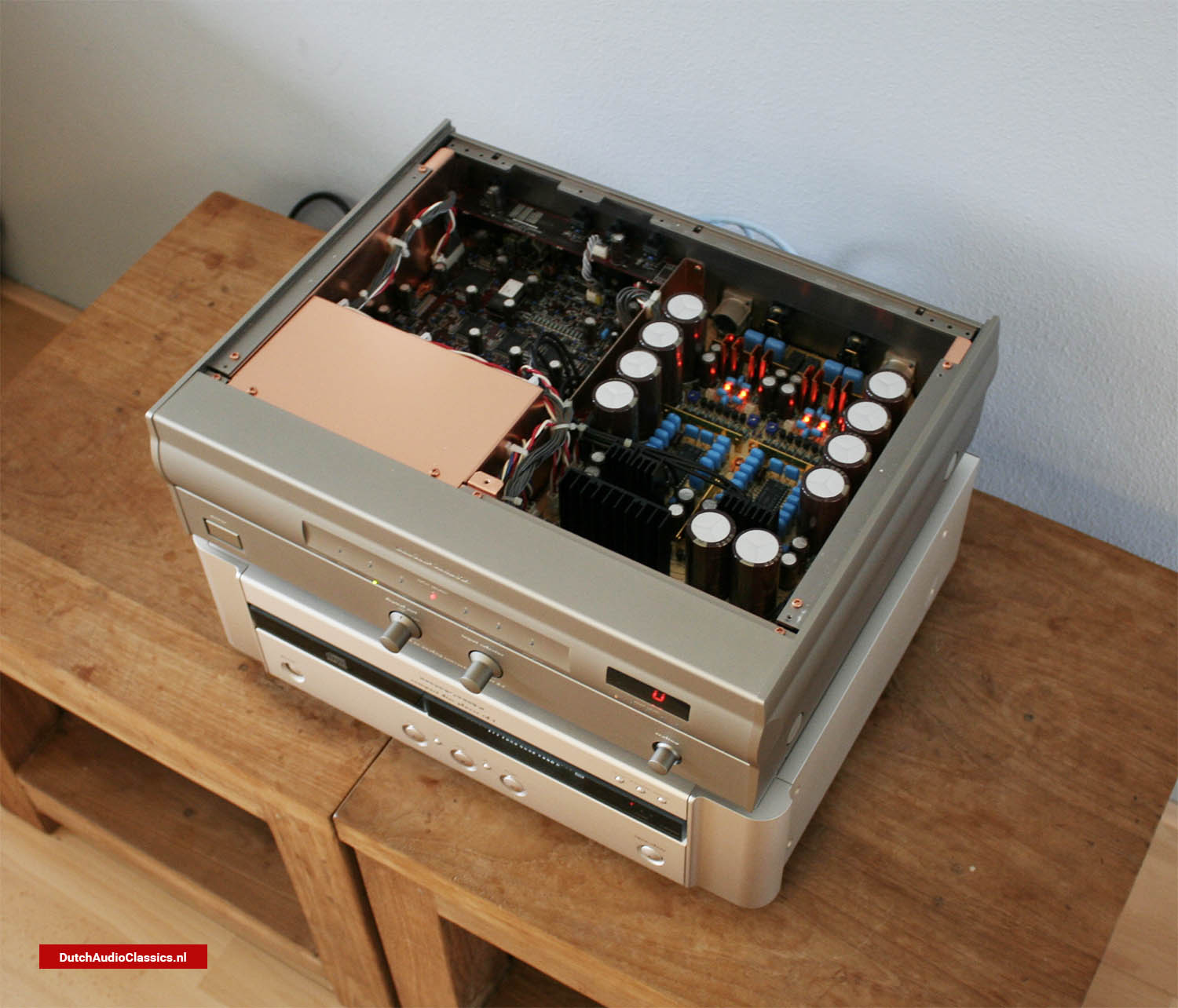 The Project D-1’s internal construction, built for stability, shielding, and control.
The connections
In terms of connectivity, the D-1 also positioned itself as a serious digital control center. The device features seven digital inputs: three coaxial BNC inputs, three optical inputs, and one balanced AES/EBU input. In addition, there is a coaxial BNC output and an optical output.
On the analog side, the D-1 offers both balanced XLR outputs and unbalanced RCA outputs. Notably, the RCA outputs are available in both normal phase and inverted phase, providing additional flexibility for different systems and preferences.
This broad usability shows that the D-1 was not only intended as an exotic showcase, but also as a seriously usable reference DAC in high-end digital systems.
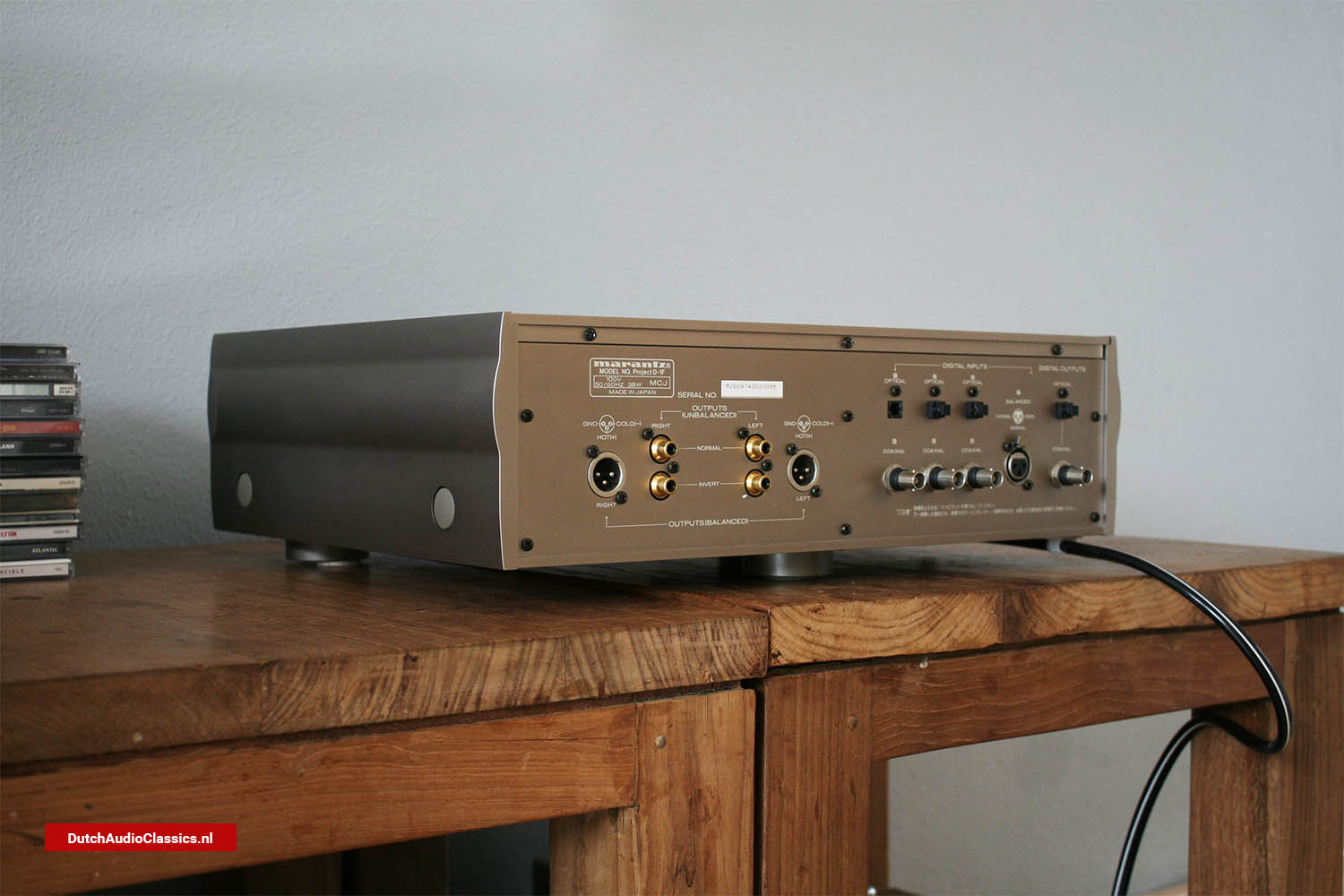 Rear panel of the Project D-1 showing BNC, optical, AES/EBU, XLR, and RCA connections.
Final perspective
The Marantz Project D-1 is much more than a rare high-end DAC from 1998. The device is the product of a very specific historical situation, an exceptional team of designers, and an uncompromising vision of digital music reproduction. At a time when the market was mainly looking ahead to new formats and cheaper technology, the D-1 instead looked deeper into the potential of what already existed: the compact disc and the classic multi-bit architecture.
Its relationship with the Philips LHH series, and in particular the LHH900R, makes it clear that the D-1 was not an isolated experiment, but the peak of a longer development line. At the same time, it distinguishes itself through its deliberate choice for the TDA1541A S2, its self-developed DSP, the revolutionary scaling function, the uncompromising Non-NFB architecture, the extremely heavy power supply, and the exceptional chassis construction.
Everything about the D-1 reflects the same conviction: that digital audio is not only about specifications, but about fully unlocking the emotional and spatial content of a recording. It is precisely for that reason that the Project D-1 has retained its legendary status. Not because it is scarce, but because it demonstrates a rare combination of technology, vision, and timing. The D-1 is not a curiosity from the past, but one of the most pronounced and serious endpoints of the 16-bit CD era.